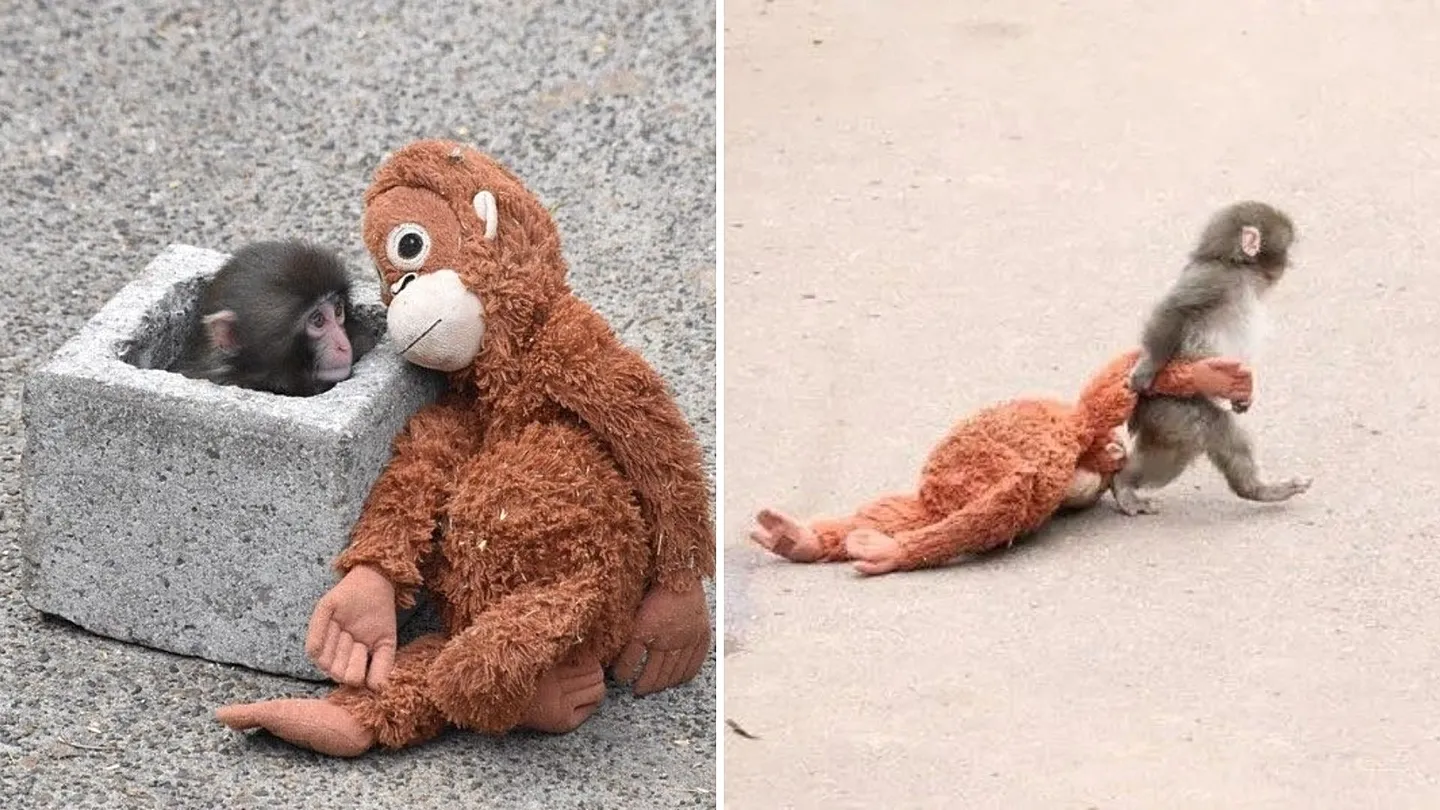
If you've been scrolling through social media recently, you've likely encountered a small, furry Japanese macaque solemnly carrying a slightly larger orangutan stuffed toy everywhere he goes. This is Punch (affectionately called Punch-kun), a six-month-old monkey residing at Ichikawa City Zoo near Tokyo, whose story of abandonment and resilience has captivated the global internet. While millions have been moved by Punch's journey, his situation raises a profound biological question: why do mother animals sometimes abandon their offspring? The viral phenomenon of Punch the monkey provides a compelling case study to explore the complex scientific reasons behind maternal rejection in the animal kingdom.
The Heartbreaking Story of Punch: From Rejection to Viral Sensation
Born in July 2025 during a sweltering heatwave, Punch's life began with immediate hardship. His biological mother rejected him shortly after birth—zookeepers believe due to complications from the difficult delivery exacerbated by extreme temperatures. This left the newborn macaque entirely dependent on human caretakers, who hand-raised him for months. According to Euronews, Punch's primary social interactions during this period were with zoo staff rather than other monkeys, creating an unusual developmental circumstance for a species known for its complex social structures.
By January 2026, zookeepers determined it was time to gradually reintroduce Punch to the troop in the zoo's "Monkey Mountain" enclosure. Japanese macaques live within strict social hierarchies where juveniles typically learn their place through maternal guidance. Without his mother to show him the ropes, Punch struggled to navigate macaque social life. Viral videos captured him tentatively approaching older monkeys in search of affection, only to be swatted away or ignored entirely. One particularly poignant clip shows the baby monkey crawling around, desperately trying to get his stuffed orangutan to hug him back—a moment that encapsulated both his loneliness and his enduring hope for connection.

The Science Behind Maternal Abandonment: Survival Strategies in Nature
Punch's story, while emotionally compelling, represents a natural phenomenon observed across numerous species. Animal behavior experts explain that maternal abandonment, while heartbreaking to human observers, often represents an evolutionary survival strategy. According to The Guardian's coverage of Punch's case, "In environments where survival is compromised by environmental conditions, mother animals may abandon offspring to conserve resources for themselves or healthier siblings." This harsh calculation reflects the reality that in nature, resources are often limited, and investing in offspring with low survival prospects could jeopardize the mother's ability to reproduce successfully in the future.
Several key factors contribute to maternal rejection across mammalian species. First-time mothers, lacking experience, may struggle with maternal instincts or become overwhelmed by the demands of childcare. Environmental stressors—such as the extreme heatwave during Punch's birth—can significantly impact both the mother's health and her ability to care for offspring. Resource scarcity, whether food, water, or safe shelter, forces mothers to make difficult decisions about where to allocate limited energy. Additionally, offspring perceived as weak, sick, or developmentally compromised may be abandoned so the mother can focus her resources on healthier siblings or future reproductive opportunities.
Expert Insights: Understanding Primate Behavior and Social Structures
Primate researchers emphasize that maternal behavior in monkeys and apes is influenced by complex social and environmental factors. Dr. Jane Goodall Institute scientists note that while maternal rejection occurs in wild populations, it's typically less frequent than in captive settings where stressors may be more concentrated. Japanese macaques, in particular, have matrilineal societies where social status is inherited through the mother. A mother's rejection can therefore have profound implications for her offspring's social integration and long-term survival prospects.
In Punch's specific case, experts cited by various news outlets suggest multiple potential factors: the physical stress of birth during extreme heat, possible hormonal imbalances in the mother, or even the mother's own social standing within the troop. "Sometimes it's an act of survival for a mother to reject, abandon, or even cull their own offspring," explains a Science Focus article on mammalian maternal behavior. "Natural selection has favored mothers that provide resources to offspring most likely to survive and thrive."
The Zoo's Intervention: How Caretakers Support Rejected Infants
Ichikawa City Zoo's response to Punch's situation demonstrates modern zoological practices for handling maternal rejection. Rather than allowing the infant to perish, zookeepers intervened with a multi-faceted approach. They provided round-the-clock hand-rearing, ensuring proper nutrition and basic care. Perhaps most famously, they introduced an IKEA Djungelskog orangutan plush toy as both an emotional comfort object and a tool for physical development. The stuffed animal, slightly larger than Punch himself, helped build the young monkey's muscle strength as he dragged it around his enclosure.
The zoo's thoughtful approach extended to public communication. When concerns arose about perceived "bullying" in videos showing Punch being dragged or swatted by older monkeys, the institution issued a clarifying statement: "Even though Punch gets scolded, he also possesses very strong mental resilience and recovers quickly. The fact that he repeatedly receives the cold shoulder and exclusion from group members after trying to communicate with various monkeys is not something to simply feel sorry about. We hope you will see it as cheering for and supporting Punch's persistence and efforts." This perspective reframed the narrative from one of victimization to one of resilience and gradual social learning.
From Isolation to Integration: Punch's Gradual Social Acceptance
Recent developments in Punch's story offer hope and important insights into primate social dynamics. Footage from February 2026 shows significant progress: the young macaque being gently groomed by a peer—a crucial marker of social acceptance in primate societies—and playing with younger monkeys closer to his age. This gradual integration demonstrates that even after maternal rejection and initial social struggles, infants can find their place within complex troop structures with appropriate support.
Animal behaviorists observing Punch's journey note several positive indicators. His persistent attempts to engage with other monkeys, despite repeated rejections, demonstrate remarkable social drive. The fact that he eventually began receiving grooming suggests that other troop members are recognizing him as part of their social group. This progression aligns with research showing that orphaned primates can sometimes be "adopted" by other group members or gradually integrated through persistent, non-threatening social overtures.
The Viral Phenomenon: Why Punch's Story Resonated Globally
Beyond the scientific implications, Punch's story captured unprecedented global attention for reasons that reveal much about human psychology. Clips of the tiny macaque accumulated tens of millions of views across TikTok, Instagram, and other platforms, with some individual videos surpassing 30 million views. The phenomenon extended beyond social media: IKEA reported a noticeable increase in sales of its Djungelskog orangutan plush in Japan, the United States, and South Korea following Punch's viral fame. Even late-night television host Stephen Colbert referenced the monkey during his opening monologue, joking that the $19.99 stuffed animal "might be exactly the kind of comfort everyone needs right now."
Psychologists suggest several reasons for this extraordinary resonance. Punch's visible loneliness and persistent search for connection tap into universal human emotions. His use of a substitute comfort object mirrors human behaviors during times of stress or isolation. The narrative arc—from rejection to gradual acceptance—provides a satisfying story of hope and resilience. Perhaps most fundamentally, Punch's story reminds us of our own vulnerability and our deep-seated need for social belonging, making his journey profoundly relatable despite the species barrier.
Conservation and Ethical Considerations in Modern Zoology
Punch's situation raises important questions about conservation ethics and the role of modern zoological institutions. While maternal rejection occurs in wild populations, zoo environments present unique challenges and opportunities. On one hand, concentrated populations and human observation make such incidents more visible. On the other, veterinary care and human intervention can save infants who would likely perish in nature. This creates ethical questions about when intervention is appropriate and what constitutes humane treatment.
Contemporary zoological philosophy generally supports intervention for infants rejected by their mothers, particularly for species of conservation concern. Japanese macaques are currently listed as a species of "Least Concern" by the IUCN, but their populations face threats from habitat loss and climate change. Individual lives like Punch's therefore serve important educational purposes, raising public awareness about primate behavior and conservation challenges. His story has undoubtedly increased public engagement with primatology and zoo conservation efforts worldwide.
Key Takeaways: What Punch Teaches Us About Nature and Nurture
The extraordinary journey of Punch the monkey offers several important insights into animal behavior and our relationship with the natural world. Maternal abandonment, while distressing to observe, represents a natural survival strategy shaped by millions of years of evolution. Modern zoological science has developed sophisticated methods to support rejected infants while respecting species-appropriate behaviors. Perhaps most importantly, Punch's story demonstrates that resilience and social connection are not exclusively human traits but are deeply rooted in our shared biological heritage with other primates.
As Punch continues his gradual integration into his troop at Ichikawa City Zoo, his legacy extends far beyond his enclosure. He has become an unintended ambassador for understanding complex animal behaviors, a symbol of resilience in the face of adversity, and a reminder of the profound emotional lives of our primate cousins. While his story began with rejection, it has evolved into a testament to the possibility of connection across species and the enduring power of compassion in both human and animal worlds.