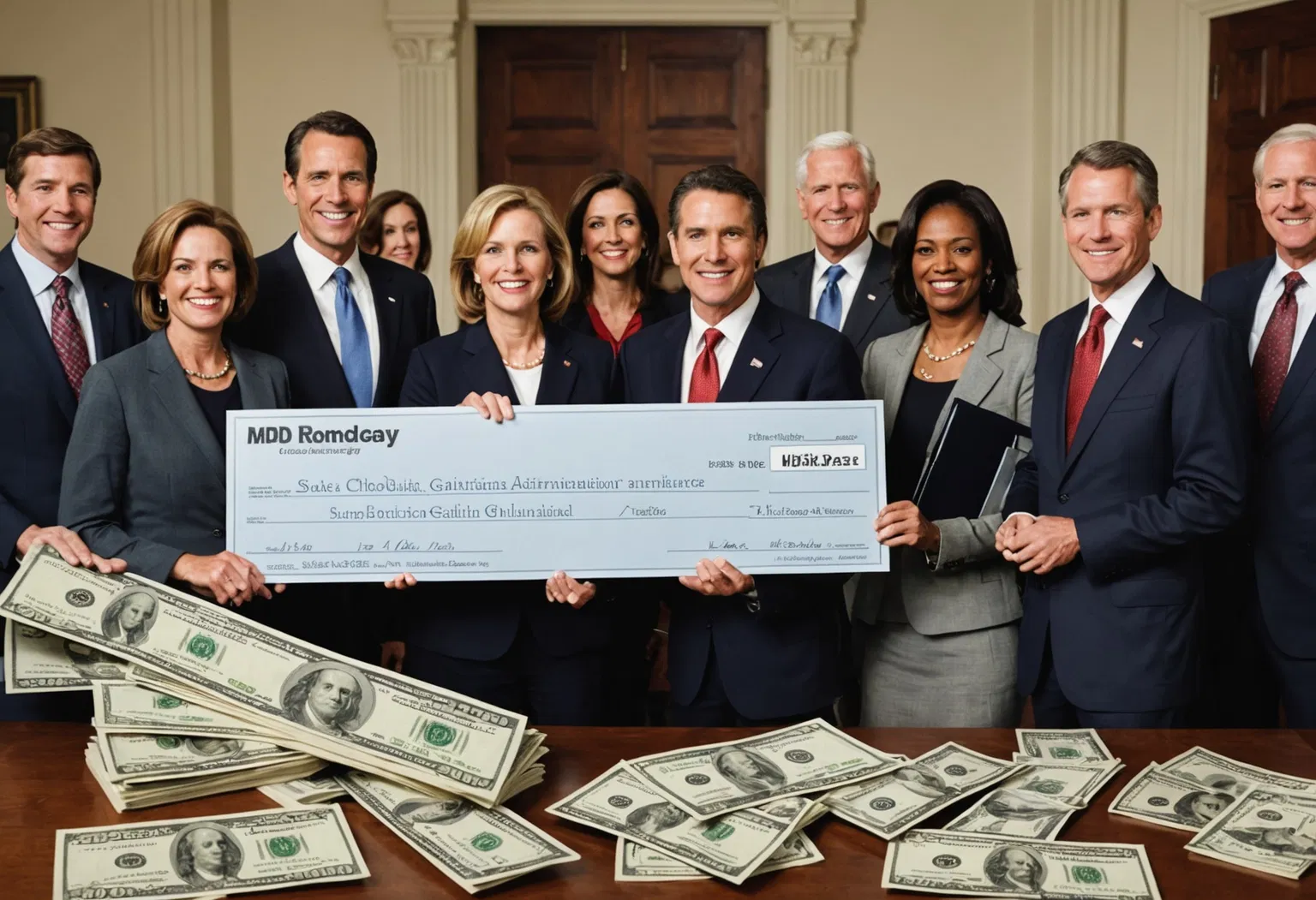
The Trump administration has begun mailing $500 refund checks to nearly one million Americans who purchased health insurance through HealthCare.gov, the federal Affordable Care Act (ACA) marketplace. The payments — first announced by the White House on Sept. 10, 2026 — started going out around Sept. 30 and are being sent automatically to roughly 950,000 people across 30 states. If you are trying to figure out whether one of those checks is headed to your mailbox, the eligibility rules are fairly simple: you had to buy a 2026 marketplace plan without receiving a premium tax credit. Here is a plain-English guide to what the $500 check is, who qualifies, and how the refund actually works.
What the $500 check actually is
To understand this refund, it helps to know how Obamacare plans are priced. The Affordable Care Act created online marketplaces — the biggest being the federally run HealthCare.gov — where people can shop for individual and family health plans. To keep those exchanges running, insurers that sell plans on the marketplace pay a 'user fee' for each policy. Those fees are built into the cost of coverage, which means shoppers ultimately pay for them through their premiums.
The Trump administration says that under the previous administration, Americans were overcharged through these user fees and that a surplus of unspent money was left behind. The $500 checks are the government's way of returning a portion of that overage. According to the White House, the refunds are being paid from unspent user fees collected from insurers — not from general tax revenue.
In everyday terms: if you bought an Obamacare plan at full price and did not receive a subsidy, a slice of what you paid went toward those exchange fees. The $500 check is a partial refund of that amount. Each payment is expected to arrive with a letter signed by President Donald Trump explaining why the check is being sent.
Timeline: From announcement to your mailbox
Here is how the program has unfolded so far:
- Sept. 10, 2026: The White House announces the refunds, saying nearly one million Americans in 30 states will receive $500 per person.
- Sept. 30, 2026: The Treasury Department begins mailing the checks, according to administration officials and news reports.
- Oct. 1–2, 2026: Outlets including CNBC, CNN and ABC News confirm the checks are in the mail, with recipients concentrated in states that use the federal exchange.
- Nov. 3, 2026: The refunds are landing just over a month before the midterm elections, which has drawn extra political attention to the program.
Officials have not said exactly how long it will take every eligible person to receive a check. If you qualify, be prepared to wait several weeks before it shows up in the mail.
Who qualifies: Three tests to check
Eligibility comes down to three conditions, and you need to meet all of them:
1. You live in one of 30 states that use the federal exchange. These are the states where residents buy marketplace coverage through HealthCare.gov rather than a state-run marketplace. The 30 states are Alabama, Alaska, Arizona, Arkansas, Delaware, Florida, Hawaii, Indiana, Iowa, Kansas, Louisiana, Michigan, Mississippi, Missouri, Montana, Nebraska, New Hampshire, North Carolina, North Dakota, Ohio, Oklahoma, South Carolina, South Dakota, Tennessee, Texas, Utah, Virginia, West Virginia, Wisconsin and Wyoming.
2. You bought 2026 coverage through HealthCare.gov. If you enrolled through a state-based exchange — such as California's Covered California or New York's state marketplace — you are not part of this round of refunds.
3. You did not receive a premium tax credit. The vast majority of marketplace enrollees receive a subsidy that lowers their monthly premium. This refund is aimed at the smaller group who paid the full, unsubsidized cost of their plan. Because of that, most recipients have incomes above 400 percent of the federal poverty level — roughly $64,000 for a single person or about $132,000 for a family of four.
How the refund works
The refund is $500 per eligible person, not per household. That means a household with more than one qualifying enrollee could receive more than $500. The checks are sent automatically, so there is no application to complete, no claim form to file, and no deadline to meet — the administration has already identified the eligible recipients from its HealthCare.gov enrollment records.
Because the payments are automatic, consumer-protection agencies and news outlets have cautioned people to be wary of unsolicited calls, texts, or emails that promise to 'speed up' the check in exchange for personal information or a fee. The government will not contact you out of the blue to ask for your bank details, Social Security number, or a payment to release the refund. If someone asks for that, it is almost certainly a scam.
Where things stand now
As of early October 2026, the checks are actively being mailed. Administration officials have said the money is drawn from unspent user fees paid by insurers rather than from new taxpayer funds. The timing — roughly a month before the Nov. 3 midterm elections — has made the program politically notable, and analysts note that many of the checks are landing in competitive battleground states.
The broader context is also worth understanding. The refunds arrive after the expiration of enhanced ACA subsidies that had temporarily lowered premiums for many marketplace shoppers. That means some enrollees are seeing higher monthly costs this year, and the $500 refund is being presented by the administration as partial relief for those who pay full price.
What happens next
If you meet all three eligibility tests, keep an eye on your mailbox over the coming weeks. The check should arrive automatically with a letter from the White House. If you are unsure whether you qualify, the quickest self-check is to review your 2026 plan documents: if you bought coverage through HealthCare.gov and your plan shows no premium tax credit applied, you are likely in the eligible group.
For everyone else — including the roughly 20 states plus the District of Columbia that run their own marketplaces — this particular refund does not apply, and any future rounds would have to be announced separately.
Key takeaways
- The Trump administration is mailing $500 ACA refund checks to about 950,000 people across 30 states.
- The refunds stem from excess exchange user fees that the White House says were overcharged and passed on to consumers through higher premiums.
- To qualify, you must have bought 2026 coverage through HealthCare.gov without receiving a premium tax credit.
- Most recipients earn above 400 percent of the federal poverty level — roughly $64,000 for an individual or $132,000 for a family of four.
- Checks are sent automatically with no application required, and each one arrives with a letter signed by the president.