Nearly everyone will encounter gray hair at some point in their lives, yet the process behind it is far more complex than simply getting older. While the silver strands that appear in your 30s, 40s, or beyond may seem like a straightforward sign of aging, the science of gray hair involves specialized pigment cells, genetic programming, and even the potential for reversal under specific circumstances. Understanding what is actually happening inside your hair follicles can help you separate myth from fact—and know what, if anything, you can do about it.
How Hair Loses Its Color: The Melanin Story
Every strand of hair gets its color from melanin, a pigment produced by specialized cells called melanocytes located inside hair follicles. These cells inject melanin into the growing hair shaft, determining whether hair will be black, brown, blonde, or red. The more melanin present, the darker the hair.
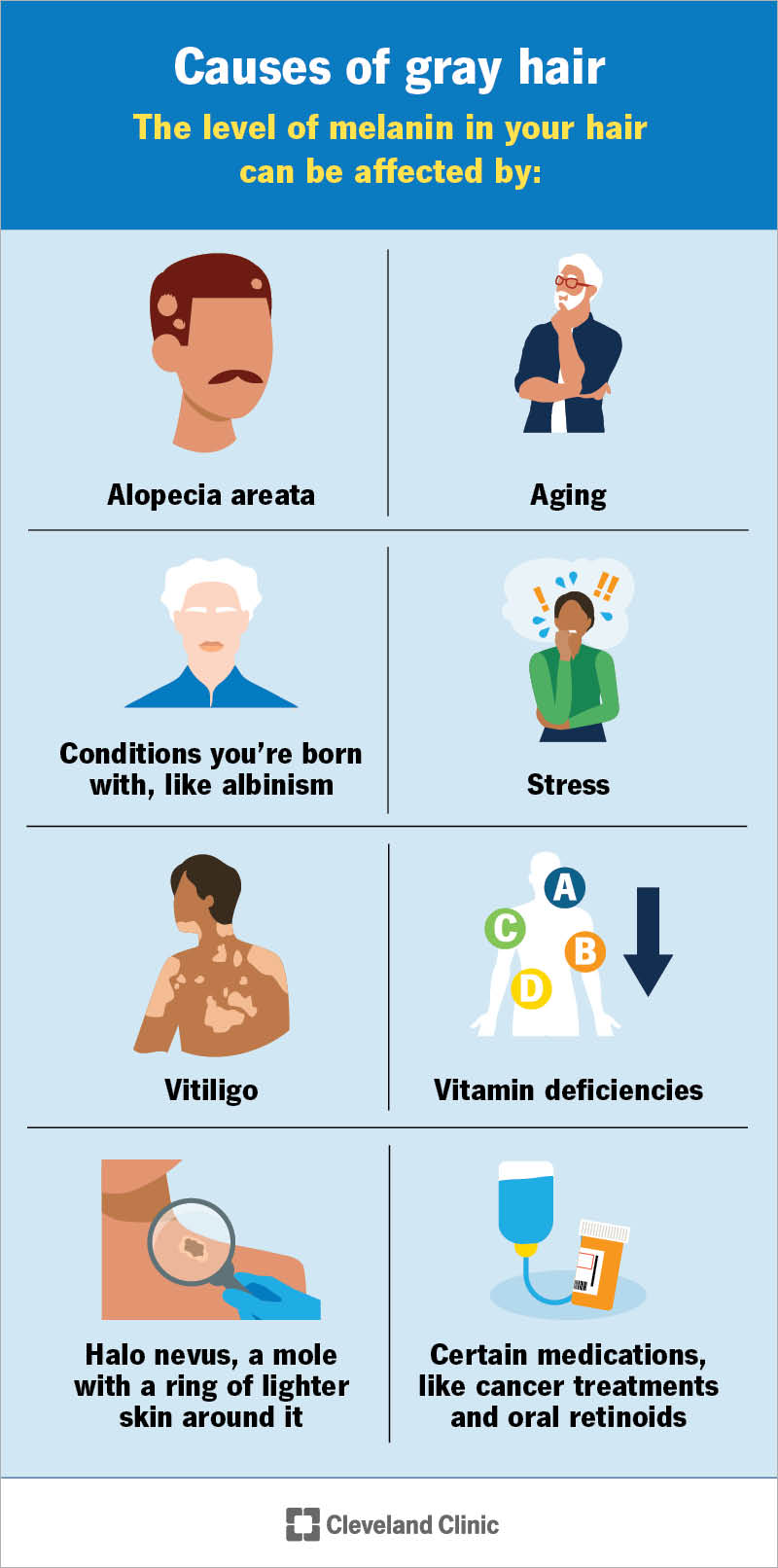
As we age, melanocytes gradually slow down their pigment production. According to the American Academy of Dermatology (AAD), hair turns gray or white when hair follicles stop creating melanin altogether. However, the Harvard Health Blog notes an important distinction: hair does not actually "turn" gray after it grows. Once a hair follicle produces a strand, the color is set. The change happens during the hair growth cycle—new hairs grow in with less pigment, creating the gradual transition to gray over months and years.
This process typically begins after age 35, though the timing varies significantly based on genetics. Cleveland Clinic reports that most people start noticing their first gray hairs in their 30s or 40s, with some achieving a full head of gray hair within a decade and others taking much longer.
Timeline: How Gray Hair Develops Over a Lifetime
The graying process follows a fairly predictable pattern for most people, though individual timelines differ considerably:
- 20s and 30s: The first gray hairs typically emerge. For people with lighter skin tones, graying before age 20 is considered premature; for those with darker skin tones, the threshold is age 30.
- 30s and 40s: Most people begin to see noticeable graying. By age 50, approximately 50% of the population has significant gray hair.
- 50s and beyond: Graying continues and may accelerate. The rate and extent are largely determined by genetics.
In 2023, BBC News reported on a significant discovery by researchers at NYU Grossman School of Medicine: melanocyte stem cells, which mature into pigment-producing cells, can become "stuck" as they age. Instead of moving to their proper position in the hair follicle to produce pigment, these stem cells remain in place and fail to mature. This finding helps explain why graying occurs and opens new possibilities for intervention.
The Bigger Picture: What Genetics, Stress, and Nutrition Mean for Gray Hair
While aging is the primary driver of gray hair, multiple factors influence when and how quickly it happens. Genetics play the dominant role—your DNA essentially programs a timeline for when your melanocytes will begin winding down production. If your parents went gray early, you likely will too.
However, research increasingly points to other significant contributors:
Stress and the Reversal Possibility
For years, the connection between stress and gray hair was considered folklore. Modern science confirms there is truth to it—though not in the way most people imagine. Stress does not turn existing hair gray overnight. Instead, stress can affect the melanocyte stem cells in hair follicles, leading newly growing hairs to emerge without pigment. A landmark 2021 study published in eLife, cited by Cleveland Clinic and AARP, demonstrated that when stress levels decrease, some gray hairs can actually regain their original color—a phenomenon known as stress-related graying reversal.
Nutritional Factors
Vitamin deficiencies can contribute to premature graying. According to the AAD and Cleveland Clinic, vitamin B12 deficiency is one of the most common nutritional causes of early gray hair. Copper and iron deficiencies have also been linked to premature graying in multiple studies. However, dermatologists caution that vitamin deficiency as a cause of gray hair is relatively rare in the general population—addressing these deficiencies helps maintain overall hair health but is unlikely to reverse graying for most people.
Lifestyle Factors
Smoking is consistently associated with earlier graying. Harvard Health notes that smokers are significantly more likely to develop gray hair before age 30 compared to non-smokers. Oxidative stress—damage caused by free radicals—is believed to accelerate the aging of melanocytes.
Breakthrough Research: Luteolin and Gray Hair Prevention
In February 2025, researchers at Nagoya University in Japan announced a significant discovery published in Antioxidants: luteolin, a natural antioxidant found in vegetables such as celery, broccoli, carrots, and olive oil, was shown to prevent hair graying in animal models. The compound works by preserving endothelin expression and protecting melanocyte function, effectively stopping the graying process before it begins. While human trials are still needed, this represents one of the most promising avenues for non-cosmetic gray hair interventions to date.
Where Things Stand Now: Can You Reverse Gray Hair?
The short answer is: it depends on the cause. For age-related graying driven by genetics, there is currently no reliably effective treatment that can restore natural hair color. The AAD, Harvard Health, and Cleveland Clinic all agree that no FDA-approved medical therapy exists to reverse gray hair.
However, there are specific scenarios where reversal or prevention may be possible:
- Stress-related graying: When stress is the primary cause, reducing stress levels may allow some hairs to regain their pigment, though this typically takes months and requires sustained stress reduction.
- Nutritional deficiencies: Correcting underlying vitamin B12, copper, or iron deficiencies can sometimes restore hair color, particularly in cases of premature graying.
- Emerging treatments: Regenerative approaches such as microneedling, laser therapy, and PRP (platelet-rich plasma) injections are being studied for their potential to stimulate melanocyte activity, but evidence remains preliminary.
- Topical antioxidants: Products containing palmitoyl tetrapeptide-20 and other peptides have shown limited promise in clinical settings, though results vary widely.
What Happens Next: The Future of Gray Hair Research
The scientific understanding of gray hair has advanced dramatically in recent years. The discovery of "stuck" melanocyte stem cells by NYU researchers, combined with Nagoya University's findings on luteolin, suggests that pharmaceutical interventions for gray hair may eventually become a reality. Researchers are also exploring how existing drugs might be repurposed to target the pathways involved in melanocyte aging.
According to the 2025 review article published in PMC titled "Gray Hair: From Preventive to Treatment," the field is moving toward topical treatments that stimulate melanin production, antioxidants that combat oxidative stress in hair follicles, and targeted therapies that address the stem cell mechanisms underlying graying.
The Bottom Line: Key Points to Remember
- Gray hair is caused by decreasing melanin production in hair follicles, primarily driven by genetics and aging.
- Stress can contribute to graying, but the effect is gradual—and potentially reversible when stress is reduced.
- Smoking and vitamin deficiencies (especially B12, copper, and iron) are linked to premature graying.
- No FDA-approved medical treatments currently exist to reverse age-related gray hair.
- Emerging research on luteolin and melanocyte stem cells offers hope for future prevention and reversal options.
- For now, hair dye remains the most reliable way to cover gray hair, though embracing the silver can be equally empowering.