
The CrossFit Open 26.2 workout has taken the fitness world by storm following its recent announcement, presenting athletes with a grueling 15-minute test of grip endurance, shoulder stability, and gymnastic proficiency. As the second workout of the 2026 CrossFit Open season, 26.2 follows the classic three-round format that progressively increases in difficulty, challenging even the most seasoned competitors with its combination of overhead dumbbell lunges, alternating snatches, and a pull-up progression that culminates in ring muscle-ups.

How the 26.2 Workout Unfolds: Breaking Down the Movements
The 26.2 workout follows a precise three-round structure where only the gymnastics movement changes each round. Athletes begin with 80 feet of dumbbell overhead walking lunges, immediately followed by 20 alternating dumbbell snatches and 20 pull-ups. The second round repeats the lunges and snatches but upgrades to 20 chest-to-bar pull-ups, while the final round maintains the same lunges and snatches before finishing with 20 ring muscle-ups. The entire workout operates under a strict 15-minute time cap, with women using a 35-pound (15kg) dumbbell and men using a 50-pound (22.5kg) dumbbell.
According to analysis from The Progrm, this workout represents a classic Open progression where the difficulty increases exactly when athletes are most fatigued. The overhead lunges demand strong shoulder stability and core control, while the dumbbell snatches test power and coordination. The gymnastic progression from pull-ups to chest-to-bar to ring muscle-ups creates what experts describe as a "grip endurance test" that separates those who manage their fatigue effectively from those who burn out early.
Timeline: How the 26.2 Announcement Developed
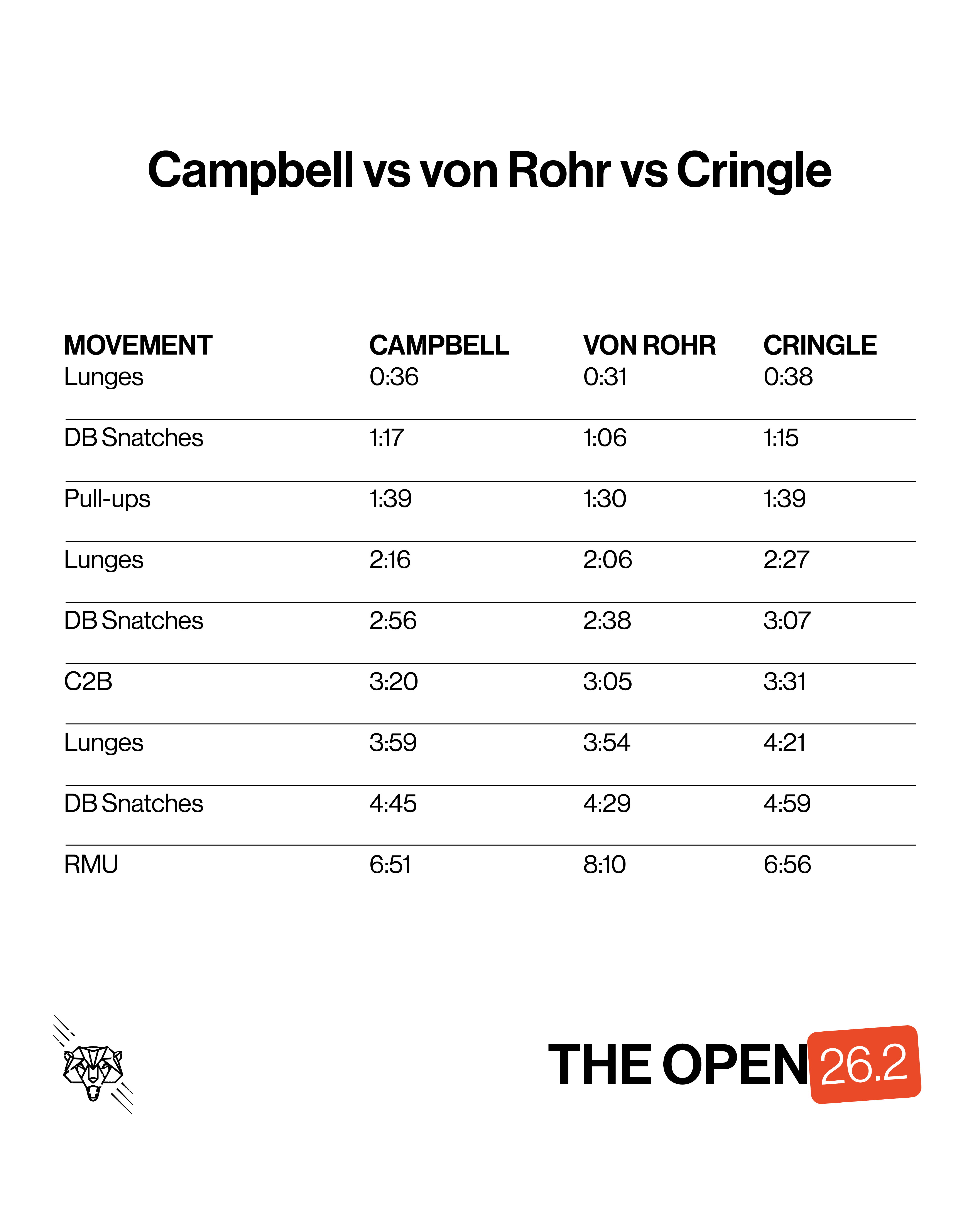
The 26.2 workout was officially revealed on March 5, 2026, during a live announcement at CrossFit Black Edition in Cascais, Portugal. The event featured three of Europe's top female athletes—Lucy Campbell, Mirjam von Rohr, and Aimee Cringle—competing head-to-head in the workout immediately following its announcement. Athletes worldwide had from March 5 to March 9 to submit their scores through the CrossFit Games website, with the submission window closing at 5 p.m. PT on March 9.
Why 26.2 Matters: Expert Analysis and Strategic Implications
Week two of the CrossFit Open traditionally serves as a separating event where the leaderboard begins to take shape, and 26.2 follows this pattern perfectly. As noted by coaches at The Progrm, "This is where strategy overtakes capacity." The workout's design forces athletes to make critical pacing decisions early, particularly regarding how they break up their gymnastics sets to preserve grip strength for the ring muscle-ups in the final round.
VELITES Sport's analysis, featuring insights from athletes Calum Clements and Tiago Luzes, emphasizes the importance of starting conservatively. "If you do the pull-ups and chest-to-bar pull-ups too fast you will blow up on the Ring Muscle-Ups," advises Luzes. Clements recommends using gymnastics grips for the pulling movements and suggests breaking the gymnastic sets into manageable chunks—ideally sets of 5 or 10 repetitions—to ensure athletes reach the ring muscle-ups with sufficient energy.
The overhead walking lunges present their own unique challenge, as athletes must maintain the dumbbell overhead for 80 feet each round while alternating arms. This continuous overhead demand fatigues the shoulders precisely when athletes need them fresh for the ring muscle-ups, creating a strategic dilemma about when to switch arms and how to maintain breathing control during the lunges.
Where Things Stand Now: Early Results and Leaderboard Insights
Following the live announcement, early leaderboard results revealed impressive performances from top athletes. Lucy Campbell set the pace with a winning time of 6:50, followed closely by Aimee Cringle at 6:57 and Mirjam von Rohr at 8:08 in the women's division. On the men's side, Chen Sheng led with a time of 6:57, just one second ahead of Esteban Ospina at 6:58. These fast times indicate that elite athletes approached the workout with aggressive pacing but smart set management.
For everyday CrossFit athletes, the consensus among experts is that breaking the gymnastics early proves crucial. The Progrm's strategy guide suggests that most athletes should break pull-ups into two sets (12-8) and chest-to-bar pull-ups into three sets (8-7-5) if ring muscle-ups under fatigue aren't a strong suit. The dumbbell snatches should also be broken approximately halfway (12-8) for those concerned about grip endurance.
What Happens Next: The Road Ahead for Open Athletes
With 26.2 submissions closed, athletes now look ahead to 26.3, the final workout of the 2026 CrossFit Open. Historical patterns suggest the third workout often introduces new elements or higher skill movements, potentially including double-unders, heavier loading, or more complex gymnastic combinations. The leaderboard separation created by 26.2 will become more pronounced as athletes face 26.3, determining who advances to the Quarterfinals stage of the competition.
For those who struggled with 26.2, coaches recommend focusing on grip endurance training, overhead stability work, and ring muscle-up proficiency in the off-season. The workout exposes specific weaknesses that athletes can address systematically: dumbbell overhead walking lunge endurance, unilateral power development for snatches, and gymnastic efficiency under fatigue.
The Bottom Line: Key Points to Remember
CrossFit Open 26.2 represents a masterfully designed test that balances multiple fitness domains while progressively increasing difficulty. The 15-minute time cap creates urgency without forcing reckless pacing, while the weight selections (35lb for women, 50lb for men) provide an appropriate challenge across ability levels. Successful execution requires strategic set management, particularly on the gymnastics movements, and conscious breathing control during the lunges. As with all Open workouts, 26.2 serves not only as a competition but as a diagnostic tool that reveals where athletes need to focus their training for future improvement.