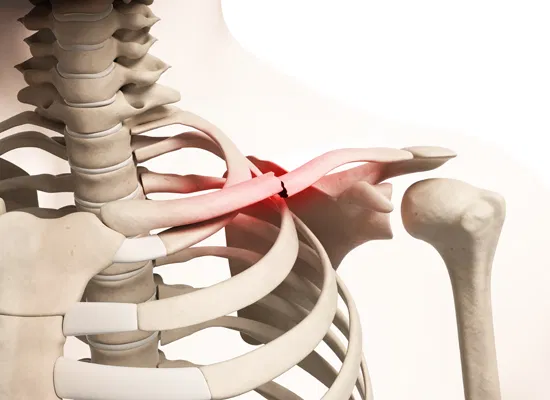
The word "clavicular" refers to the clavicle — the long, slender bone most people know as the collarbone. A clavicular fracture, or break in this bone, is one of the most common bone injuries there is, accounting for roughly 5% of all adult fractures. Because the collarbone sits close to the surface of the skin and acts as the main bridge connecting your arm to the rest of your body, it is especially vulnerable to falls, collisions, and sports mishaps.
Most broken collarbones heal well with simple, conservative care such as wearing a sling, but a small percentage require surgery when the broken ends shift too far out of place. Understanding how this bone works, what a fracture feels like, and how healing unfolds can help you respond quickly to an injury and know what to expect during recovery.
What the Clavicle Does and Why It Breaks So Easily
The clavicle is located between the sternum (breastbone) and the scapula (shoulder blade), and it is the only bone that connects the arm to the torso. It lies just above several important nerves and blood vessels, which is one reason an injury here is taken seriously.
How Long Does a Broken Collarbone Take to Heal?
Recovery time depends on your age and the type of fracture. On average, healing takes:
- 8 to 12 weeks for adults
- 6 to 8 weeks for adolescents
- 3 to 6 weeks for children under 8
- About 2 weeks for a baby
Most people return to their regular activities within three months, but it's important to follow your provider's guidance. Returning to lifting or sports too early can cause the bone fragments to shift or the hardware to break, potentially restarting treatment from the beginning.
Do's and Don'ts While Your Collarbone Heals
If you're recovering from a clavicle fracture, these guidelines can help protect the healing bone.
Do:
- Apply ice to your shoulder for 20 minutes a few times a day to ease pain and swelling
- Wear your sling or immobilizer day and night, removing it only to bathe
- Move your shoulder, arm, and hand gently each day as instructed
- Attend all follow-up appointments so your provider can confirm the bone is healing properly
Don't:
- Mix pain medications unless your provider tells you to
- Take more than the recommended dose of medication
- Drive while you still need a sling or immobilizer
- Use your arm to lift, push, or pull until your provider says it's safe
Complications to Watch For
Most clavicular fractures heal completely, but problems can arise. If the bone fails to heal, it's called a nonunion; if it heals in the wrong position, it's a malunion. Both are uncommon and usually only require surgery if they cause significant pain or limit arm movement. A permanent bump often remains at the fracture site even after successful healing.
For surgical patients, additional risks include infection, numbness below the clavicle, and irritation from the hardware — which is why some people have their plates and screws removed after healing.
When to See a Doctor
A broken collarbone is a serious injury that warrants prompt medical attention. Seek emergency care if you suspect a fracture, and contact a provider during recovery if you notice new or worsening pain, numbness or tingling, shortness of breath, or feelings of faintness.
The Bottom Line: What to Remember About Clavicular Fractures
- A clavicular fracture is a break in the collarbone, the bone that connects the arm to the body.
- It accounts for about 5% of all adult fractures and is usually caused by a fall onto the shoulder or an outstretched arm.
- Key symptoms include shoulder pain, a drooping shoulder, a visible bump, and difficulty lifting the arm.
- Most heal with a sling and rest in 8 to 12 weeks; surgery is reserved for displaced or complicated fractures.
- Follow your doctor's recovery plan to avoid nonunion, malunion, or re-injury.