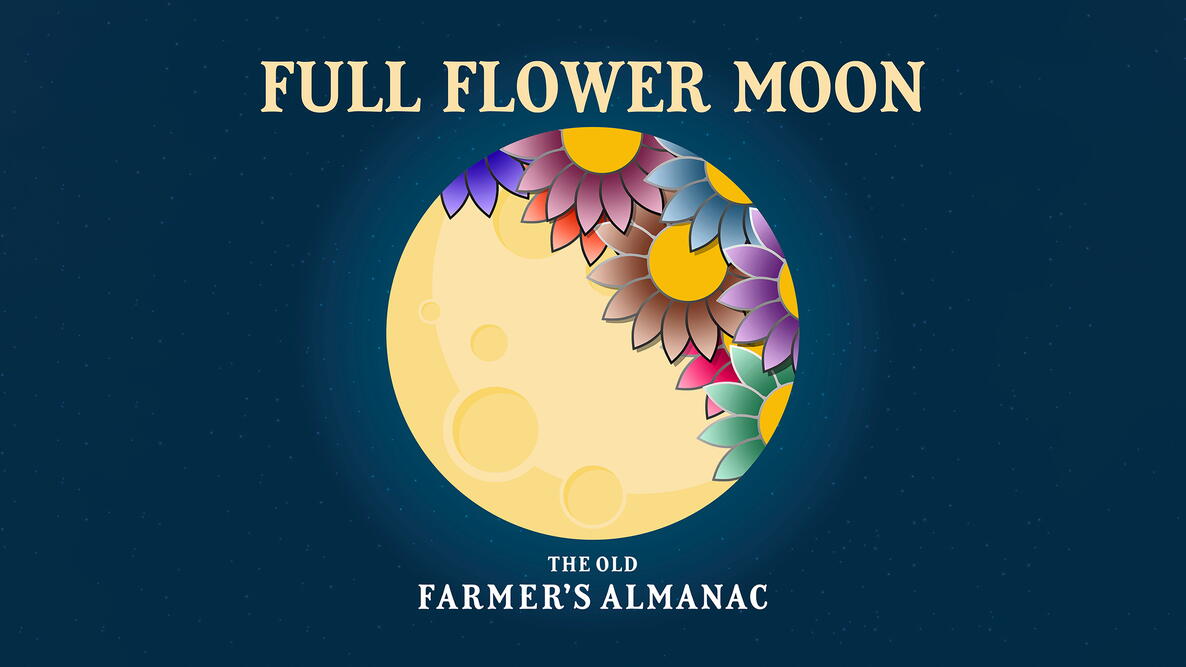
Every month, skywatchers around the world look up to witness one of nature's most stunning celestial events: the full moon. But what exactly causes this luminous spectacle, and why does May's full moon carry the poetic name of the "Flower Moon"? Whether you're a casual stargazer or someone curious about lunar lore, understanding the full moon offers a fascinating glimpse into the mechanics of our solar system and the cultural traditions that have tracked the night sky for millennia.
The Science Behind a Full Moon: How Lunar Phases Work
A full moon occurs when the Earth is positioned directly between the Sun and the Moon, with the Sun's light fully illuminating the entire face of the Moon that we see from Earth. As NASA explains, the Moon does not produce its own light. What we call "moonlight" is actually sunlight reflecting off the Moon's surface. When we have a full view of the completely illuminated side of the Moon, that phase is known as a full moon.
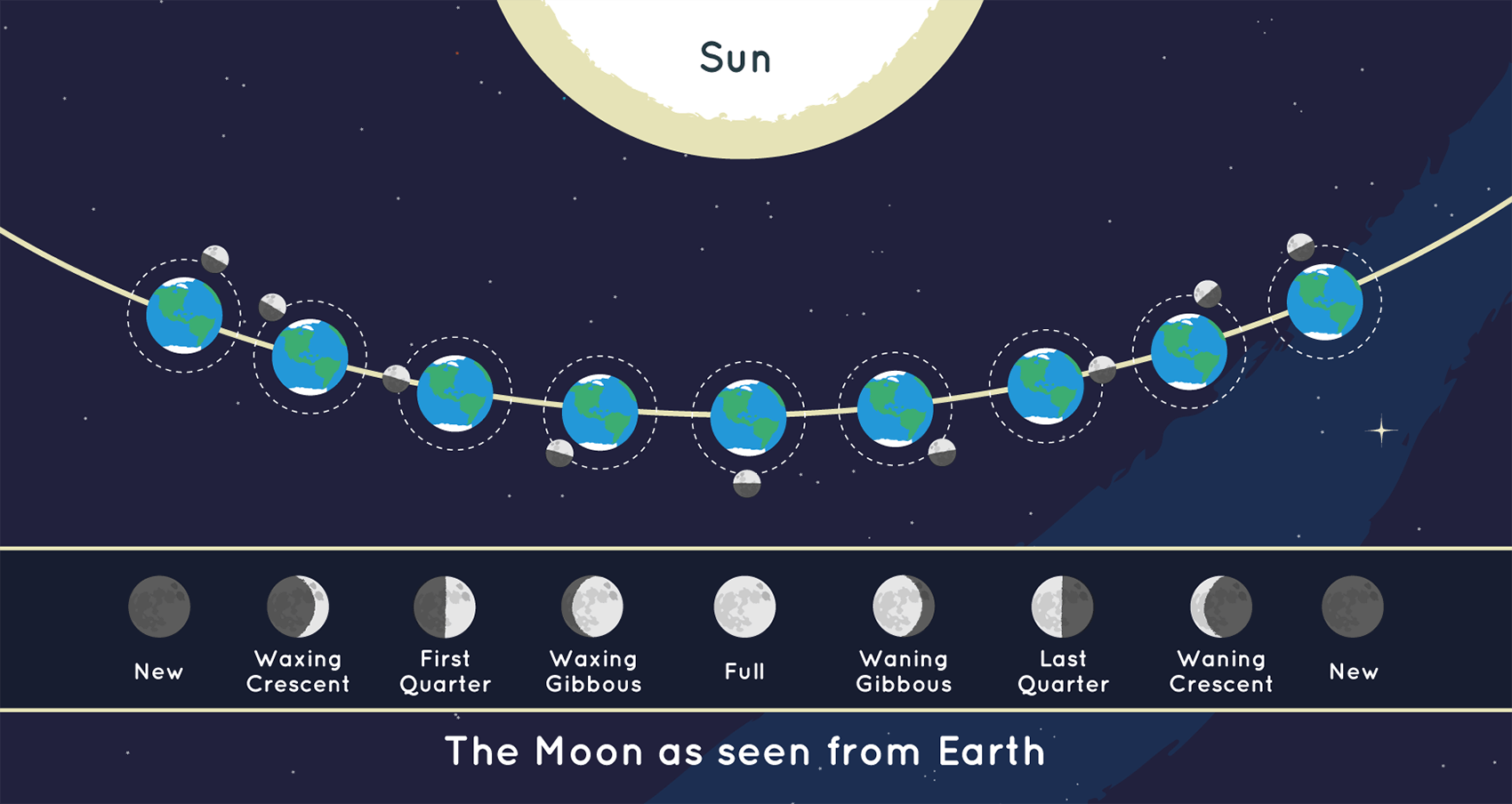
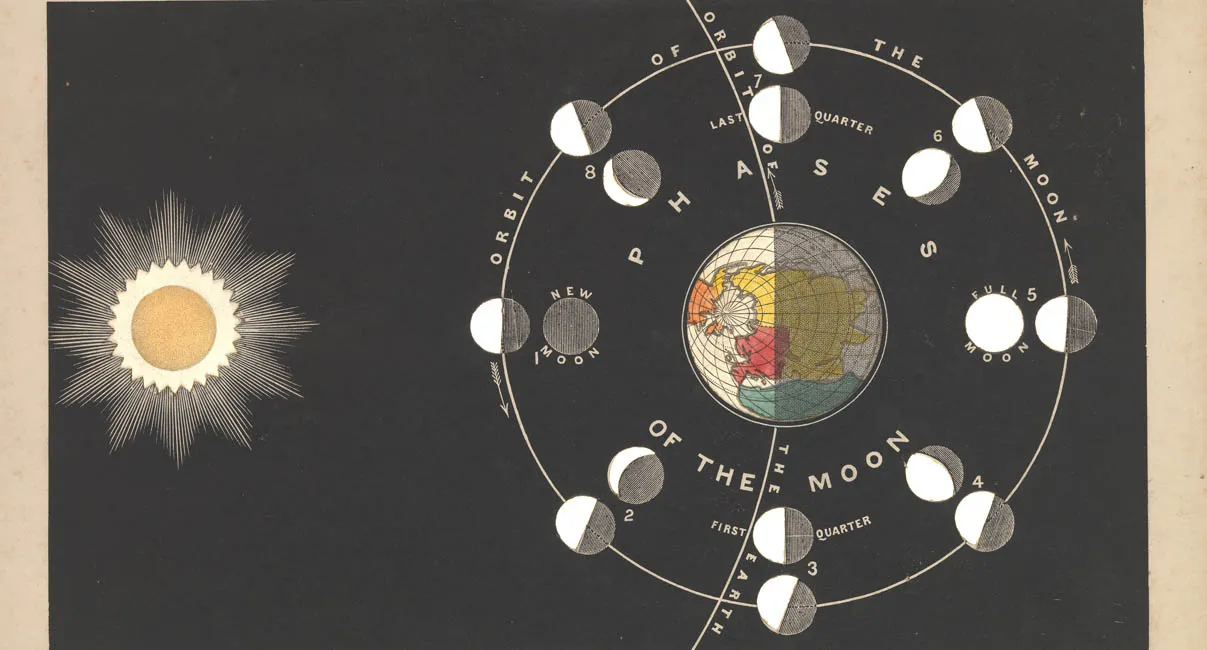
The Moon's appearance changes throughout the month because of its orbit around Earth. As the Moon travels along its elliptical path, the angle between the Moon, Earth, and Sun shifts, changing the portion of the Moon's sunlit side that we can see. The Royal Observatory Greenwich notes that the phases of the Moon are caused by the relative positions of the Moon, Sun, and Earth. Because the Moon produces no visible light of its own, we can only see the parts of the Moon that are lit up by the Sun.
The 8 Phases of the Lunar Cycle: A Complete Timeline
The Moon completes a full cycle of phases every 29.5 days, which is known as a lunar month. This is slightly longer than the 27.3 days it takes the Moon to actually orbit Earth. The word "month" itself takes its root from the Moon — a month was originally defined as roughly equal to the 29.5-day cycle of lunar phases.
The eight phases of the Moon in order are:
- New Moon — The Moon is between Earth and the Sun, so the side facing Earth is in darkness.
- Waxing Crescent — A thin sliver of the Moon becomes visible as it moves away from the Sun's position.
- First Quarter — Half of the Moon's face is illuminated, resembling a D-shape.
- Waxing Gibbous — More than half of the Moon is lit, growing toward fullness.
- Full Moon — The entire face of the Moon is illuminated by the Sun.
- Waning Gibbous — The illuminated portion begins to shrink.
- Third Quarter — Again, half of the Moon is visible, but on the opposite side from the first quarter.
- Waning Crescent — A thin crescent remains before returning to the new Moon phase.
The crescent and gibbous phases each last approximately one week, making the transition between new and full moon a gradual, beautiful transformation over about two weeks.
Why May's Full Moon Is Called the Flower Moon
Long before modern calendars, Native American tribes, Colonial Americans, and European farmers tracked the seasons by naming each full moon. These names reflected natural events — the behavior of animals, the growth of plants, or the weather patterns of each month. The Full Moon names used by The Old Farmer's Almanac come from many sources, including Native American, Colonial American, and European traditions.
May's full moon is called the Flower Moon — a name that should come as no surprise. Flowers spring forth across North America in abundance during this month. According to The Old Farmer's Almanac, the name "Flower Moon" has been attributed to Algonquin peoples, as confirmed by Christina Ruddy of The Algonquin Way Cultural Centre in Pikwakanagan, Ontario.
May's moon was also called the "Month of Flowers" by Jonathan Carver in his 1798 publication Travels Through the Interior Parts of North America, as a likely Dakota name. The famous naturalist Henry David Thoreau also referenced the Flower Moon in his writings about Native Americans.
Other traditional names for May's full moon include:
- Budding Moon and Leaf Budding Moon (Cree) — celebrating the awakening of local flora
- Planting Moon (Dakota, Lakota) — marking the time to start seeds for the farming season
- Egg Laying Moon and Frog Moon (Cree) — highlighting the activities of animals in spring
- Milk Moon (Anglo-Saxon) — referring to the increased milk production from cows grazing on spring grass
- Moon of the Shedding Ponies (Oglala) — indicating warmer weather ahead
Full Moon Names Through the Year: A Seasonal Calendar
Native American and Colonial traditions assigned names to each month's full moon, creating a natural calendar that tracked the seasons. Here are the most commonly used names throughout the year:
- January: Wolf Moon — after the howling of hungry wolves in midwinter
- February: Snow Moon — for the typically cold, snowy weather
- March: Worm Moon — after worm trails appearing in newly thawed ground
- April: Pink Moon — named after early blooming wildflowers
- May: Flower Moon — for the abundant spring blooming
- June: Strawberry Moon — marking the strawberry harvest
- July: Buck Moon — when male deer begin regrowing antlers
- August: Sturgeon Moon — when sturgeon fish appeared in number
- September: Corn Moon (or Harvest Moon) — when crops are gathered
- October: Hunter's Moon — the preferred month for hunting summer-fattened deer
- November: Beaver Moon — for beaver trapping or dam building
- December: Cold Moon — marking the coming of winter
The Flower Moon's Special Place in 2026
The May 2026 full moon holds a particularly special place in the lunar calendar. The first full moon, the Flower Moon, reaches peak illumination at 1:23 PM EDT on Friday, May 1 — fittingly arriving on May Day. But May 2026 features not one, but two full moons. The second full moon, which peaks on Sunday, May 31 at 4:45 AM EDT, is classified as a Blue Moon (the term used when two full moons occur in a single calendar month).
Interestingly, the May 31 full moon is also a Micromoon. This occurs because the full moon happens just before reaching apogee — the point when the Moon is farthest from Earth in its elliptical orbit. A micromoon is the opposite of a supermoon, appearing slightly smaller and dimmer than usual, though the difference is too subtle to notice with the naked eye.
How Full Moons Affect Earth and Why They Matter
Beyond their beauty, full moons have tangible effects on our planet. During a full moon (and new moon), the Sun and Moon are aligned with Earth, and their gravitational forces combine to create especially high "spring tides." This gravitational pull affects ocean tides more dramatically than at other times of the month.
The full moon has also influenced human culture for thousands of years — from ancient calendars and agricultural planting schedules to folklore and mythology. As the Royal Observatory Greenwich notes, the Moon's phases and the months of the year are inextricably linked. The full moon remains a powerful symbol in art, literature, and spiritual practices across virtually every culture on Earth.
What to Expect: The Science of Viewing a Full Moon
A full moon rises at sunset and sets at sunrise, meaning it's visible throughout the entire night — one of the reasons it has captivated humans for millennia. It appears opposite the Sun in the sky, fully illuminated and at its brightest. For the best viewing experience, find a location with an unobstructed view of the eastern horizon as the sun sets, or simply look up after dark on any clear night around the full moon date.
The Moon appears especially large and dramatic when it is near the horizon — an optical effect known as the "Moon illusion" that makes the moon seem larger than when it's high in the sky. This is not a physical change but a trick of human perception.
The Bottom Line: Key Points to Remember
- A full moon happens when Earth sits between the Sun and Moon, with the Moon's entire face illuminated
- The Moon goes through eight phases over a 29.5-day cycle
- The Flower Moon is May's full moon, named by Algonquin peoples for the abundance of spring flowers
- Traditional full moon names served as a seasonal calendar for Native American and Colonial communities
- The May 2026 Flower Moon peaks on May 1, with a rare Blue Moon micromoon following on May 31
- Full moons affect ocean tides and have deeply influenced human culture, language, and calendars for millennia