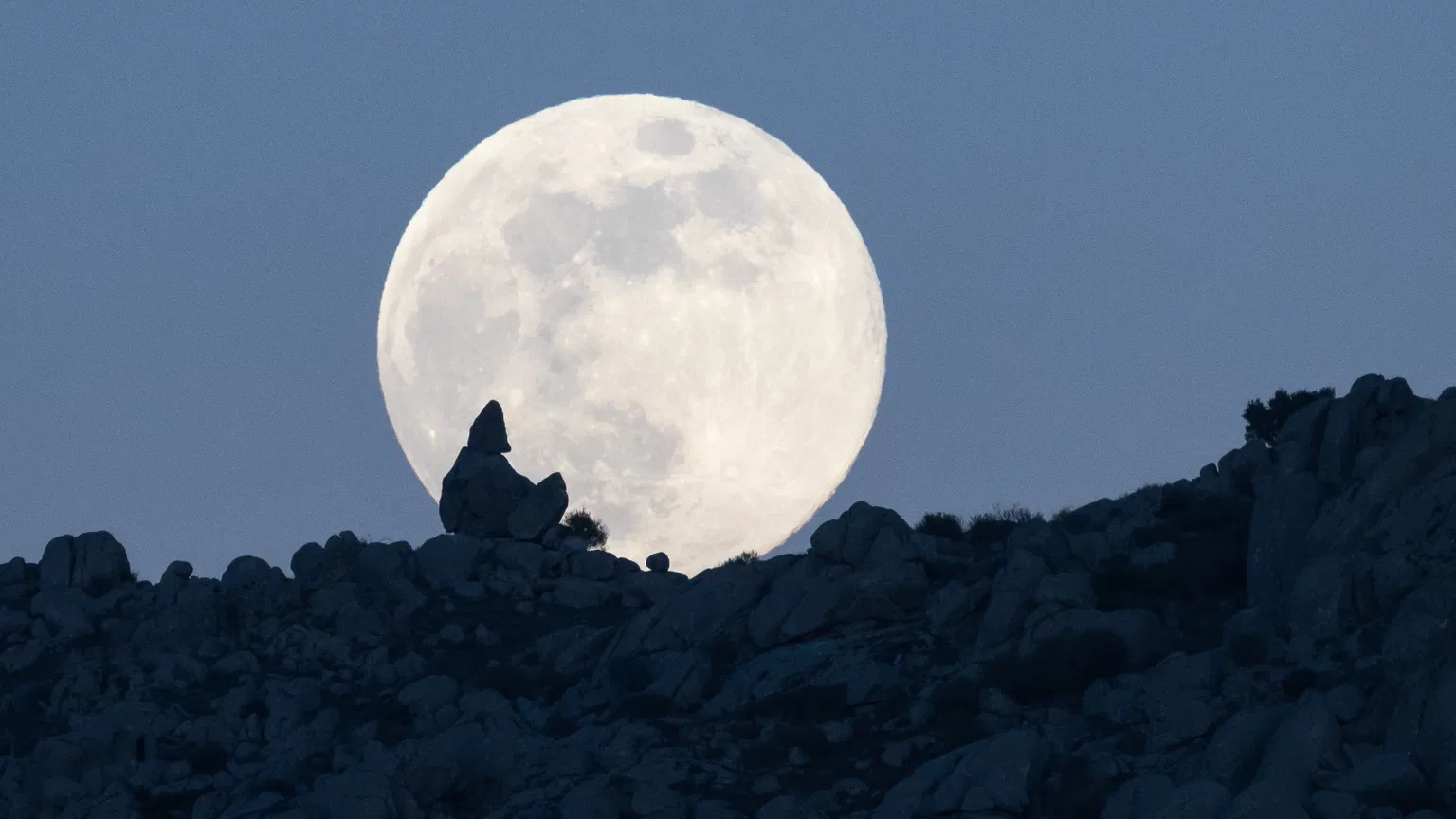
The first full moon of 2026 is not just any lunar event—it's the Wolf Moon, a celestial spectacle that combines ancient folklore with modern astronomy. On January 3, 2026, at 5:03 a.m. EST, the moon will reach peak illumination as both a traditional Wolf Moon and a supermoon, appearing larger and brighter than usual while sharing the sky with brilliant Jupiter. This convergence of natural phenomena offers a perfect opportunity to understand how full moons work, why they have names, and what makes this particular moon so special.
The Howling History: Why January's Full Moon is Called the Wolf Moon
The name "Wolf Moon" has roots that stretch back centuries across multiple cultures. According to The Old Farmer's Almanac, the term comes from Native American, Colonial American, and European traditions where wolves were more frequently heard howling during the deep winter months. Contrary to popular belief, this howling wasn't necessarily about hunger—wolves use vocalizations to locate pack members, reinforce social bonds, define territory, and coordinate hunting during the sparse winter landscape.
Different cultures have their own names for January's full moon that reflect the season's harshness. The Assiniboine people of the Northern Great Plains call it the Center Moon, marking the middle of the cold season. Other indigenous names include Cold Moon (Cree), Frost Exploding Moon (Cree), Freeze Up Moon (Algonquin), and Severe Moon (Dakota). The Dakota also used Hard Moon to describe the crust that forms on fallen snow. European settlers brought their own traditions, with Anglo-Saxons calling it the Moon After Yule, referencing the pre-Christian winter solstice festival.
As Royal Museums Greenwich explains, these moon names served as a lunar calendar for agricultural and hunting societies. Each full moon marked a specific time in the seasonal cycle, helping communities track when to plant, harvest, hunt, or prepare for winter. The Wolf Moon signaled the deepest part of winter, when food was scarce and survival depended on careful planning and community cooperation.
When to Watch: Catching the 2026 Wolf Moon and Supermoon Spectacle
The 2026 Wolf Moon reaches its peak illumination at 5:03 a.m. EST (1003 UTC) on Saturday, January 3. However, as Space.com notes, the moon will appear full to casual observers on both January 2 and 3. For the best viewing experience, look toward the eastern horizon at dusk on January 2 to watch the Wolf Moon rise shortly before sunset. On January 3, the moon will rise in a darker sky shortly after sunset, potentially appearing with an orange-yellow hue due to atmospheric scattering.
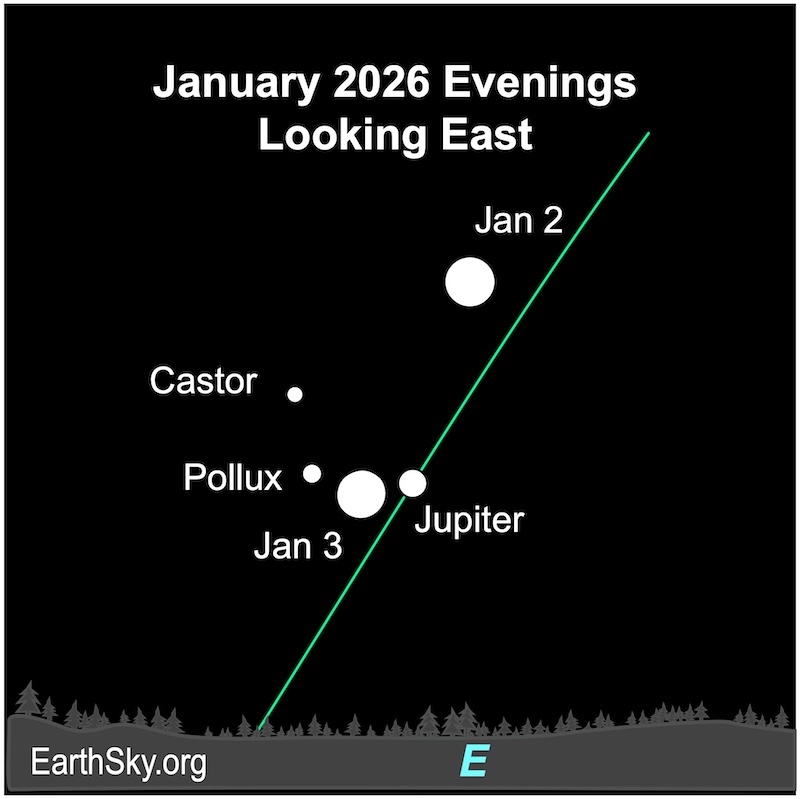
EarthSky provides specific timing for different time zones: 4:03 a.m. CST for central North America, 10:03 a.m. GMT in London, 7:03 p.m. JST in Tokyo, 6:03 p.m. CST in Beijing, and 9:03 p.m. AEDT in Sydney. The moon will be highest in the sky around midnight local time and will set in the west near sunrise. A special bonus for skywatchers: bright Jupiter will shine less than 4 degrees to the right of the lunar disk on January 3—about the width of three middle fingers held at arm's length.
This Wolf Moon also coincides with Earth's closest approach to the sun (perihelion) on January 3 at 17 UTC, creating what EarthSky calls a "cool cosmic coincidence." While the alignment won't create dramatic effects, it represents a rare triple event where the Earth, moon, and sun are all unusually close and aligned as the new year begins.
Supermoon Science: What Makes the Wolf Moon Bigger and Brighter
January's Wolf Moon qualifies as a supermoon because it occurs near lunar perigee—the moon's closest point to Earth in its elliptical orbit. EarthSky explains that lunar perigee for January 2026 occurs at 22 UTC on January 1, about 36 hours before full moon peak. At this point, the moon will be 225,130 miles (362,312 kilometers) from Earth, compared to the average distance of 240,000 miles (390,000 km).

This proximity creates measurable differences in appearance. A supermoon can appear up to 14% wider than a micromoon (the year's most distant full moon) and shine 30% brighter. Compared to an average full moon, a supermoon exceeds the disk size by up to 8% and brightness by about 16%. While experienced observers might detect the size difference, most people will notice the increased brightness more readily.
The "moon illusion" will further enhance the viewing experience. When the Wolf Moon sits near the horizon, it appears larger to human perception—a psychological effect rather than an optical one. This occurs because our brains compare the moon to familiar terrestrial objects like trees and buildings, making it seem magnified. Combined with the actual increased size of a supermoon, this creates a truly impressive visual display.
Understanding Moon Phases: The Astronomy Behind Full Moons
To fully appreciate the Wolf Moon, it helps to understand how moon phases work. As Royal Museums Greenwich explains, the moon produces no visible light of its own—we only see the portions illuminated by the sun. A full moon occurs when Earth sits between the sun and moon, with the moon's entire Earth-facing side receiving sunlight.
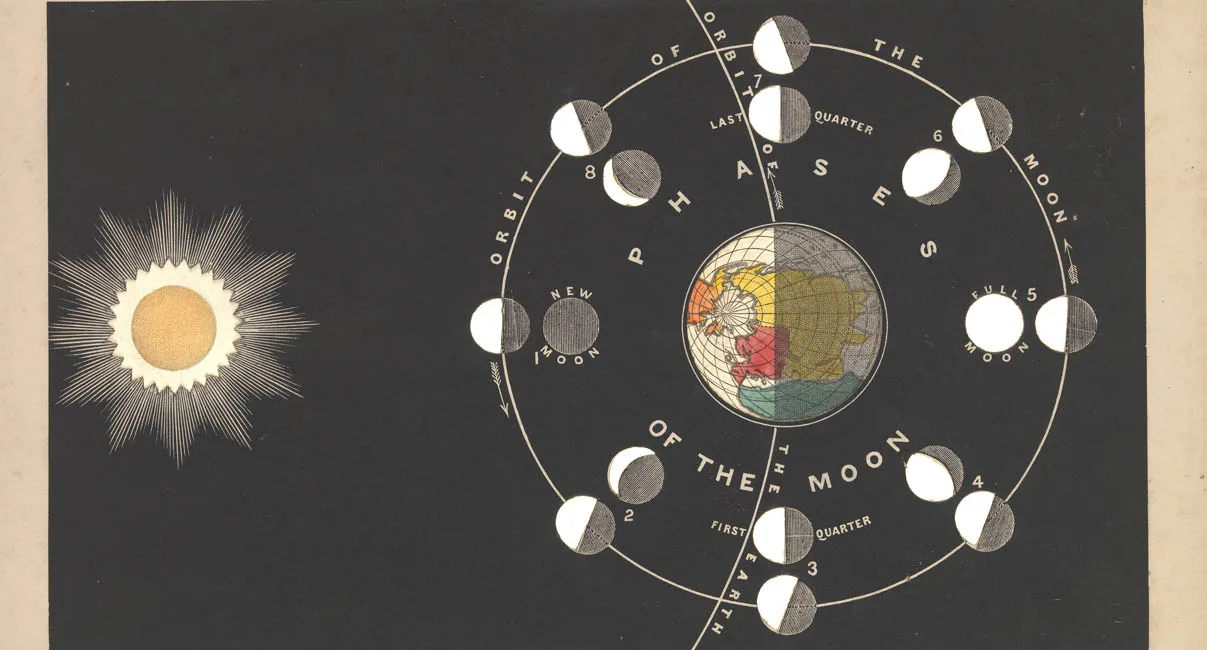
The moon completes its phase cycle every 29.5 days—the origin of the word "month" in many languages. This period, called a synodic month, includes eight distinct phases: new moon, waxing crescent, first quarter, waxing gibbous, full moon, waning gibbous, last quarter, and waning crescent. The full moon represents the midpoint of this cycle, when the moon is opposite the sun in Earth's sky.
Interestingly, as EarthSky notes, the January full moon follows the same high arc across the sky that the June sun follows. In the Northern Hemisphere, this means the Wolf Moon rides particularly high in the sky, spending more time above the horizon than full moons in other seasons. This high path results from the moon's position relative to the December solstice, making early January full moons the highest-rising of the year.
Skywatching Guide: How to See the Wolf Moon Near Jupiter
Viewing the 2026 Wolf Moon requires no special equipment—just your eyes and a clear view of the eastern horizon at dusk. Space.com recommends finding a location with minimal light pollution for the best experience. While the bright moonlight will wash out fainter stars, Jupiter's brilliance will cut through the glow, creating a beautiful pairing with the lunar disk.
For photography enthusiasts, the Wolf Moon presents excellent opportunities. Try using a tripod and longer exposure settings to capture the moon's details and surrounding landscape. The moon will appear particularly photogenic as it rises through atmospheric layers that can create colorful distortions and halo effects.
If you miss the exact peak time, don't worry—the moon will appear nearly full on the nights before and after January 3. In fact, many casual observers won't notice the difference between a 98% illuminated moon and a true full moon. This gives multiple opportunities to witness the spectacle throughout the weekend.
Beyond 2026: When the Next Wolf Moons Will Illuminate the Night
While the 2026 Wolf Moon is particularly special due to its supermoon status and Jupiter proximity, Wolf Moons occur every January. Time and Date provides future dates: January 22, 2027 at 7:17 a.m. EST, and January 11, 2028 at 12:03 a.m. EST. These dates shift each year because the lunar calendar doesn't align perfectly with our solar calendar.
The next Wolf Moon supermoon after 2026 won't occur until January 21, 2029, when lunar perigee again aligns closely with January's full moon. However, 2026 offers a particularly favorable viewing situation with the moon rising early in the evening and reaching impressive heights in the night sky.
For those interested in other named full moons, 2026 features several notable events: the Snow Moon on February 1, the Worm Moon on March 3, the Pink Moon on April 2, and the Flower Moon on May 1. Each carries its own cultural significance and viewing characteristics, creating a year-round celestial calendar to explore.
Key Takeaways: Everything You Need to Know About the Wolf Moon
The Wolf Moon represents more than just a beautiful night sky event—it's a connection to ancient timekeeping traditions, a demonstration of astronomical mechanics, and an accessible entry point into skywatching. Remember these key points:
- Origins: The name comes from wolves' increased winter howling, with roots in Native American, European, and Colonial American traditions
- Timing: In 2026, peak illumination occurs at 5:03 a.m. EST on January 3, with excellent viewing on both January 2 and 3
- Special Features: This Wolf Moon is a supermoon (appearing larger and brighter) and will shine near Jupiter
- Viewing Tips: Look east at dusk, find dark skies, and watch for the moon illusion near the horizon
- Science: Full moons occur when Earth is between the sun and moon, with the cycle repeating every 29.5 days
Whether you're an experienced astronomer or simply someone who appreciates natural beauty, the Wolf Moon offers a chance to look up and connect with centuries of human observation and wonder. As the first full moon of 2026, it sets the tone for a year of celestial discoveries and reminds us of the reliable rhythms that govern our night sky.