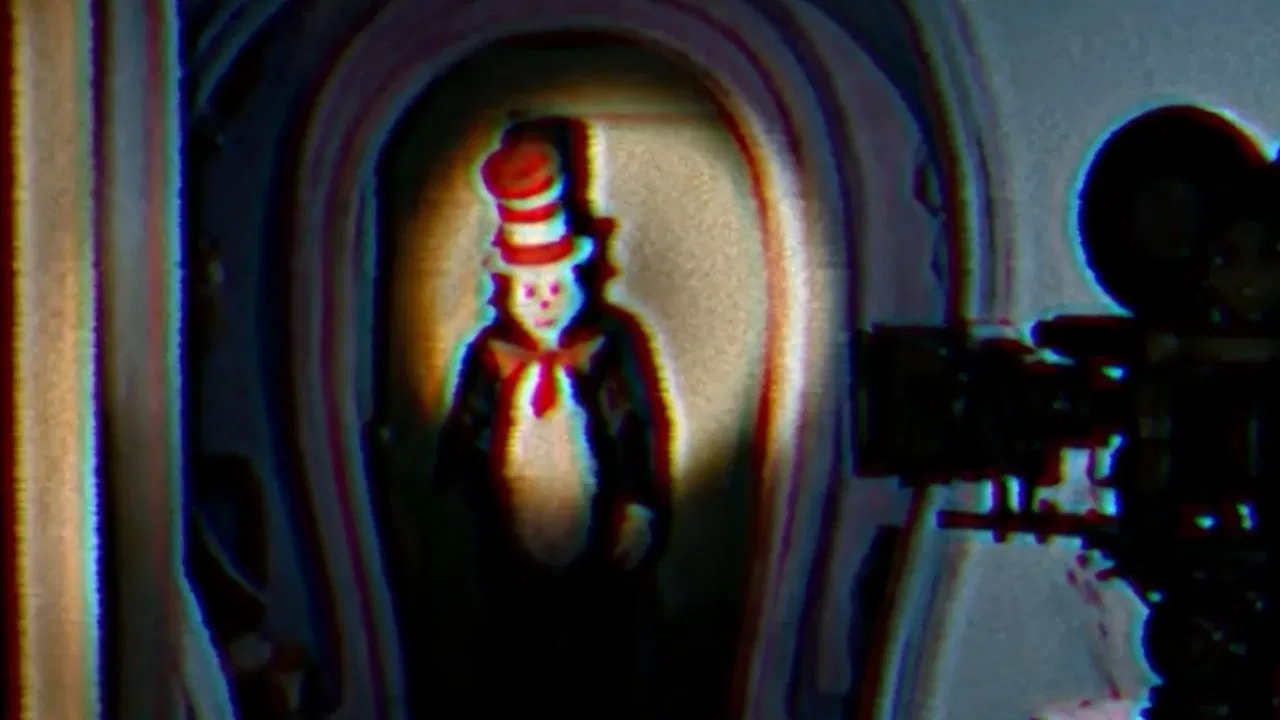
The "Cat in the Hat" trend is a viral social media phenomenon that takes a beloved children's character and turns him into something unsettling. Instead of the playful, rhyming trickster from Dr. Seuss's 1957 book, the trend reimagines the Cat — specifically the version played by Mike Myers in the 2003 live-action film — as a shadowy, often AI-generated figure who appears to lurk outside homes, schools, and street corners in grainy, security-camera-style videos.
What started in late June 2026 as an offbeat, dark-humored meme on TikTok has since crossed into the real world. By early September, the trend had prompted warnings from police departments and state homeland security officials, temporary school closures, and at least one arrest of a teenager in Colorado. Authorities describe the clips as "unsettling," and some posts now name specific schools, communities, and students — a shift that turned a prank into a genuine safety concern.
If you have seen an ominous clip of a striped-hat figure sliding through grainy footage and wondered what it all means, you are not alone. Here is a plain-language explanation of what the Cat in the Hat trend is, where it came from, and why schools and police are paying close attention.
What Is the 'Cat in the Hat' Trend?
At its core, the trend is a form of "analog horror" — a genre of internet storytelling that mimics old VHS tapes, CCTV footage, and distorted audio to create an eerie, found-footage feel. Creators take scenes from the 2003 film The Cat in the Hat and re-frame them with dark captions, glitchy filters, and ominous music, turning the cheerful Cat into something that reads like a horror-movie villain.
The early memes were simple: a clip of the Cat dancing would be paired with a bleak, deadpan caption that reframed the scene in a disturbing way. Over time, creators began using artificial intelligence tools to generate entirely new footage — videos that make the Cat appear to be standing at the end of a driveway, walking through a neighborhood, or hovering outside a school building at night, as if caught on a Ring doorbell or security camera.
The result is a character who looks familiar but feels threatening. Because the imagery is often low-resolution and grainy, it can be difficult to tell at a glance whether a clip is a real recording or something generated from scratch. That ambiguity — the blurring of what is real and what is fake — is a big part of why the trend has become so difficult for schools and families to manage.
How the Trend Started: A Cult Classic Becomes a Horror Meme
The trend traces back to a single meme posted in late June 2026. According to internet-culture site Know Your Meme, a TikTok creator known as Daletok (username @dannykelvin47) posted a clip of the Cat dancing from the 2003 film, layered with the caption, "How mfs be dancing at prom just to overdose 2 weeks later." The clip was set to the song "Gats" by Japanese composer Susumu Hirasawa — the famous "Guts' Theme" from the 1997 anime Berserk — which gave it a haunting, almost cursed atmosphere.
The video took off, racking up more than 4.4 million views in about a week. Other TikTokers quickly made their own versions, pairing different scenes from the movie with the darkest captions they could write. Before long, the format spread to Instagram Reels, and creators began editing the film to look like a horror trailer or the "last known footage" of a missing person.
Part of what made the meme stick is the strange cultural afterlife of the 2003 movie itself. Widely panned by critics when it was released, the film has become a cult favorite for a generation that grew up with it. Recasting its goofy, rubber-faced Cat as a monster was, to many young users, both funny and genuinely creepy — a combination that fueled the trend's rapid spread.
When the Joke Stopped Being Funny: School Warnings and an Arrest
For weeks, the trend stayed mostly in the realm of internet humor. That changed as some posts began naming real places and people. According to ABC News, some videos now include specific locations, lists of names, or threatening language suggesting the character is "coming for" particular individuals — a shift that law enforcement agencies say can create real fear even when no actual threat exists.
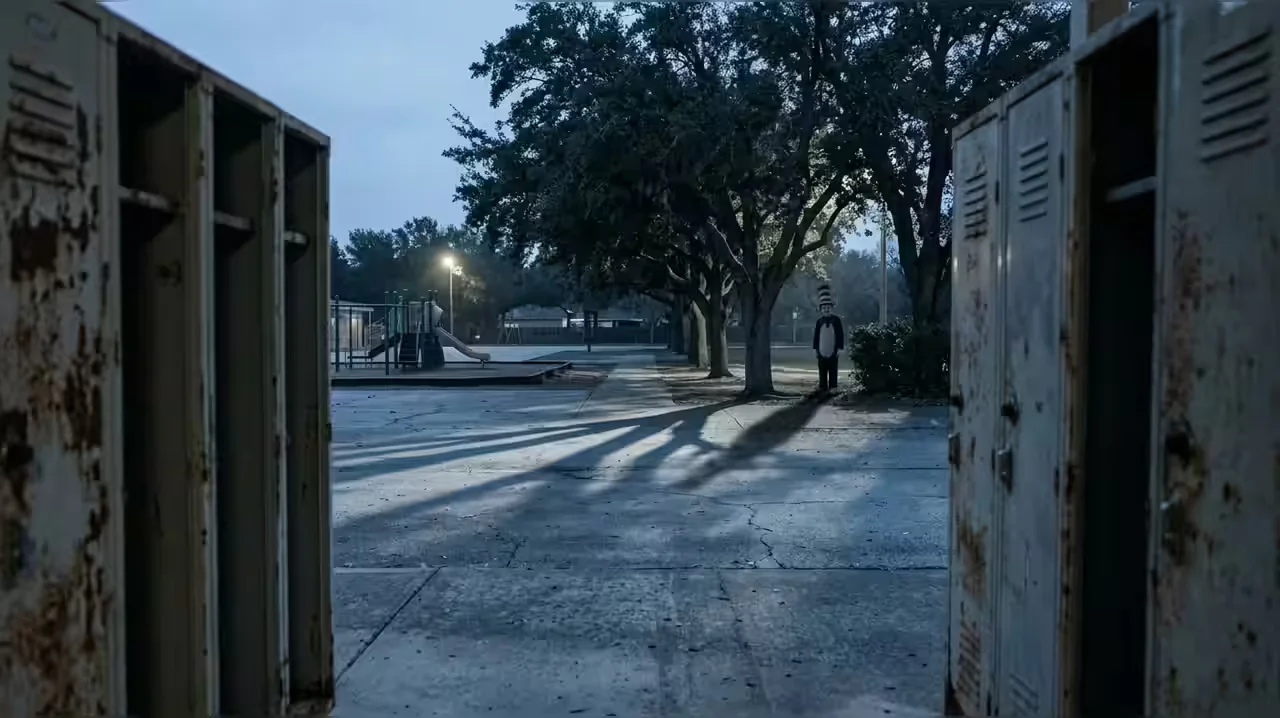
In Grand Junction, Colorado, the trend led to a real-world arrest. The Grand Junction Police Department said it was alerted to a social media post suggesting someone dressed as the Cat in the Hat would appear at West Middle School and other local locations. Out of "an abundance of caution," the department increased its presence at West Middle School and Grand Junction High School. Officers ultimately found no credible threat, but the following Monday they identified and arrested a 14-year-old student on suspicion of interference with an educational institution and harassment.
"The posts are intended to cause alarm and fear in individuals," the Grand Junction Police Department said in a news release.
The pattern repeated in other states. The Tennessee Office of Homeland Security's Threat Assessment Center said it was tracking the trend after posts began targeting students there, describing the content as "unsettling AI-generated videos and images." In Kentucky, the Louisville Metro Police Department said it was reviewing posts and working with school administrators, while Assumption High School in Louisville temporarily closed on August 31 over safety concerns linked to a post featuring the character. Schools in Arkansas — including in Carlisle and Pocahontas — also responded to AI-generated videos tied to the trend, and authorities in Virginia issued a community warning after a post referenced a high school by name.
What Parents and Students Should Know
For families, the most important thing to understand is that the presence of the Cat in the Hat imagery alone does not necessarily mean there is a real danger. Law enforcement officials have repeatedly stressed that most of the posts appear to be pranks or hoaxes, and that in many cases no credible threat has been identified.

At the same time, the trend is harder to dismiss than a typical meme because it mixes recognizable imagery with real names and locations. That combination can make a fake post feel specific and personal, which is exactly what causes alarm. Officials generally recommend the same basic steps: do not share or repost concerning content, and report anything that feels threatening to school staff or police rather than amplifying it online.
It also helps to know how to spot AI-generated or altered clips. Look for visual glitches — warped hands or faces, unnatural lighting, distorted text, or inconsistent backgrounds — and check whether the same footage appears across multiple accounts with different captions. A single grainy clip circulating with no clear original source is often a sign it has been created or edited for attention.
Where Things Stand Now
As of early September 2026, investigations into the trend remain ongoing in several states, and schools have responded with heightened vigilance rather than blanket closures. The Louisville Metro Police Department said it had not identified any credible threats connected to the trend but was continuing to investigate reports.
"Our Homeland Security Unit is actively reviewing information related to these incidents, working with school administrators, and investigating the origin of any posts that may be causing alarm," the department said in a statement. "We encourage students, parents, and school staff to report any concerning messages or behavior to school officials or law enforcement."
The broader lesson officials are drawing is that viral pranks can quickly tip into real-world disruption when they borrow a familiar face and attach it to real people and places — a dynamic that is likely to keep recurring as AI tools make it easier than ever to produce convincing-looking imagery.
The Bottom Line: Key Takeaways
- The "Cat in the Hat" trend reimagines the Dr. Seuss character — and the 2003 film version played by Mike Myers — as a horror-style figure in dark, often AI-generated videos.
- It began in late June 2026 with a TikTok meme by creator Daletok that gained more than 4.4 million views in a week.
- The trend turned serious when some posts began naming real schools, communities, and students with threatening language.
- A 14-year-old student in Grand Junction, Colorado, was arrested in connection with a post tied to the trend.
- Police and school officials in multiple states have urged people to report concerning content rather than share it, while noting that most posts appear to be pranks.