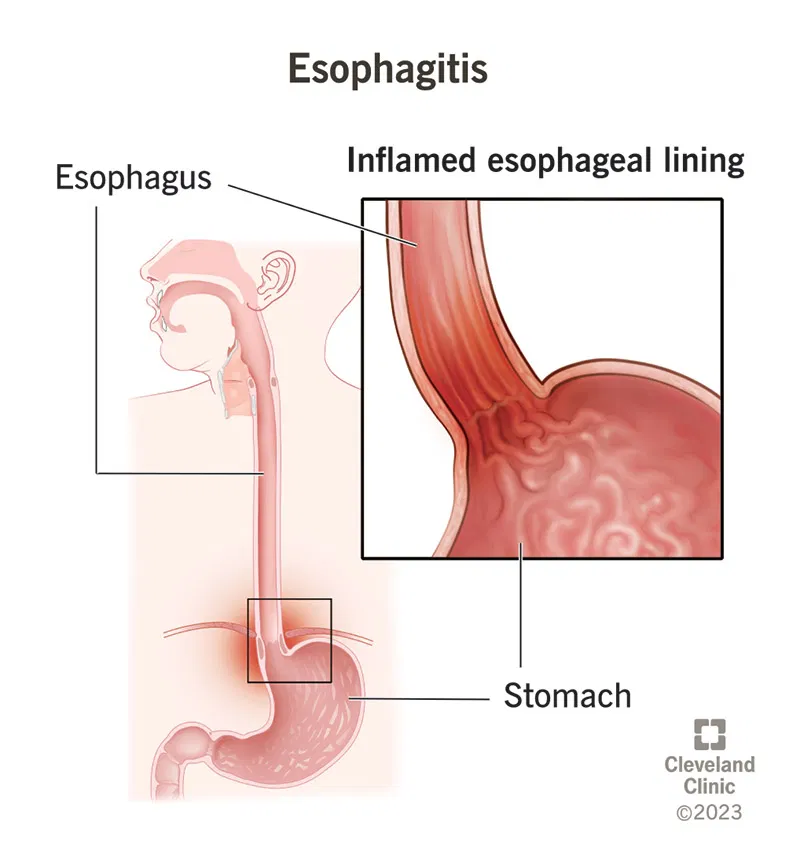
Esophagitis is inflammation of the esophagus, the muscular swallowing tube that carries food and liquid from your throat through the middle of your chest and down to your stomach. When this lining becomes irritated, it can feel sore, swollen, raw, or burning — and the condition is more common than many people realize. That's because its leading cause, chronic acid reflux (GERD), affects at least 20% of the population. The reassuring news is that esophagitis is usually treatable, and in most cases the esophagus can heal within a few weeks once the underlying trigger is addressed. Here's what you should know about the symptoms, causes, types, and treatment options for esophagitis.
What Is Esophagitis and Why Does It Happen?
Your esophagus is a hollow, muscular tube that connects your throat to your stomach. Most of the time, you barely notice it working as it pushes food downward. But when the tissues lining the esophagus become inflamed, everyday actions like swallowing can become painful or difficult.
Inflammation is your immune system's response to injury or a perceived threat. In esophagitis, that threat is usually one of three things: something corrosive (such as stomach acid or certain medications) injuring the lining, an infection the body is trying to fight, or an allergic reaction. As Cleveland Clinic explains, esophagitis "may feel like chest pain, or it might make swallowing painful or difficult."
The single most common trigger is acid reflux. When the muscular valve between the stomach and esophagus weakens or relaxes at the wrong time, stomach acid and digestive juices can wash backward into the esophagus, irritating and eroding its mucous lining. Other causes include certain medications, infections, allergies, radiation therapy, and autoimmune conditions.
The 6 Types of Esophagitis, Explained
Doctors classify esophagitis into subtypes based on what causes it. Understanding the type matters, because each one is treated differently.
Reflux esophagitis
The most common form, reflux esophagitis occurs when stomach acid and digestive agents escape into the esophagus and erode its lining. It is typically linked to gastroesophageal reflux disease (GERD), bile reflux, or frequent vomiting (as seen in bulimia nervosa).
Drug-induced (pill) esophagitis
Also called pill esophagitis, this type happens when frequently used medications irritate or erode the esophageal lining — especially if pills are taken with too little water or while lying down. Common culprits include nonsteroidal anti-inflammatory drugs (NSAIDs), acetaminophen, certain antibiotics, potassium chloride, bisphosphonates, and some chemotherapy drugs.
Infectious esophagitis
Infections in the esophagus are uncommon in healthy people and usually occur in those with weakened immune systems. Fungal infections (most often Candida albicans, or yeast) are the most frequent, followed by viral infections such as cytomegalovirus (CMV) and oral herpes simplex virus (HSV-1).
Eosinophilic esophagitis
This rare form is an immune hypersensitivity reaction. The body sends too many white blood cells called eosinophils to the esophagus, where they accumulate and cause chronic inflammation — even after the original trigger has passed. It is more likely to affect people with multiple allergies.
Autoimmune esophagitis
Certain autoimmune diseases can cause esophagitis as a side effect, including graft-versus-host disease, inflammatory bowel disease (IBD), and Behçet's disease.
Radiation esophagitis
Radiation therapy aimed at the chest, throat, or esophagus — often used to treat cancer — can inflame the esophageal lining as a side effect.
Recognizing Esophagitis: Common Symptoms to Watch For
Esophagitis symptoms can range from mild to severe and may come and go. The most common signs include:
- A sore throat
- Heartburn
- Difficulty swallowing (dysphagia)
- Chest pain, which can sometimes be mistaken for a heart problem
Depending on the cause and severity, you might also notice acid reflux, regurgitation, food feeling stuck in your throat, indigestion, nausea and vomiting, blood in vomit, mouth sores, or feeding difficulties in children.

Because chest pain is a shared symptom, it is important not to assume chest discomfort is "just" esophagitis. Seek emergency care for any chest pain that is sudden, severe, or accompanied by shortness of breath, sweating, or pain radiating to the arm or jaw.
How Doctors Diagnose Esophagitis
A healthcare provider can often diagnose esophagitis based on your symptoms alone. A common first step is a trial of acid-blocking medication — if symptoms improve, reflux esophagitis is the likely culprit. If they do not, your provider may investigate further using one or more tests:
- Upper endoscopy (EGD): A thin, flexible tube with a camera is passed down the throat to visually inspect the esophagus for inflammation, ulcers, or narrowing.
- Esophageal pH test: This measures the amount of acid in your esophagus over a period of time to confirm acid reflux.
- Allergy testing: For suspected eosinophilic esophagitis, allergy skin tests may help identify triggers.
Treating Esophagitis: Medications and Lifestyle Changes
The goal of treatment is to stop whatever is irritating the esophagus long enough for it to heal. In many cases, this means a combination of medication and lifestyle adjustments.
Medications may include:
- Acid-blocking drugs: Antacids, H2 blockers, and proton-pump inhibitors (PPIs) reduce stomach acid and are available over the counter or by prescription.
- Anti-inflammatory steroids: For eosinophilic esophagitis, a liquid steroid formula may be swallowed to coat and soothe the esophagus.
- Antifungal or antiviral medications: Used for infectious esophagitis caused by Candida or herpes.
- Monoclonal antibodies: Dupilumab is a newer FDA-approved medication for eosinophilic esophagitis.
Lifestyle changes that support healing include:
- Dietary changes: Identify and avoid foods and drinks that trigger acid reflux or allergic reactions, including spicy and acidic foods.
- Medication adjustments: Ask your provider about switching medications that irritate the esophagus, or take pills with a full glass of water.
- Evening routine: Eat smaller meals, especially at dinner, and finish eating at least three hours before bedtime.
- Quit smoking and limit alcohol: Both can irritate and weaken the esophagus.
How Long Esophagitis Takes to Heal — and How to Care for Yourself
Once the right treatment begins, healing usually starts immediately, but it can take three to six weeks for esophagitis to heal completely. If the underlying cause is a chronic condition like GERD, you may need long-term therapy to keep symptoms in check.
While your esophagus heals, a few self-care habits can make a meaningful difference:
- Avoid irritants such as spicy and acidic foods, alcohol, and smoking.
- Consider a soft diet to reduce friction in the esophagus.
- Take small bites and chew food thoroughly before swallowing.
- Stay hydrated with water or soothing teas such as marshmallow or slippery elm.
If you have undiagnosed symptoms or your treatment is not working, see a healthcare provider. Sometimes esophagitis has more than one contributing cause that needs to be addressed.
The Bottom Line: Key Points to Remember
- Esophagitis is inflammation of the esophagus, most often caused by chronic acid reflux (GERD), which affects at least 20% of people.
- There are six main types — reflux, drug-induced, infectious, eosinophilic, autoimmune, and radiation esophagitis — each with different causes and treatments.
- Common symptoms include heartburn, sore throat, difficulty swallowing, chest pain, and regurgitation.
- Diagnosis may start with a trial of acid-blocking medication, followed by upper endoscopy or pH testing if needed.
- Treatment combines acid-blocking medications, dietary changes, and lifestyle adjustments, and most cases heal within three to six weeks.
- Left untreated, esophagitis can lead to esophageal ulcers, narrowing (stricture), and Barrett's esophagus, a precancerous change.