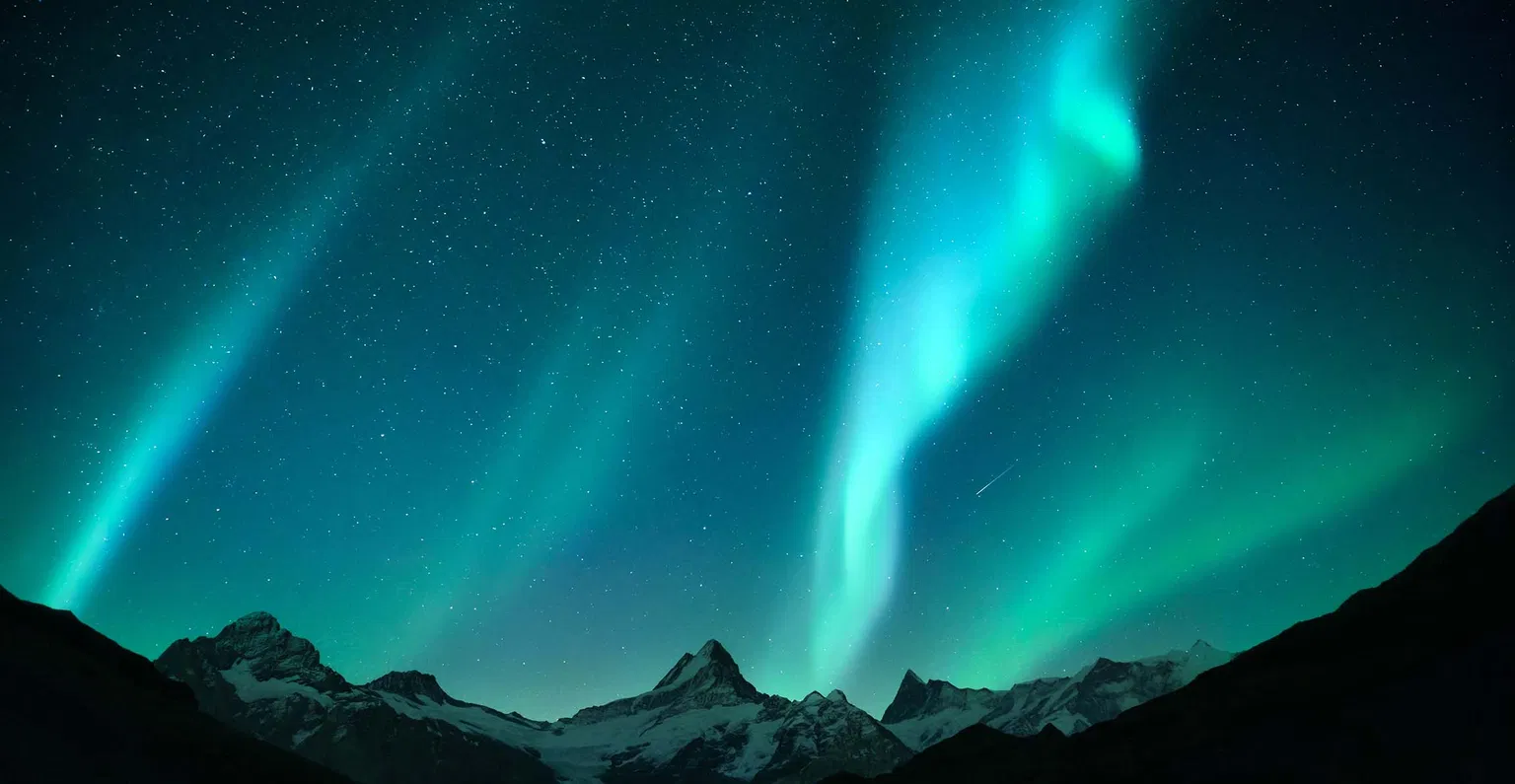
If you've ever looked up at the night sky and seen curtains of green, red or purple light shimmering across the heavens, you've witnessed the beautiful end result of a geomagnetic storm. These natural light displays — known as the aurora borealis in the northern hemisphere and aurora australis in the south — are caused by powerful disturbances in Earth's magnetic field triggered by activity from the Sun. But what exactly is a geomagnetic storm, how does it work, and why are we seeing more of them right now?
Understanding Geomagnetic Storms: What Happens When the Sun Meets Earth's Magnetic Field
A geomagnetic storm is a major disturbance of Earth's magnetosphere — the region of space dominated by our planet's magnetic field. According to NOAA's Space Weather Prediction Center, these storms occur when there is a highly efficient exchange of energy from the solar wind into the space environment surrounding Earth. The process begins roughly 93 million miles away, at the surface of the Sun.
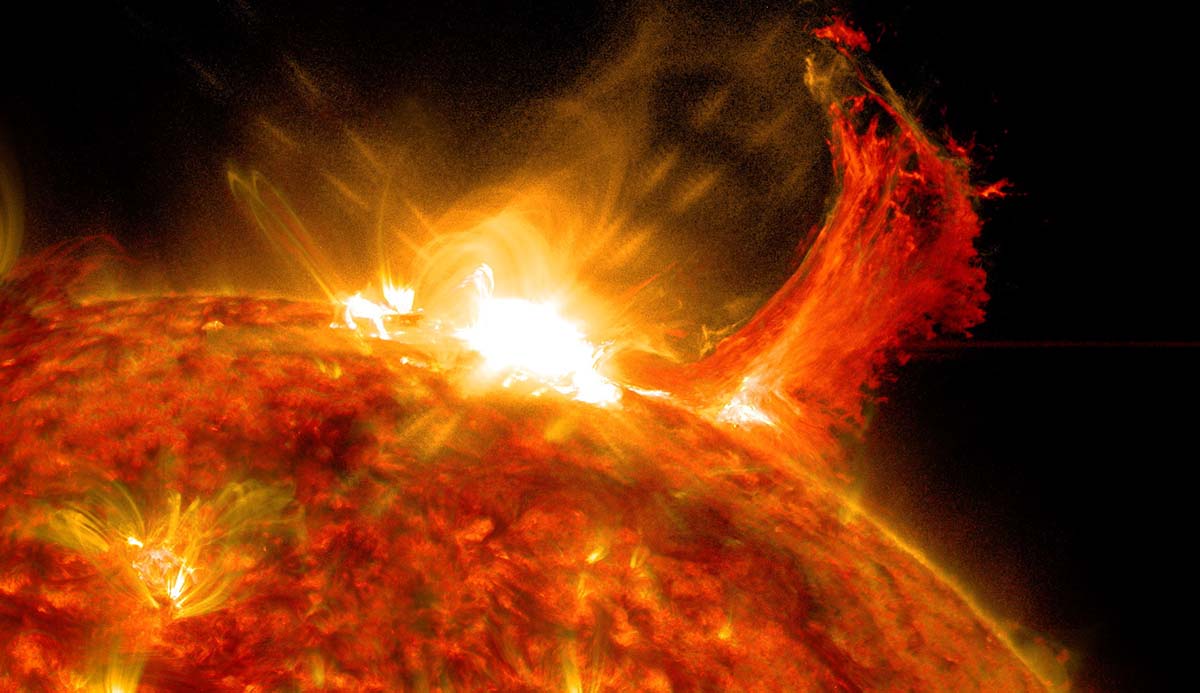
The Sun is essentially a gigantic nuclear reactor, fusing hydrogen atoms into helium at its core. This energy eventually rises to the surface, where it drives powerful convection currents that generate the Sun's magnetic field. Periodically, the Sun releases massive bursts of energy and charged particles in events called solar flares and coronal mass ejections (CMEs). These CMEs are enormous clouds of magnetized plasma that travel through space at millions of miles per hour.
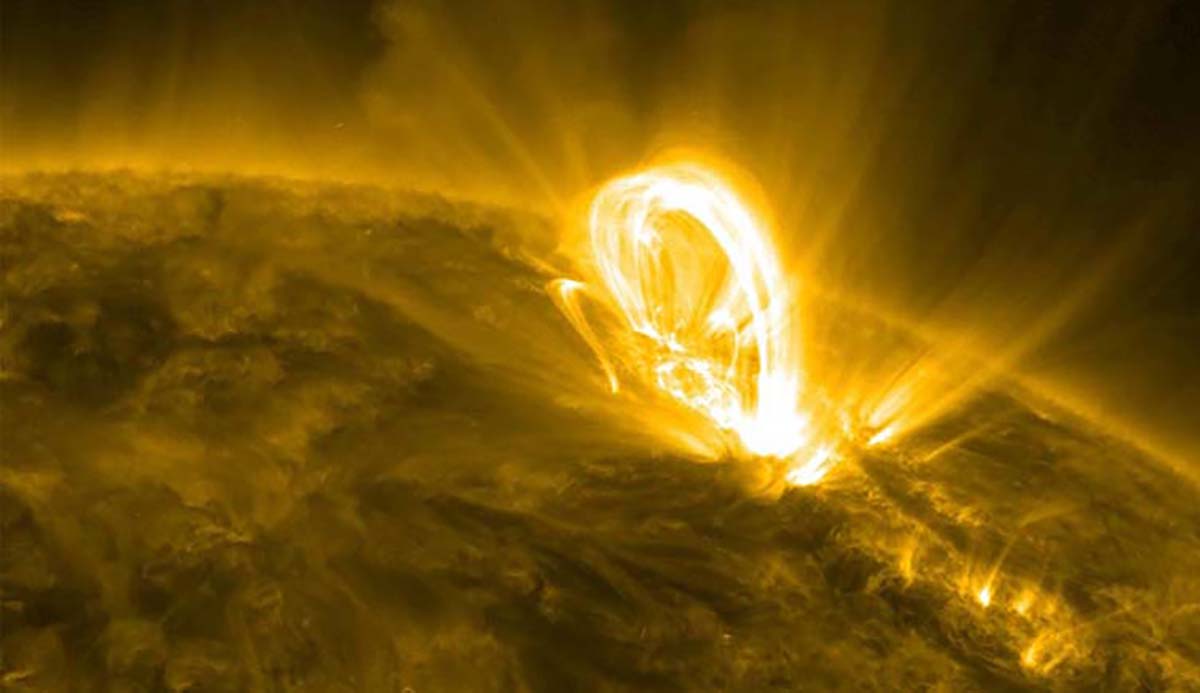
"When the magnetic fields of the Sun reach our planet, they can push Earth's magnetic field out behind it," explains Dr. Geoff Vasil, a mathematician studying the Sun at the University of Edinburgh. "Once it is stretched out far enough, Earth's magnetic field snaps back like an elastic band. This is known as reconnection and releases a large amount of particles into the upper atmosphere." As these energized particles rain down toward the poles along magnetic field lines, they collide with atoms and molecules in the atmosphere, transferring energy that is released as light — the aurora.
Timeline: How a Geomagnetic Storm Develops From Start to Spectacle
Geomagnetic storms unfold in distinct stages, from a solar event to the vibrant light show we see in the sky. Here's how the process works step by step:
- Solar eruption: A solar flare or coronal mass ejection occurs on the Sun's surface, often near sunspot groups where magnetic fields are most intense. X-class flares are the most powerful category.
- Travel through space: The CME travels through the solar system at speeds ranging from 250 to 3,000 kilometers per second. At typical speeds, it takes 1–5 days to reach Earth.
- First contact: When the CME arrives, it compresses Earth's magnetosphere on the dayside and stretches it on the nightside, triggering the initial phase of the geomagnetic storm.
- Main phase: Intense currents flow through the magnetosphere, injecting energetic particles deep into the atmosphere. The ring current strengthens, weakening Earth's magnetic field at the surface. This is when auroras become most brilliant and visible at lower latitudes.
- Recovery phase: The magnetosphere gradually returns to normal over hours to days as the excess energy dissipates and the aurora fades back toward the polar regions.
The November 2025 solar storm, as documented by the European Space Agency, is a textbook example. On November 11, 2025, the Sun unleashed an intense X-class solar flare followed by a CME traveling at roughly 1,500 km/s. By the next day, the CME reached Earth, triggering a severe geomagnetic storm that peaked for about six hours. Auroras were seen as far south as Mallorca, Spain — a rare treat for the Mediterranean region.
The Aurora Color Palette: Why the Northern Lights Display Different Hues
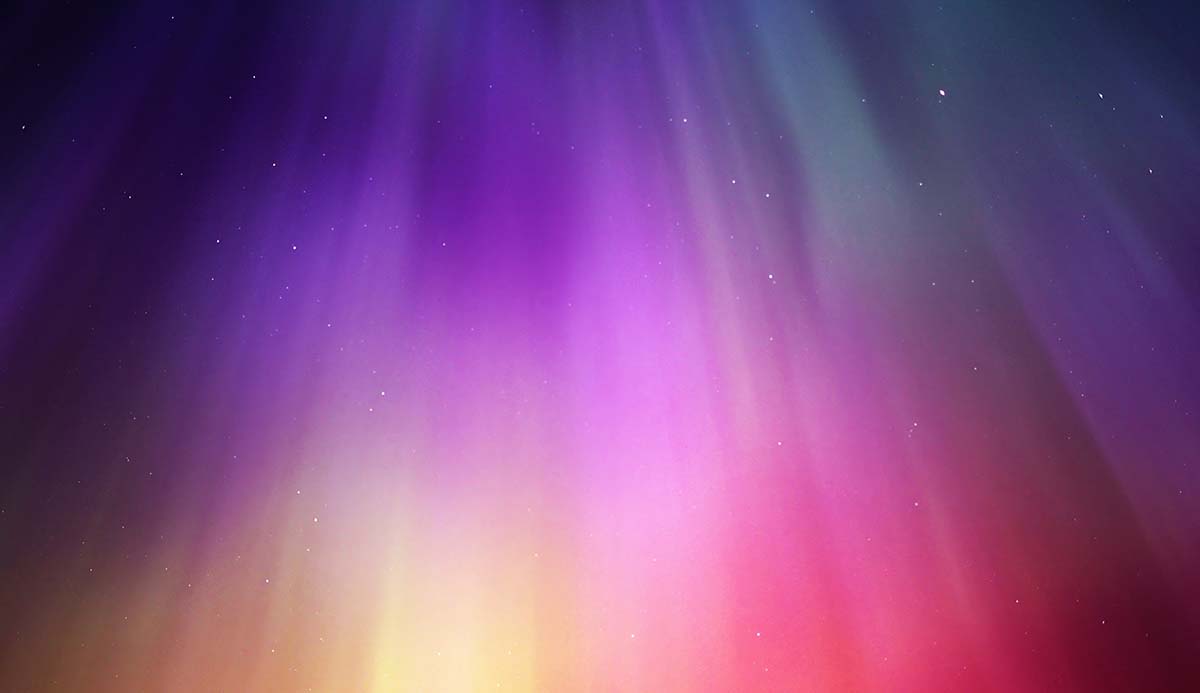
One of the most fascinating aspects of geomagnetic storms is the dazzling array of colors they produce. The color of the aurora depends on which atmospheric gas is being struck by incoming charged particles, and at what altitude the collision occurs.
Green — The most common aurora color, caused by oxygen atoms located 100–200 kilometers (60–120 miles) above Earth. Green appears so frequently because oxygen is abundant at this altitude and the excited atoms take about three-quarters of a second to release their energy, creating a bright, sustained glow.
Red — Produced by high-altitude oxygen more than 200 kilometers (125 miles) up. Red auroras are rare because oxygen is scarce at these heights, so they only appear during very intense geomagnetic storms when more charged particles penetrate deeper into the atmosphere's upper reaches.
Pink, purple and blue — Come from nitrogen molecules around 100 kilometers (60 miles) altitude. These colors require a very active Sun, as enough charged particles must first pass through the oxygen-rich upper atmosphere without colliding to reach the lower nitrogen layer.
Yellow — A blend of colors produced simultaneously, often seen during periods of very high solar activity when multiple auroral processes are occurring at once.
Auroras don't just happen on Earth. NASA scientists have detected auroral activity on other planets including Mars, Jupiter, Saturn, and even on comets and dwarf stars far beyond our solar system.
Measuring the Storm: The G-Scale and Kp-Index Explained
Not all geomagnetic storms are equal. NOAA classifies them on a G-scale from G1 (Minor) to G5 (Extreme), similar to how hurricanes are categorized. The scale is based on the Kp-index, a global measure of geomagnetic activity derived from ground-based magnetometers around the world. The Kp-index runs from 0 to 9:
- Kp 0–4 — Quiet to unsettled conditions. Auroras are typically confined to polar regions.
- Kp 5 (G1) — Minor storm. Auroras may be visible at higher latitudes like northern Canada and Scandinavia.
- Kp 6 (G2) — Moderate storm. Auroras can be seen as far south as Scotland and the northern United States.
- Kp 7 (G3) — Strong storm. Auroras visible at 50° latitude and beyond — cities like London and Chicago may get a show.
- Kp 8 (G4) — Severe storm. Auroras can be seen at 45° latitude, including Central Europe and the central United States.
- Kp 9 (G5) — Extreme storm. Auroras possible at 40° latitude and below — rare events, occurring only about 4 times per 11-year solar cycle.
G4 and G5 storms are powerful enough to cause real-world disruptions. They can induce electrical currents in power grids, interfere with GPS and satellite communications, disrupt high-frequency radio transmissions, and increase drag on satellites in low Earth orbit.
Where Things Stand Now: Solar Maximum and the Current Aurora Season
The Sun operates on an approximately 11-year cycle of activity, known as the solar cycle. During solar maximum, the Sun's magnetic field is at its strongest, producing more sunspots, solar flares, and coronal mass ejections. NASA and NOAA confirmed in October 2024 that the Sun had reached the maximum phase of Solar Cycle 25.
According to ESA, "Earlier this year, our star reached solar maximum, making major solar storms more probable." However, solar maximum doesn't mean activity immediately drops off. The elevated activity level typically persists for 2–3 years after the official peak, meaning 2025 and 2026 continue to offer exceptional opportunities for aurora viewing. In fact, recent data from NOAA's Space Weather Prediction Center shows G2-level geomagnetic storm conditions were reached as recently as June 5, 2026.
What's Next: The Future of Geomagnetic Storms and Aurora Viewing
As Solar Cycle 25 gradually declines from its peak, scientists expect elevated geomagnetic activity to continue through at least 2026. For aurora enthusiasts, this means more opportunities to see the northern lights at lower latitudes than usual. The key resources for tracking geomagnetic storms include NOAA's Space Weather Prediction Center (spaceweather.gov) for official forecasts and alerts, and services like SpaceWeatherLive.com for real-time Kp-index data.
ESA continues to analyze data from the November 2025 storm collected by multiple spacecraft missions. "The event provided an opportunity for multiple ESA missions, whether orbiting Earth or far into deep space, to collect radiation data, which is now being analyzed," the agency reported. This research will help improve future space weather forecasts, giving us better warning before the next big geomagnetic storm arrives.
Key Takeaways: Everything You Need to Know About Geomagnetic Storms
- Geomagnetic storms are disturbances in Earth's magnetosphere caused by solar wind and CMEs from the Sun.
- They produce the aurora borealis and aurora australis as charged particles collide with atmospheric gases.
- Aurora colors depend on altitude and gas type: green from oxygen at 100–200 km, red from high-altitude oxygen, and pink/blue from nitrogen.
- NOAA rates storms from G1 (minor) to G5 (extreme) using the Kp-index.
- The Sun is currently in Solar Cycle 25's maximum phase, making 2024–2026 an exceptional period for aurora viewing.
- While visually stunning, strong storms can disrupt power grids, GPS, and satellite communications.