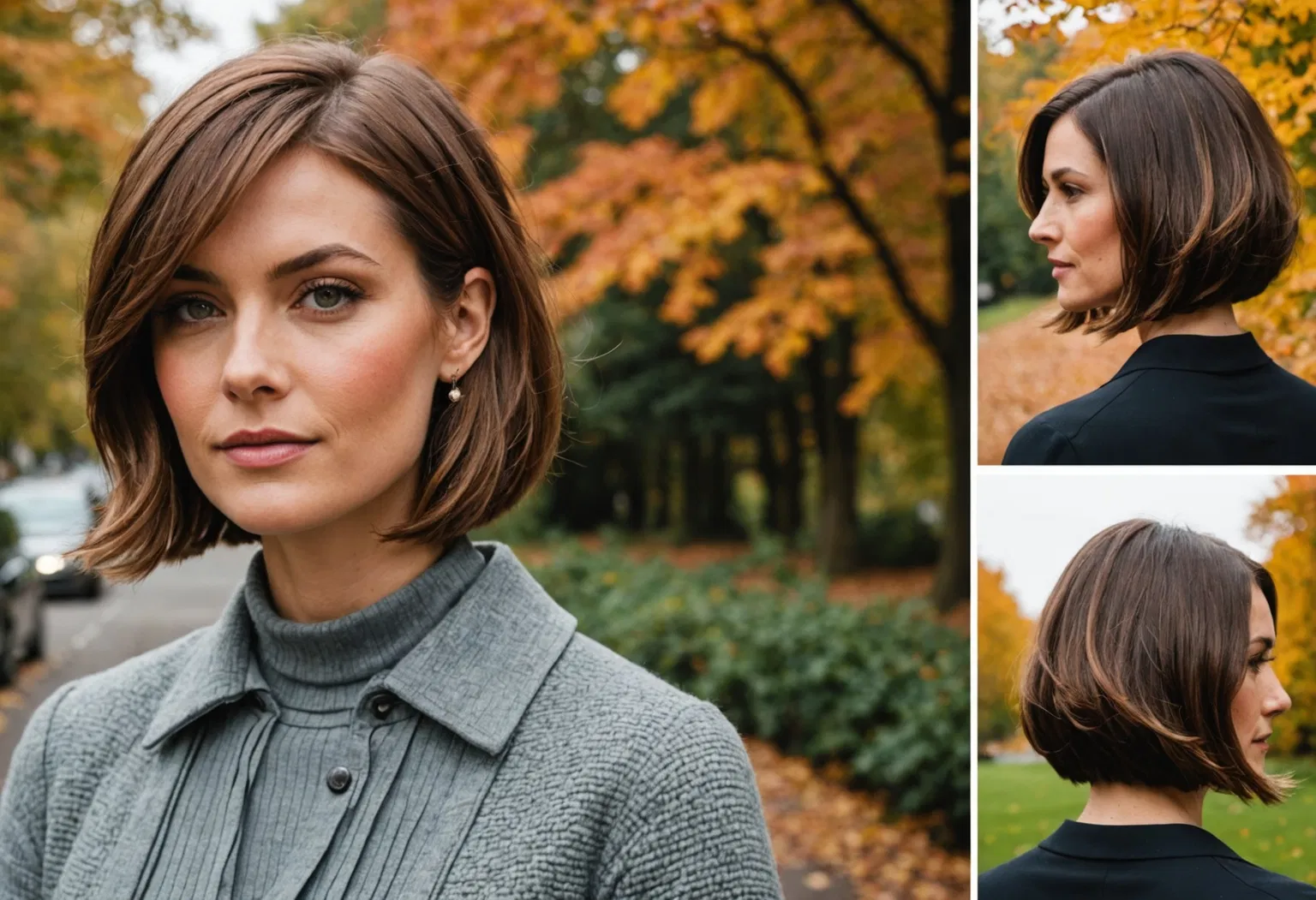
The "waterfall bob" is autumn 2026's most elegant hair trend — and once you see it, it is easy to understand why. Named for the smooth, S-shaped waves that cascade through the cut like falling water, this polished yet low-maintenance bob has travelled from the front rows of Paris Fashion Week straight onto salon request lists. Defined by relaxed shine rather than sharp edges, it offers a softer, more undone alternative to the blunt bobs that dominated summer, making it the season's most flattering reset for anyone ready to go shorter. Below, we break down exactly what the waterfall bob is, how it differs from a classic bob, and how to recreate the look at home.
What Is the Waterfall Bob?
The waterfall bob is a mid-length bob — typically sitting anywhere from the chin to just above the shoulders — that is defined less by its length and more by its movement. Stylists describe the look using the phrase "waterfall waves": smooth, glossy, S-shaped bends that begin at the mid-lengths and gently taper off towards the ends. The result is a cut that reads polished and elegant without ever looking overly styled.
ELLE UK, which named the trend, describes the waterfall bob as being "known for its relaxed, shiny, S-shaped bends, which offers a more polished finish that's perfect for autumn." Grazia goes one step further, calling the waterfall bob "the relaxed, slightly smug cousin of the classic bob," and noting that the front pieces are often kept slightly longer for a soft, face-framing sweep.
Crucially, the waterfall bob is not about heavy layering. The softness of the cut is what sets it apart, and stylists warn against anything too choppy. "The trick is to avoid anything too choppy or heavily layered as this can take away from the softness of the cut," experts told ELLE. "You want the layers to fall" in one continuous, fluid shape rather than breaking up into distinct, separated pieces.
How the Waterfall Bob Differs From a Classic Bob
A traditional bob is usually one-length and blunt, with clean, graphic lines that create a sharp silhouette. The waterfall bob keeps the classic bob's chin-to-shoulder length but softens every hard edge. Where a blunt bob reads structured and precise, the waterfall bob reads relaxed and effortless — think of it as the difference between a pressed suit and a silk slip dress.
The defining difference is in the finish. A classic bob is often worn smooth and straight, while the waterfall bob leans into bend, bounce and shine. Those signature S-shaped waves — which start at the mid-lengths and taper at the ends — are what give the cut its name and its elegant, cascading movement.
Length is also more flexible than you might expect. Because the waterfall bob is a finish-led trend rather than a strictly length-led one, it can be tailored to every preference. It can sit shorter, closer to the chin, or be left longer towards the shoulders, depending on what suits your face shape and lifestyle.
How the Waterfall Bob Took Over Autumn 2026
The waterfall bob did not appear overnight. The look began gathering momentum in spring and summer, when Who What Wear declared it "the style of the summer" and pointed to Emma Stone's glossy waterfall bob as the season's muse. Viva Glam traces the trend's early attention to Carey Mulligan, whose soft, glossy, wavy bob felt effortlessly modern.
By autumn, the trend had fully arrived. Victoria Beckham — long the poster woman for the classic, polished bob — swapped her signature sharp cut for a softer waterfall style, a move Grazia called "fall's most flattering haircut." Then, during Paris Fashion Week, Naomi Watts took centre stage on the front row wearing the look, cementing the waterfall bob as the season's definitive crop. "Soft, polished and infinitely wearable," is how ELLE summed up the moment.
How to Style the Waterfall Bob at Home
The good news is that the waterfall bob is genuinely easy to recreate at home. The key, according to the hair experts at Alan Howard, is to focus on shape and movement rather than creating a tight curl. "The key to nailing the brief for a Waterfall Wave is less about creating a tight curl and more about focusing on the shape and movement" the look creates, they explain.
Start by applying a heat protectant from the mid-lengths to the ends — the glossy finish that defines the waterfall bob begins with healthy, protected hair. Next, take medium-sized sections and wrap them around a large-barrel curling iron or wand of around 1.25 to 1.5 inches. Rather than wrapping the hair tightly, spread it out along the length of the barrel so the wave stays loose and elongated.
Curl away from the face on both sides, and leave the very ends of the hair out of the iron. This is what creates the soft, tapered finish rather than a ringlet. Once you have curled each section, let the waves cool completely before touching them — cooling "sets" the S-bend shape and makes it last longer. Finally, brush through the waves gently with a wide-tooth comb or your fingers, then finish with a light texture spray and a gloss or shine oil. The shine is what elevates the waterfall bob from beachy to elegant, so do not skip this final step.
How to Ask Your Stylist for the Waterfall Bob
At the salon, the words you use matter. Ask for a chin-to-shoulder length bob with soft, flowing layers rather than choppy or heavy ones — the goal is movement, not separation. Ask your stylist to keep some weight through the ends so the bob looks full and healthy rather than too wispy, as ELLE's experts recommend.
It is also worth bringing reference photos. Because the waterfall bob is a finish-led trend, a picture of the S-shaped waves you are after — whether that is Emma Stone's glossy version or Victoria Beckham's softer take — will help your stylist understand the exact level of polish and movement you want.
Who the Waterfall Bob Suits Best
One of the reasons the waterfall bob has become so popular is its versatility. Because both the length and the softness can be adjusted, it works across a wide range of face shapes and hair textures. The gentle S-waves soften angular features, making the cut particularly flattering on square and heart-shaped faces, while the option of keeping more length towards the shoulders keeps it wearable for rounder faces.
It is also kind to grown-out hair. Unlike a sharp, graphic bob that needs frequent trims to hold its shape, the waterfall bob is designed to grow out seamlessly — another reason stylists love recommending it as an autumn reset.
Where the Waterfall Bob Is Headed Next
If the trajectory of recent seasons is anything to go by, the waterfall bob is unlikely to fade quickly. Bobs in all their forms continue to dominate, and the softer, more undone direction — echoed in trends like the "shattered bob" — suggests that polished-but-relaxed hair is the mood for the season ahead. Expect to see the waterfall bob worn slick and glossy for evening, and brushed out into looser, airier waves for daytime.
The Bottom Line: Waterfall Bob Essentials
- The waterfall bob is a chin-to-shoulder bob defined by smooth, shiny, S-shaped bends rather than sharp lines.
- It is softer and more relaxed than a classic blunt bob, with the front pieces often left slightly longer.
- The look gained momentum through Emma Stone and Carey Mulligan before Victoria Beckham and Naomi Watts made it autumn 2026's defining crop.
- At home, use a large-barrel iron on medium sections, leave the ends out, and finish with texture spray and gloss.
- At the salon, ask for soft, flowing layers and weight kept through the ends for a full, healthy finish.