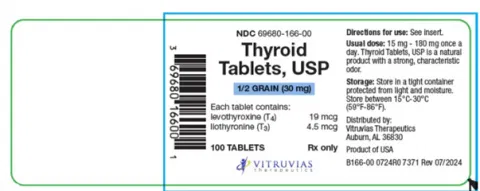
The U.S. Food and Drug Administration (FDA) has announced a nationwide recall of one lot of Thyroid Tablets, USP 30 mg made by Vitruvias Therapeutics after testing confirmed the pills could be "superpotent" — meaning they may deliver more thyroid hormone than the label states. The voluntary recall, issued by the Auburn, Alabama-based manufacturer, centers on Lot 504950, a medication used to treat hypothyroidism, or an underactive thyroid. With 1,955 units sold into the marketplace, the concern for patients is real: taking a stronger-than-intended dose of thyroid hormone can tip the body into hyperthyroidism, triggering symptoms such as rapid heart rate, chest pain, muscle weakness, and heat intolerance.
Whether you currently take a thyroid prescription or simply want to understand how these recalls work, here is a clear breakdown of what the medication does, why this particular lot was pulled, and the steps you should take if your bottle matches the recall.
Understanding Thyroid Medication: What These Tablets Actually Do
Thyroid, USP — the product at the center of this recall — is a natural preparation derived from porcine (pig) thyroid glands. It contains two active hormones: levothyroxine (T4) and liothyronine (T3). Together, these hormones replace what the thyroid gland would normally produce, which is why the medication is prescribed to treat hypothyroidism, a condition in which the thyroid does not make enough hormone to keep the body running normally.

The thyroid is a small, butterfly-shaped gland at the front of the neck, but it regulates processes throughout the body, including metabolism, heart rate, body temperature, and energy levels. When the thyroid is underactive, people often experience fatigue, weight gain, cold intolerance, dry skin, and sluggishness. Thyroid replacement medication restores those hormone levels, helping the body return to a balanced state.
Because thyroid hormones affect so many systems, the dose matters enormously. A dose that is too low leaves a patient feeling hypothyroid, while a dose that is too high can flip them into the opposite state — an overactive thyroid, or hyperthyroidism. That precise balance is exactly what makes the "superpotent" finding in this recall so serious.
Inside the Recall: Why Vitruvias Pulled the Tablets
On August 21, 2026, Vitruvias Therapeutics announced it was voluntarily recalling Lot 504950 of Thyroid Tablets, USP 30 mg "to the consumer level." The FDA published the company's announcement on August 24. The reason: testing confirmed the potential for the product to be superpotent, meaning the tablets could contain more active thyroid hormone than intended.
According to the company's risk statement, consuming superpotent thyroid tablets can cause hyperthyroidism, with symptoms that include — but are not limited to — weight loss, heat intolerance, fatigue, nervousness, muscle weakness, hypertension (high blood pressure), chest pain, rapid heart rate, and heart rhythm disturbances.
Certain populations face even greater risk. The elderly, pregnant women, and infants are especially vulnerable to excess thyroid hormone, particularly when exposure happens over an extended period. In older adults, excess thyroid hormone has been linked to adverse outcomes, especially involving heart health. During pregnancy, overtreatment of hypothyroidism is associated with a higher rate of maternal and fetal complications, including premature delivery and low birth weight. In infants, overtreatment may negatively affect growth and development.
As of the recall announcement, Vitruvias Therapeutics said it had not received any reports of adverse events known to be related to the recall. Still, the company moved quickly to notify wholesalers by email and phone, instructing them to stop distributing the affected product and arranging for its destruction.
How to Check if Your Prescription Is Affected
The recall applies to a single, specific lot — not to every thyroid medication on pharmacy shelves. If you take Thyroid, USP 30 mg, the fastest way to confirm whether your prescription is part of the recall is to check the label on your bottle against these details:
- Product: Thyroid Tablets, USP 30 mg
- NDC number: 69680-166-00
- Lot number: 504950
- Expiration date: September 30, 2026
The affected lot was distributed nationwide to Vitruvias Therapeutics' direct accounts between January 31, 2025, and September 30, 2025. According to the FDA recall notice, the company released 3,655 units and sold 1,955 units of the lot.
If the lot number on your prescription bottle reads "504950," your medication is part of the recall. If it shows any other lot number — or if you take a different thyroid medication entirely — you are not affected by this specific action.
What "Superpotent" Means for the Body
The word "superpotent" simply means the medication may be stronger than it is supposed to be. In a product dosed at 30 mg, even a modest increase in active hormone can matter, because thyroid hormone has a narrow therapeutic window — the gap between "enough" and "too much" is small.
When the body receives too much thyroid hormone, it shifts into a hyperthyroid state. That can look and feel like the body is running too hot: a racing or irregular heartbeat, unexplained weight loss, sweating and heat intolerance, anxiety or nervousness, trembling, difficulty sleeping, and muscle weakness. In more serious cases, excess thyroid hormone can strain the cardiovascular system and contribute to chest pain or heart rhythm problems.
This is why health authorities and the manufacturer are telling patients not to stop their medication abruptly. Thyroid hormone is essential for normal function, and suddenly stopping a thyroid replacement can swing a patient dangerously back toward hypothyroidism. The safer path, according to the company, is to contact a healthcare provider for guidance and, if needed, a replacement prescription before making any change.
What Patients Should Do Next
If you believe your medication is part of Lot 504950, here are the recommended steps:
- Do not stop taking your medication on your own. Vitruvias Therapeutics and the FDA both advise patients to continue taking the tablets until they can speak with a healthcare provider.
- Contact your doctor or pharmacist. Ask for guidance and, if appropriate, a replacement prescription from a different lot or a different product.
- Watch for symptoms of excess thyroid hormone. These include rapid or irregular heartbeat, chest pain, unusual weight loss, heat intolerance, nervousness, and muscle weakness. If you experience any of these, seek medical attention.
- Report any problems. Adverse reactions can be reported to the FDA's MedWatch program online, by mail, or by fax.
Consumers with questions about the recall can contact Vitruvias Therapeutics directly by email at [email protected] or by phone at (256) 239-9373, Monday through Friday from 9 a.m. to 5 p.m. Central Time.
The Bottom Line: Key Points to Remember
- Vitruvias Therapeutics is voluntarily recalling one lot (Lot 504950) of Thyroid Tablets, USP 30 mg nationwide because testing found the tablets could be superpotent.
- The product treats hypothyroidism and is derived from porcine thyroid glands, containing levothyroxine (T4) and liothyronine (T3).
- Superpotent tablets can cause hyperthyroidism, with symptoms such as rapid heart rate, chest pain, weight loss, and muscle weakness.
- Elderly patients, pregnant women, and infants are at greatest risk from excess thyroid hormone.
- Patients should not stop taking the medication without first contacting their healthcare provider for guidance or a replacement prescription.
- No adverse events related to the recall had been reported as of the announcement.