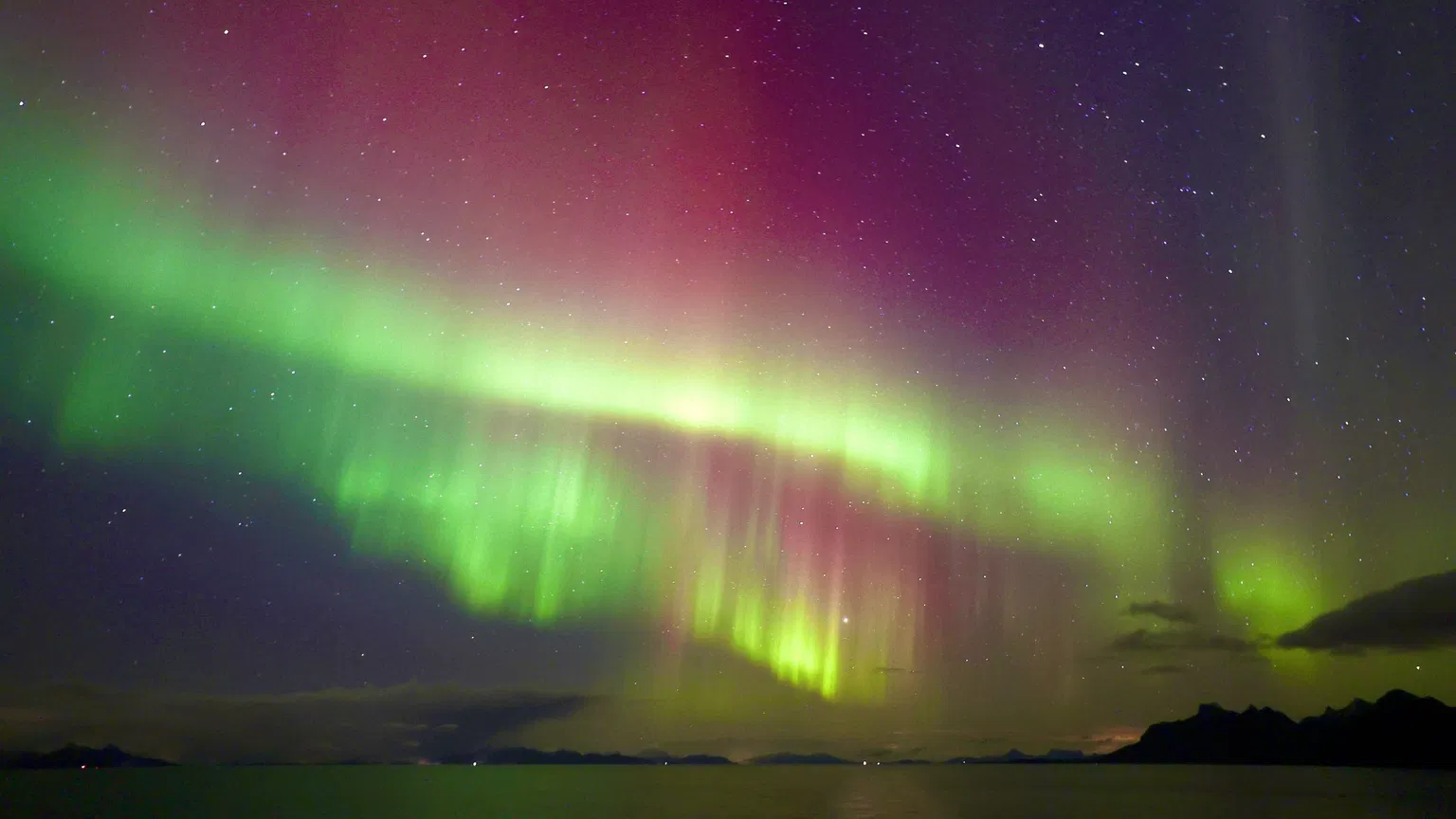
The northern lights, or aurora borealis, have captivated humanity for millennia. From ancient myths to modern astrophotography, this celestial light show remains one of nature's most breathtaking displays. But what exactly causes those shimmering curtains of green, purple, and red to dance across the night sky? And why is right now—2025 through early 2026—considered one of the best viewing windows in over a decade? Let's explore the science behind the aurora and what you need to know to see it for yourself.
The Science Behind the Northern Lights: How Auroras Form
At its simplest, the aurora borealis is the result of a cosmic collision. The process begins approximately 93 million miles away on the surface of the Sun. Solar activity—including solar flares and coronal mass ejections—releases massive clouds of electrically charged particles into space. This stream of particles is known as the solar wind.
According to astronomers at the Royal Observatory Greenwich, "These particles can travel millions of miles, and some may eventually collide with the Earth." As the solar wind reaches our planet, most particles are deflected by Earth's magnetic field. However, some become captured and accelerated down toward the magnetic poles, funneling into the upper atmosphere.
"These particles then slam into atoms and molecules in the Earth's atmosphere and essentially heat them up," explains Royal Observatory astronomer Tom Kerss. "We call this physical process 'excitation,' but it's very much like heating a gas and making it glow."
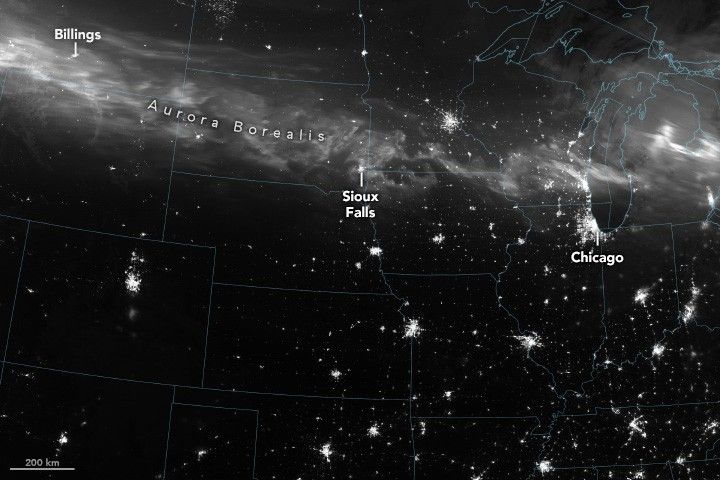
The lowest part of an aurora is typically around 80 miles above Earth's surface, but the top of a display may extend several thousand miles into space. The wavy, curtain-like patterns are created by the lines of force in Earth's magnetic field, which guide the charged particles as they spiral down toward the poles.
What Determines the Colors of the Aurora?
The spectacular range of colors in the northern lights depends on which gases are being struck and at what altitude the collision occurs. The two primary gases in Earth's atmosphere—oxygen and nitrogen—each produce distinct colors when energized.
The most common color, a pale green, is produced by oxygen molecules about 60 to 120 miles above the ground. "The green we see in the aurora is characteristic of oxygen," explains Kerss, while hints of purple, blue, or pink are caused by nitrogen. The rare and striking scarlet red aurora occurs at very high altitudes when energetic oxygen atoms are excited—a phenomenon that only happens when the aurora is particularly powerful.
Michigan Technological University notes that auroral displays appear in many hues, "though pale green and pink are most common. Shades of red, yellow, green, blue, and violet are also reported." The color you see also depends on your viewing equipment—cameras with long exposures can capture colors invisible to the naked eye.
Why Geomagnetic Storms Make the Lights So Much Brighter
While the aurora is always active near the poles, its intensity and visibility at lower latitudes depend heavily on space weather. Geomagnetic storms—temporary disturbances in Earth's magnetosphere caused by solar activity—can supercharge the northern lights, making them visible far beyond their usual range.
In May 2024, the strongest geomagnetic storm in two decades struck Earth, producing a G5 (severe) event that pushed the aurora borealis as far south as Florida and Texas in the United States, and as far south as Cornwall and Brighton in the UK. According to NASA, the display was "the strongest geomagnetic storm in over two decades."
More recently, in November 2025, a G4 (severe) geomagnetic storm watch was issued by NOAA's Space Weather Prediction Center, resulting in stunning auroral displays visible across large portions of North America and Europe. Al Jazeera reported that "a G4 geomagnetic storm watch alert, implying severe storms expected" led to dazzling light shows across the Northern Hemisphere.
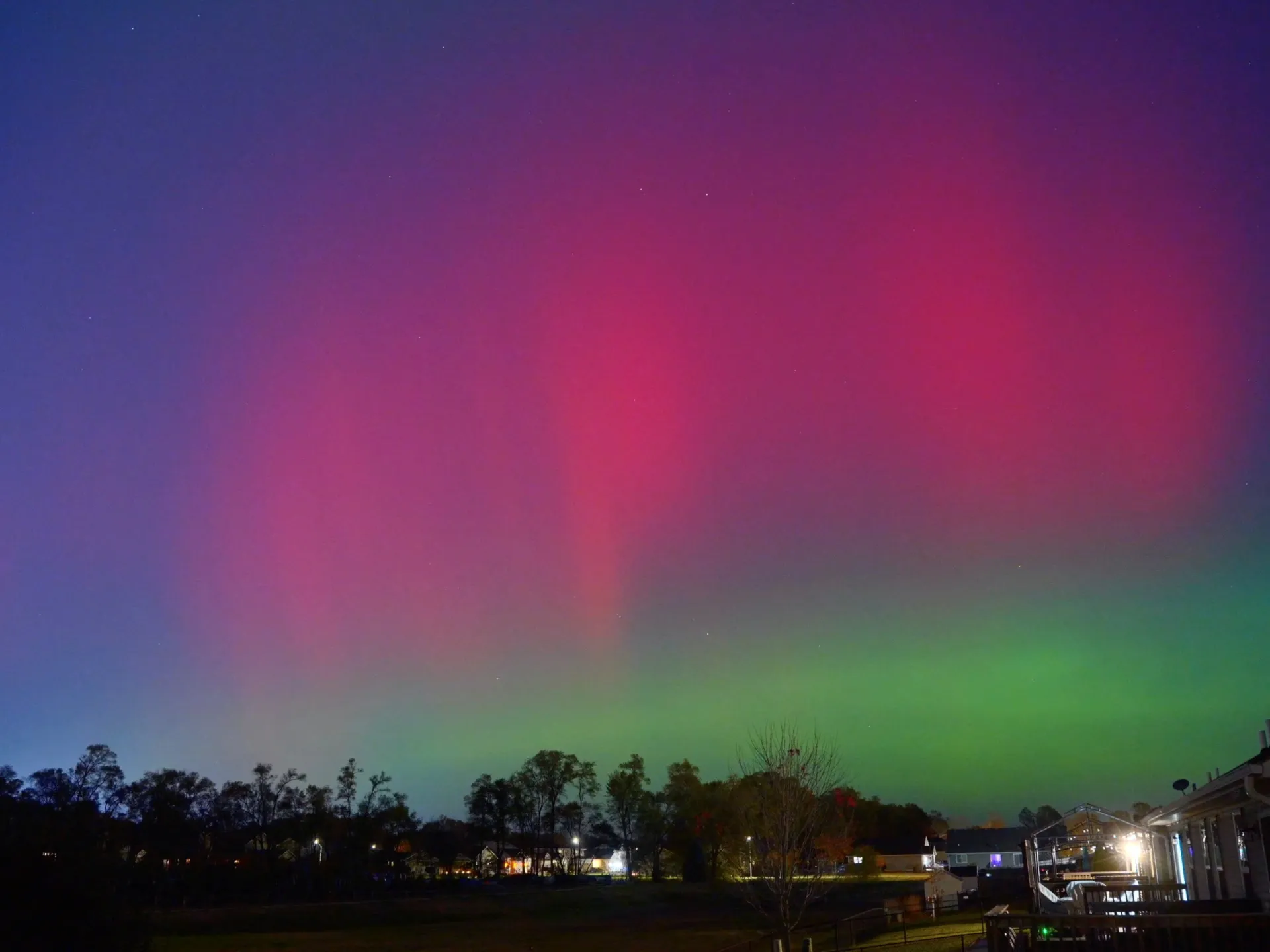
These recent events are part of a larger pattern. The Sun operates on an approximately 11-year solar cycle, and we are currently in Solar Cycle 25, which is now at or near its peak—known as the solar maximum. Scientists predicted this solar maximum would occur in 2024-2025, and it has delivered some of the most frequent and impressive northern lights displays in more than a decade.
Forbes senior contributor Jamie Carter reports that "with solar activity peaking and ideal sky conditions ahead of the spring equinox, mid-March 2026 could offer the final spectacular aurora borealis show of the 2020s." This means 2025 through early 2026 represents a once-in-a-decade opportunity for aurora viewing.
When and Where to See the Northern Lights
If you're hoping to catch the aurora borealis, timing and location are everything. Here's what experts recommend:
Season: The best time for aurora viewing is from September through April, when nights are longest and darkest in the Northern Hemisphere. In Arctic regions like northern Scandinavia, Alaska, and Canada, this is when the sky is dark enough for the lights to be visible.
Time of night: According to NOAA's Space Weather Prediction Center, "Best aurora is usually within an hour or two of midnight (between 10 PM and 2 AM local time). These hours of active aurora expand towards evening and morning."
Location: The auroral oval—the ring-shaped zone around the magnetic north pole where auroras are most frequent—passes directly over regions like northern Norway, Sweden, Finland, Iceland, Canada (particularly Yellowknife and the Northwest Territories), and Alaska. However, during strong geomagnetic storms, the lights can push much farther south.
Conditions: Dark, clear skies away from light pollution are essential. Even a bright moon can wash out a weak aurora, so aim for moonless nights when possible.
Lancaster University's Aurorawatch UK service (aurorawatch.lancs.ac.uk) and the NOAA Space Weather Prediction Center's 30-minute aurora forecast are excellent tools for real-time aurora predictions.
The Aurora Beyond Earth: A Planetary Phenomenon
Earth isn't the only planet in our solar system with auroral displays. Any planet with an atmosphere and a magnetic field is likely to have aurorae. NASA's Hubble Space Telescope has captured incredible images of auroras on Jupiter, Saturn, Uranus, and Neptune.
Mars also experiences auroras, but because the red planet lacks a global magnetic field, its auroral displays behave differently and appear to be far more widespread across the planet's surface. These findings help scientists understand how magnetic fields shape planetary atmospheres across the solar system.
Tips for Photographing the Northern Lights
Modern smartphones can sometimes capture auroras, but for the best results, use a camera that allows manual settings:
- Use a tripod: Long exposures are essential, and any movement will blur the image.
- Set a wide aperture: f/2.8 or wider if possible, to let in maximum light.
- Keep ISO between 800-3200: Adjust based on aurora brightness.
- Exposure time of 5-15 seconds: Longer exposures capture more light but may make the aurora look less crisp.
- Manual focus to infinity: Autofocus struggles in darkness.
The 2024 Astronomy Photographer of the Year competition at the Royal Observatory Greenwich featured stunning aurora images captured from locations as varied as Brighton, England—proving you don't need to travel to the Arctic Circle for a remarkable shot if conditions align.
What's Next: The Future of Aurora Viewing
Forbes' Jamie Carter warns that "this year is expected to mark the tail end of solar cycle 25's peak, known as the solar maximum." After the solar maximum fades, auroral activity will gradually decline as the Sun moves toward solar minimum—expected around 2030 to 2031. During solar minimum, the aurora is still present near the poles but far less likely to be seen at lower latitudes.
This means the next few months—through early 2026—represent the best opportunity for exceptional northern lights viewing that we may not see again until the next solar maximum around 2035-2036. Whether you're planning a dedicated trip to the auroral zone or simply hoping for a lucky sighting during the next geomagnetic storm, this is the time to look up.
Key Takeaways About the Northern Lights
- The northern lights are caused by charged solar particles colliding with Earth's atmosphere, exciting gas molecules to produce light.
- Oxygen produces green and red colors; nitrogen produces blue, purple, and pink hues.
- Geomagnetic storms can push the aurora visible far south of its usual Arctic home.
- The current solar maximum makes 2025-2026 the best viewing window until the next peak around 2035.
- Prime viewing: September-April, 10 PM-2 AM, away from light pollution, with clear dark skies.