Few shoes have crossed as many cultural boundaries as the Converse Chuck Taylor. What began as a rubber-soled basketball sneaker in 1917 is now one of the most versatile fashion staples on the planet — equally at home under a slip dress, a pair of cuffed jeans, or a punk rocker's ripped denim. After a quiet stretch, Converse is back in the spotlight in 2025 thanks to a viral Charli XCX collaboration, and its latest advertising has kept the brand in headlines. If you are wondering how to style Converse shoes, or simply how a century-old sneaker became a fashion icon, this guide breaks down the history, the design, and the styling rules that make Chucks work with almost everything.
From Basketball Court to Fashion Staple: The Chuck Taylor Story
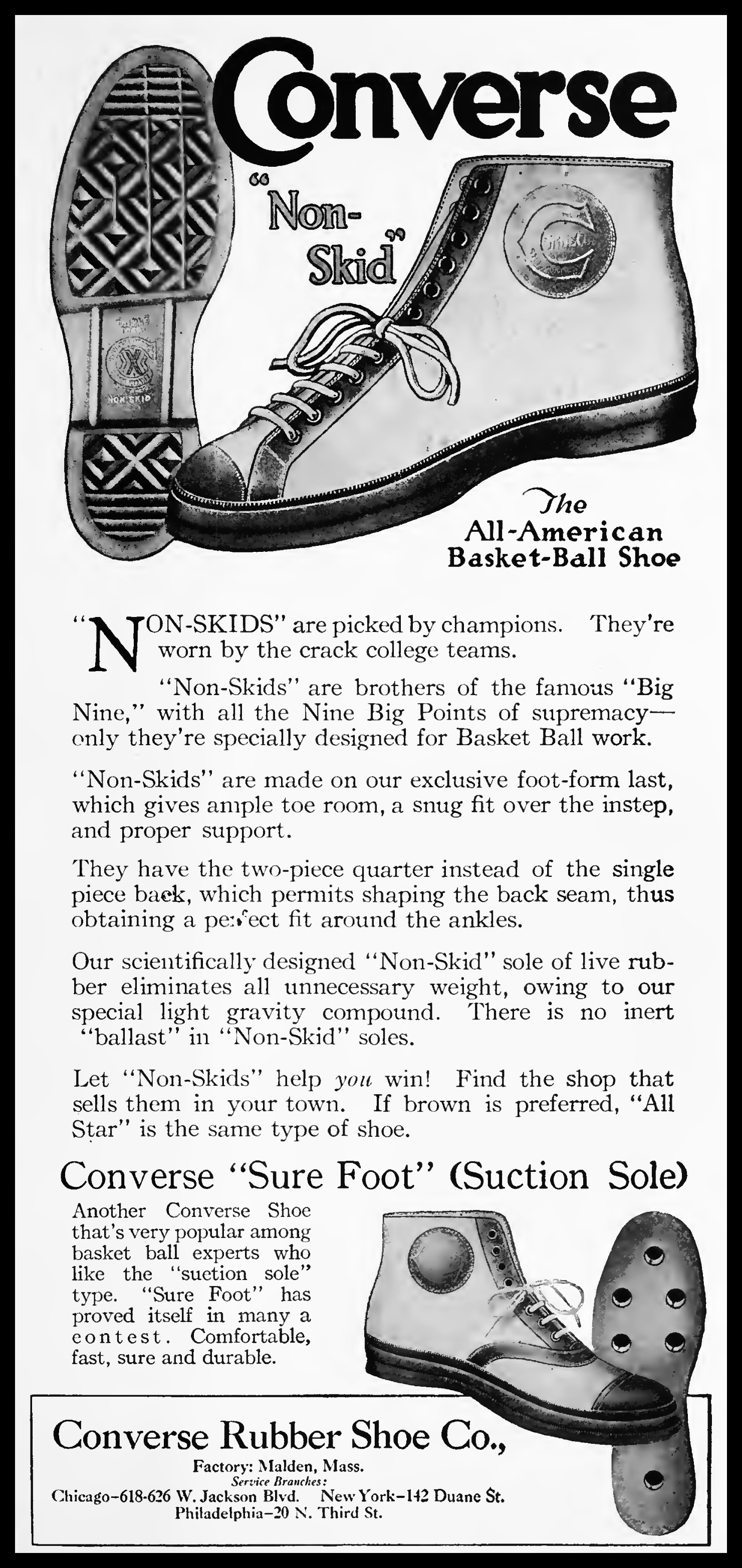
Converse traces its roots to February 1908, when Marquis Mills Converse opened the Converse Rubber Shoe Company in Malden, Massachusetts. The company initially made winterized rubber-soled boots and galoshes, but everything changed in 1917, when it introduced a canvas-and-rubber basketball shoe marketed as the "Non-Skids" — the forerunner of the modern All Star. In 1921, semi-professional basketball player Charles "Chuck" Taylor joined the company as a salesman. He spent decades running clinics and promoting the shoe across the United States, and in 1932 his signature was added to the ankle patch, creating the first celebrity-endorsed athletic shoe in history.
The Chuck Taylor All Star dominated the game for decades. It was the official shoe of the Olympic Games from 1936 to 1968 and the official training shoe of the U.S. armed forces during World War II. By the 1960s, Converse had captured roughly 70 to 80 percent of the basketball shoe market, with about 90 percent of professional and college players wearing them — including Wilt Chamberlain when he scored his legendary 100-point game in 1962. The brand faltered in the 1970s as leather-soled competitors took over, but the All Star made a dramatic comeback in the 1980s as retro, casual footwear embraced by musicians, artists, and subcultures. By 2000, Converse had sold more than 600 million pairs.
After several bankruptcies, Nike acquired Converse in 2003 for about $305 million, and the brand has since grown into a $2.4-billion-a-year (2023) lifestyle label that still centers on that same canvas silhouette.
What Makes a Converse Shoe So Wearable?
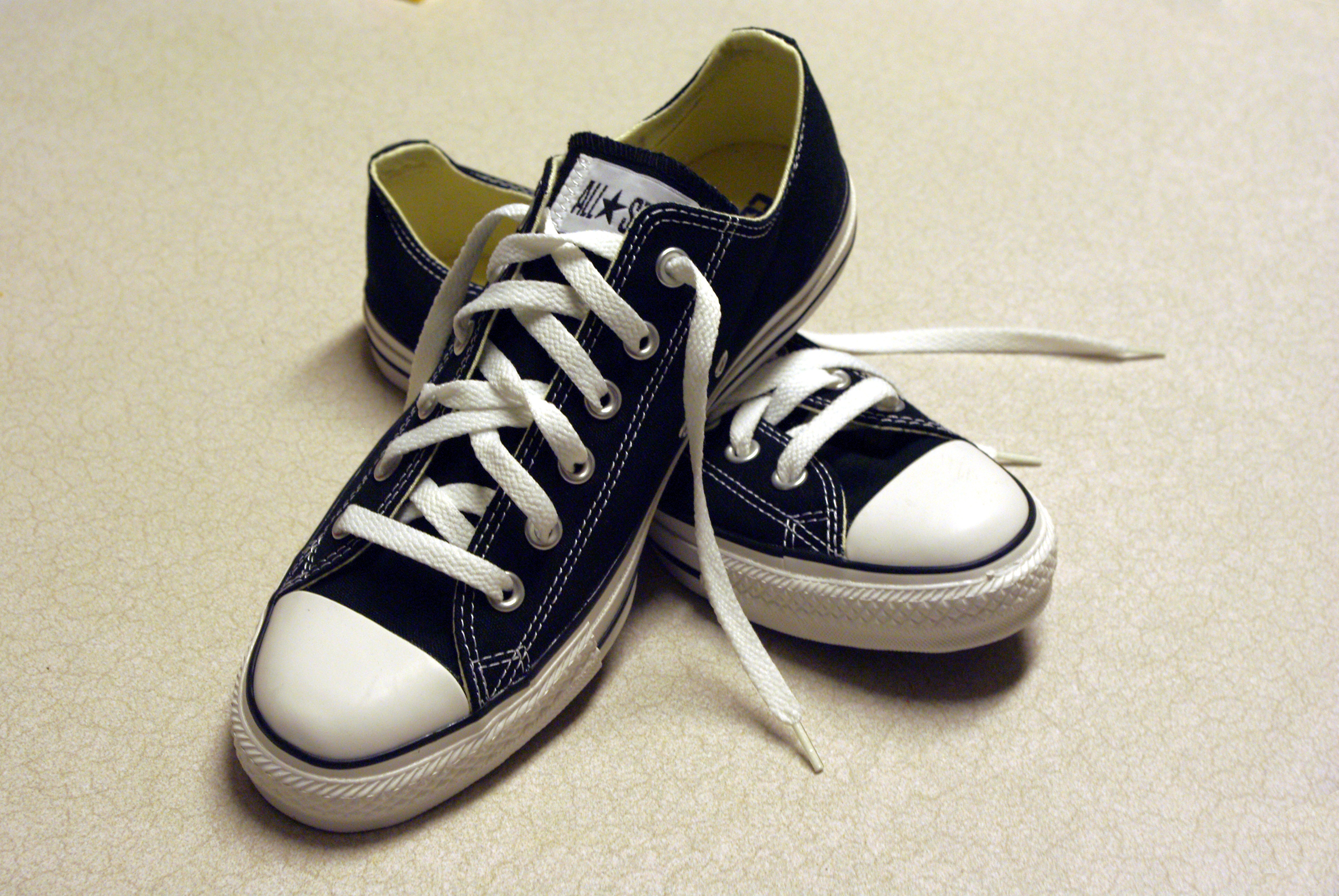
Understanding how to style Converse starts with understanding the shoe itself. The classic Chuck Taylor is built from a cotton canvas upper stitched to a rubber toe cap and outsole, with a distinctive circular ankle patch bearing the five-pointed star and Taylor's signature. The original design's "loose lining" of soft canvas was meant to add flexibility and prevent blisters, and a strip of rubber around the front — nicknamed the "pivot button" — protected the shoe during quick direction changes on the court.
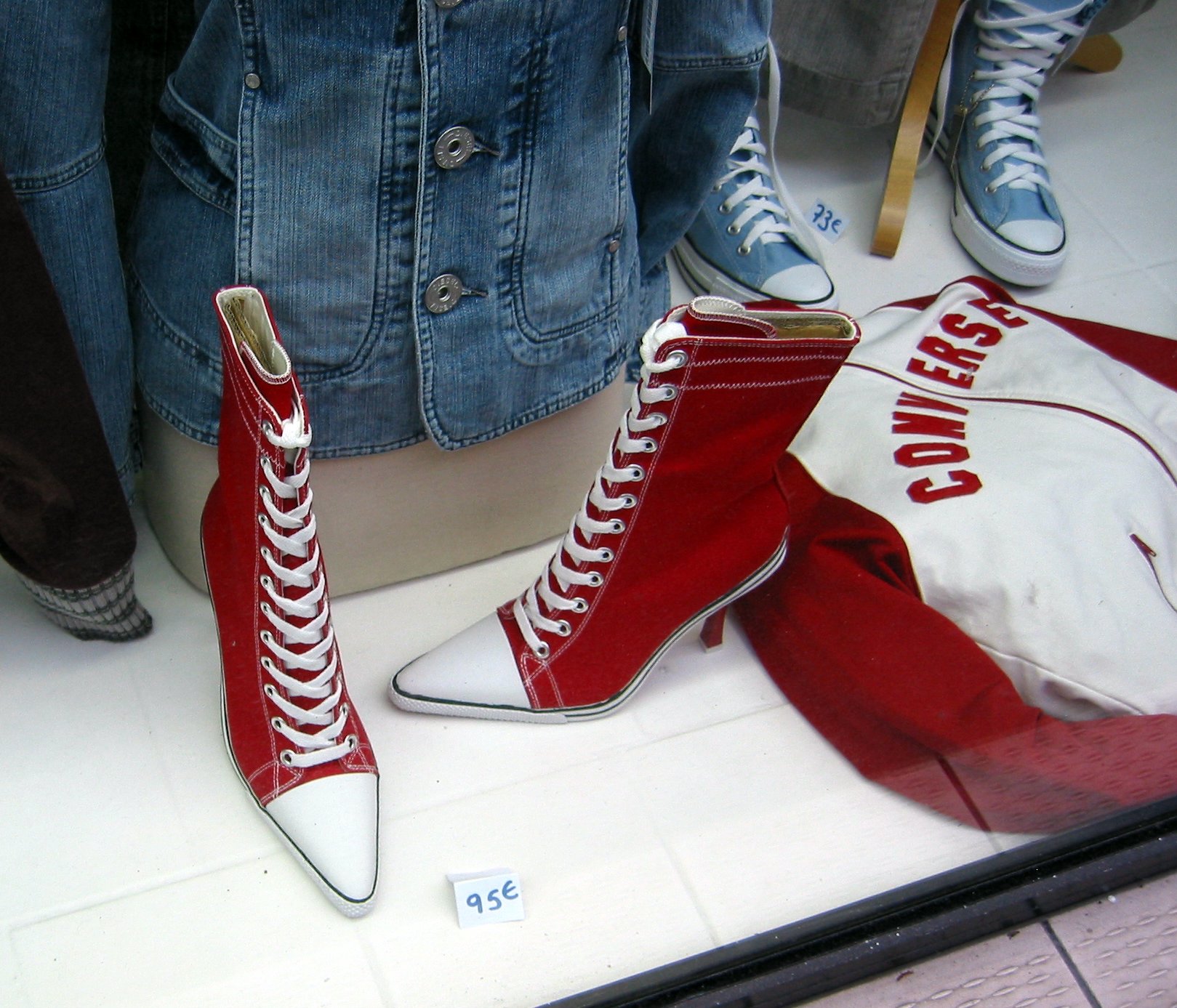
Today Chucks come in two main cuts — the high-top and the low-top — and in a wide range of materials including canvas, leather, and suede, plus countless colors and patterns. That variety is exactly what makes them so adaptable: a black or white pair reads as a neutral, while a red or patterned pair acts as a statement piece. The flat, low-profile sole keeps the shoe visually light, so it pairs as easily with tailored trousers as with denim shorts.
How to Style Converse Shoes for Any Outfit
The secret to styling Converse is treating the sneaker as a neutral anchor rather than a purely athletic shoe. High-tops look best when the full silhouette is visible, so cuff or roll your jeans to sit just above the ankle collar. Low-tops are the most flexible option and can slide under wide-leg trousers, cropped pants, or full-length dresses without breaking the line of the outfit.
For a classic everyday look, pair white low-top Chucks with straight-leg blue jeans and a tucked-in tee, or wear black high-tops with black skinny jeans for a streamlined, rock-inspired line. Converse also works surprisingly well with more dressed-up pieces: a slip dress, a midi skirt, or tailored wide-leg trousers all take on a relaxed, modern feel when grounded by canvas sneakers. On the color front, white and black are the safest investments, while a single bold color — red, for instance — can anchor an otherwise neutral outfit. Experiment with visible socks as a deliberate styling detail, and remember that canvas pairs best with lighter, warmer-weather layers, while leather or suede Chucks handle cooler months more gracefully.
The Advertising Legacy Behind the Converse Brand
Converse has always leaned on advertising and endorsements to sell its shoes. The earliest campaigns date to the 1920s, when ads touted the "Non-Skids" forerunner to the All Star. Chuck Taylor himself was a one-man marketing machine, touring gyms and YMCAs to promote the shoe, and the company later sponsored a touring "Converse All Stars" basketball team. In 1985, Converse put Larry Bird and Magic Johnson — fierce on-court rivals — into a single commercial to launch "The Weapon" basketball shoe, a campaign that became one of the brand's most memorable.
More recently, Converse's ads have kept the brand in the news cycle for less flattering reasons. In August 2026, the brand released the Chuck 70 X with an ad featuring Karina of the K-pop group Aespa standing inside a Converse star while holding a pair of black sneakers. Viewers said the lighting on her white skirt resembled a Klan hood and that the shoes' placement suggested "two dangling legs," evoking lynching imagery. Converse apologized and pulled the ad from social media and most of its websites in September. A separate campaign for the Jack Purcell PDM sneaker, developed with the Danish brand Palmes, showed a man on a ladder holding shoes hanging from a tree branch — imagery that some compared to the Billie Holiday song "Strange Fruit." The backlash underscores how closely fashion marketing is now scrutinized, even as the shoes themselves remain beloved.
Where Converse Stands Today and What's Next
Despite the ad controversy, the brand's cultural momentum is strong. Converse saw renewed popularity among teenagers in 2025, fueled in part by a limited-edition collaboration with pop star Charli XCX. Under Nike's ownership, the label has expanded beyond the Chuck Taylor into the Cons skate line, the Jack Purcell, and performance basketball models, and it now operates more than 130 stores worldwide. Leadership has also shifted: in 2025, Aaron Cain took over as president and CEO, succeeding Jared Carver.
Looking ahead, expect Converse to keep leaning into celebrity collaborations and limited drops while defending the Chuck Taylor's signature look — the company has spent years in court fighting look-alike sneakers over its bumper toe, striped midsole, and toe cap. The core appeal, however, remains unchanged: a simple, affordable canvas shoe that has outlived every trend it helped start.
Key Takeaways: Why Converse Remains a Wardrobe Essential
- Converse was founded in 1908, and the Chuck Taylor All Star debuted in 1917 as a basketball shoe.
- Chuck Taylor's 1932 signature patch made it the first celebrity-endorsed athletic shoe in history.
- By the 1960s, Converse held roughly 70–80% of the U.S. basketball shoe market before losing ground in the 1970s.
- Nike acquired Converse for about $305 million in 2003, and the brand generated $2.4 billion in revenue in 2023.
- High-tops, low-tops, and a full range of colors and materials make Chucks one of the most versatile sneakers to style — from cuffed jeans to dresses and tailored trousers.
- A 2025 Charli XCX collaboration renewed the brand's popularity, while its 2026 Chuck 70 X and Jack Purcell ads drew controversy and kept Converse in the news.