
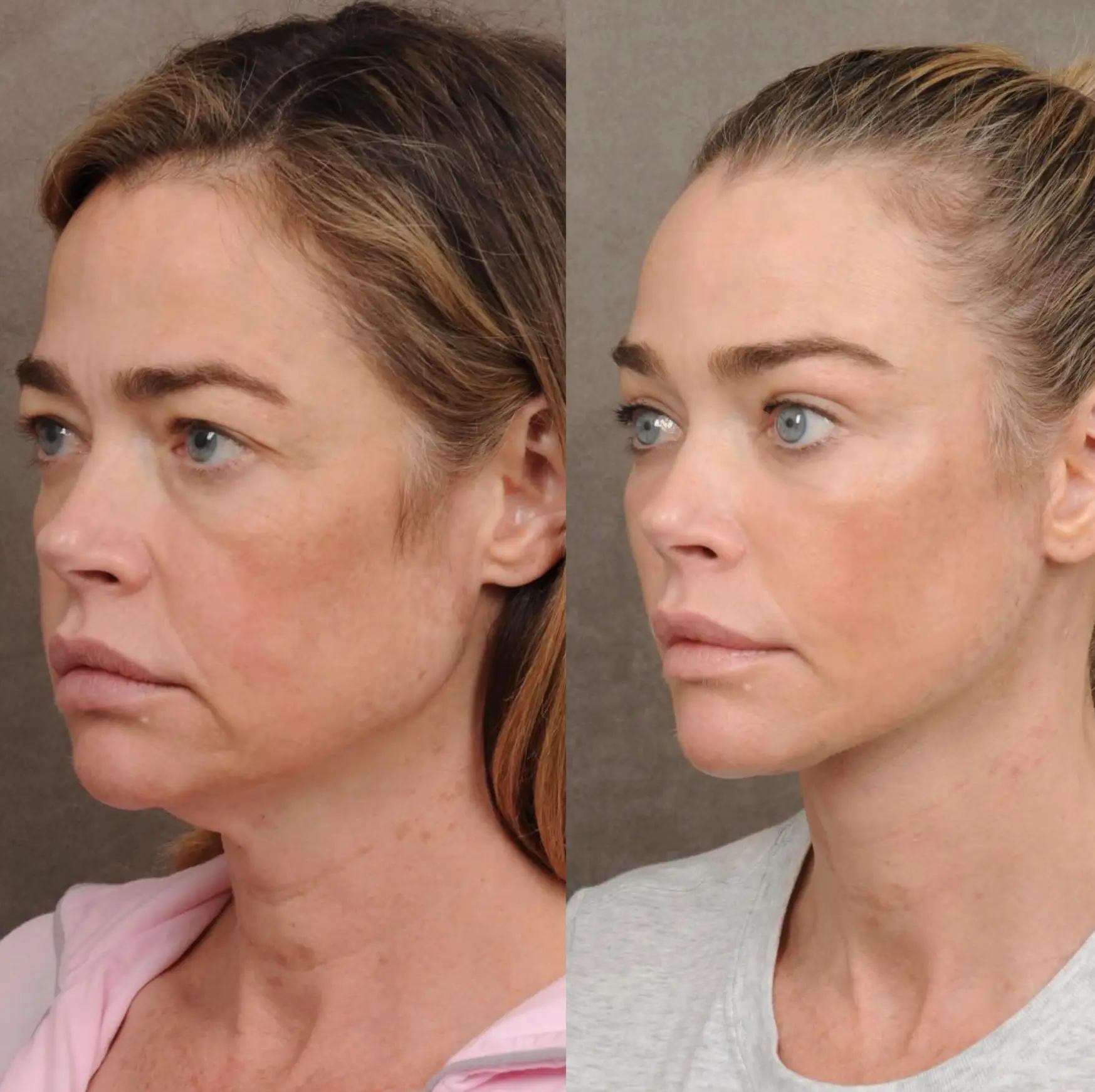
When actress Denise Richards recently revealed her "shocking" facelift transformation, describing the results as "night and day," it sparked widespread conversation about cosmetic surgery. At 55, the former Bond girl underwent a comprehensive facial rejuvenation procedure with Beverly Hills plastic surgeon Dr. Ben Talei, joining more than 131,000 Americans who choose facelift surgery each year. But what exactly happens during a facelift, and how does this procedure actually work to turn back the clock on facial aging?
Understanding the Science Behind Facelift Surgery
A facelift, medically known as rhytidectomy, is a surgical procedure designed to improve visible signs of aging in the face and neck. Unlike non-surgical treatments that primarily address surface concerns, a facelift works by repositioning or removing skin, fat, and muscle tissue to restore a more youthful facial contour. The procedure specifically targets sagging skin in the lower face, deep creases below the eyelids and along the nose extending to the corner of the mouth, fat that has fallen or disappeared, loss of skin tone in the lower face creating jowls, and loose skin and excess fatty deposits under the chin and jaw.

The Different Types of Facelifts: Which One Is Right?
Not all facelifts are created equal. Plastic surgeons have developed several specialized techniques to address different aging concerns. The traditional facelift provides comprehensive improvement for moderate to significant facial aging, while the SMAS (superficial musculoaponeurotic system) facelift specifically targets the muscular layer of your face. Deep plane facelifts lift the SMAS, fat, and skin as a single unit, while mid-facelifts focus on cheek rejuvenation. For those with earlier signs of aging, mini-facelifts offer a less invasive option focusing on the lower face and neck area.
Dr. Ben Talei, who performed Denise Richards' procedure, explained his comprehensive approach: "There are things that the majority of surgeons in the world would gloss over such as the organization of the eyebrow hair or the contour and shape of the forehead. As we age, so many little things change like the disarray of the eyebrow hair pattern." Richards' procedure included not just a standard facelift but also a temporal brow lift, minor upper blepharoplasty (eyelid surgery), lip lift, and fat grafting using her own tissue taken from her thighs.
Step-by-Step: What Actually Happens During Facelift Surgery
The facelift procedure typically begins with anesthesia—either general anesthesia where you're completely asleep or IV sedation where you're deeply relaxed but breathing on your own. Once anesthesia takes effect, the surgeon makes carefully planned incisions. These usually begin in the hairline at the temples, extend around the ears, and may continue into the lower scalp or under the chin, depending on the specific technique being used.
Through these incisions, the surgeon gently lifts the skin away from the underlying tissue. This allows access to the deeper structures that need adjustment. The surgeon then repositions and tightens the underlying muscle and connective tissue—the SMAS layer—which provides the structural support for facial contours. Excess fat may be sculpted, trimmed, or redistributed to restore volume to areas that have hollowed with age. Finally, the skin is redraped over the newly contoured foundation, excess skin is trimmed away, and the incisions are closed with sutures or skin glue.

The Recovery Journey: What to Expect After Surgery
Facelift recovery follows a predictable pattern, though individual experiences vary. Immediately after surgery, you'll have bandages around your face to minimize swelling and support the new contours. Most patients experience some discomfort that can be managed with prescribed medication. Swelling and bruising typically peak within the first 48-72 hours, then gradually subside over the following weeks.
During the first week, you'll need to keep your head elevated, even while sleeping, to reduce swelling. Your surgeon will remove bandages and possibly drains within a few days. Stitches are usually removed in stages—some within the first week, others after 7-10 days. Most people can return to work and normal social activities within 2-3 weeks, though strenuous exercise should be avoided for at least 3-4 weeks. While major swelling resolves within a month, subtle swelling can persist for several months, with final results becoming apparent around the 3-6 month mark.
Denise Richards described her recovery experience, noting that while her daughters initially expressed concern about her decision, they eventually came to understand her choice. "They see that I still look like me," she explained, addressing a common concern about facelifts looking artificial or "done."
Risks, Benefits, and Realistic Expectations
Like any surgical procedure, facelifts carry potential risks including infection, bleeding, anesthesia complications, nerve injury (which could cause temporary or permanent numbness), scarring, and asymmetry. However, when performed by a board-certified plastic surgeon, serious complications are rare. The benefits typically include a more youthful appearance, improved self-confidence, and results that last 7-10 years.
It's crucial to understand what a facelift cannot do: it doesn't stop the natural aging process, cannot dramatically change your fundamental appearance, and doesn't treat superficial wrinkles, sun damage, or skin color irregularities. For these concerns, complementary procedures like laser treatments, chemical peels, or injectables may be recommended.
Denise Richards' Experience: A Case Study in Modern Facelifts
Richards' decision to undergo a facelift came after careful consideration. "I always said I would never get a facelift, because that's my face," she admitted. "This is how I make my money. I've been in this business a long time. People know what I look like." Her fear was understandable—as a public figure, any drastic change would be immediately noticeable. However, after years of being in the spotlight since her 20s, she decided she wanted "to put things back up, where they were before."
What's particularly notable about Richards' approach is her transparency. "Being in the public eye since my 20s, people know what I look like—a facelift is not something that I could hide," she stated. This openness reflects a growing trend of celebrities being more candid about cosmetic procedures, helping to destigmatize these surgeries and provide realistic expectations for the public.
Non-Surgical Alternatives to Traditional Facelifts
For those not ready for surgery or wanting more subtle improvements, several non-surgical options exist. Dermal fillers can restore volume to hollow areas, while neurotoxins like Botox address dynamic wrinkles caused by muscle movement. Thread lifts use temporary sutures to provide a subtle lift, and energy-based treatments like ultrasound (Ultherapy) or radiofrequency (Thermage) stimulate collagen production for skin tightening. These non-surgical approaches typically have shorter recovery times but also provide less dramatic and shorter-lasting results than surgical facelifts.
As Dr. Talei noted about Richards' results, "Her stunning, gorgeous eyes were restored rather than changed or just cleaned up. Even her earlobes look better from all views. The sad or tired look around the eyes and mouth have been neutralised and reversed." This attention to detail—addressing not just the major sagging but the subtle signs of aging—represents the modern approach to facial rejuvenation.
The Bottom Line: Is a Facelift Right for You?
Facelift surgery remains one of the most effective ways to address significant signs of facial aging. Ideal candidates are typically in their 40s to 60s, in good health, non-smokers, with realistic expectations about what surgery can achieve. The decision should be made after thorough consultation with a board-certified plastic surgeon who can assess your specific concerns, explain the various options, and help you understand the recovery process.
As Denise Richards discovered, a well-performed facelift can provide natural-looking results that restore confidence while maintaining your essential appearance. "It is night and day," she said of her transformation. "It's shocking, actually. My face was in [Dr Talei's] hands." Her experience highlights how modern facelift techniques, when performed by skilled surgeons, can deliver dramatic yet natural rejuvenation for those seeking to turn back the clock on facial aging.