Registering to vote is the single most important step you can take before casting a ballot in any federal, state, or local election — and it is simpler than many first-time voters expect. In most states, you can complete your voter registration online in roughly 10 minutes using a driver's license or state ID number. Whether you are registering for the first time, moving to a new address, or updating your name after a life change, this guide explains exactly how to register to vote, the eligibility rules you must meet, the documents to gather, and the deadlines you cannot afford to miss.
How Voter Registration Works: Your Three Main Options
In the United States, elections are administered at the state level, which means the exact way you register depends on where you live. The starting point, however, is the same for everyone: the federal government's official portal, vote.gov. When you select your state or territory, the site routes you to the registration method your state accepts.
There are three primary ways to complete your registration:
- Online: The fastest and most convenient option. Most states allow you to register or update your information entirely online using your driver's license or state-issued ID number.
- By mail: You can download the National Mail Voter Registration Form from the U.S. Election Assistance Commission, fill it out onscreen and print it, or print a blank copy and complete it by hand. Remember to sign the form before mailing it to the address listed for your state.
- In person: You can register at your local election office, and many states also accept registration at the department of motor vehicles (DMV) or at state and county public assistance offices such as SNAP/food stamp offices.
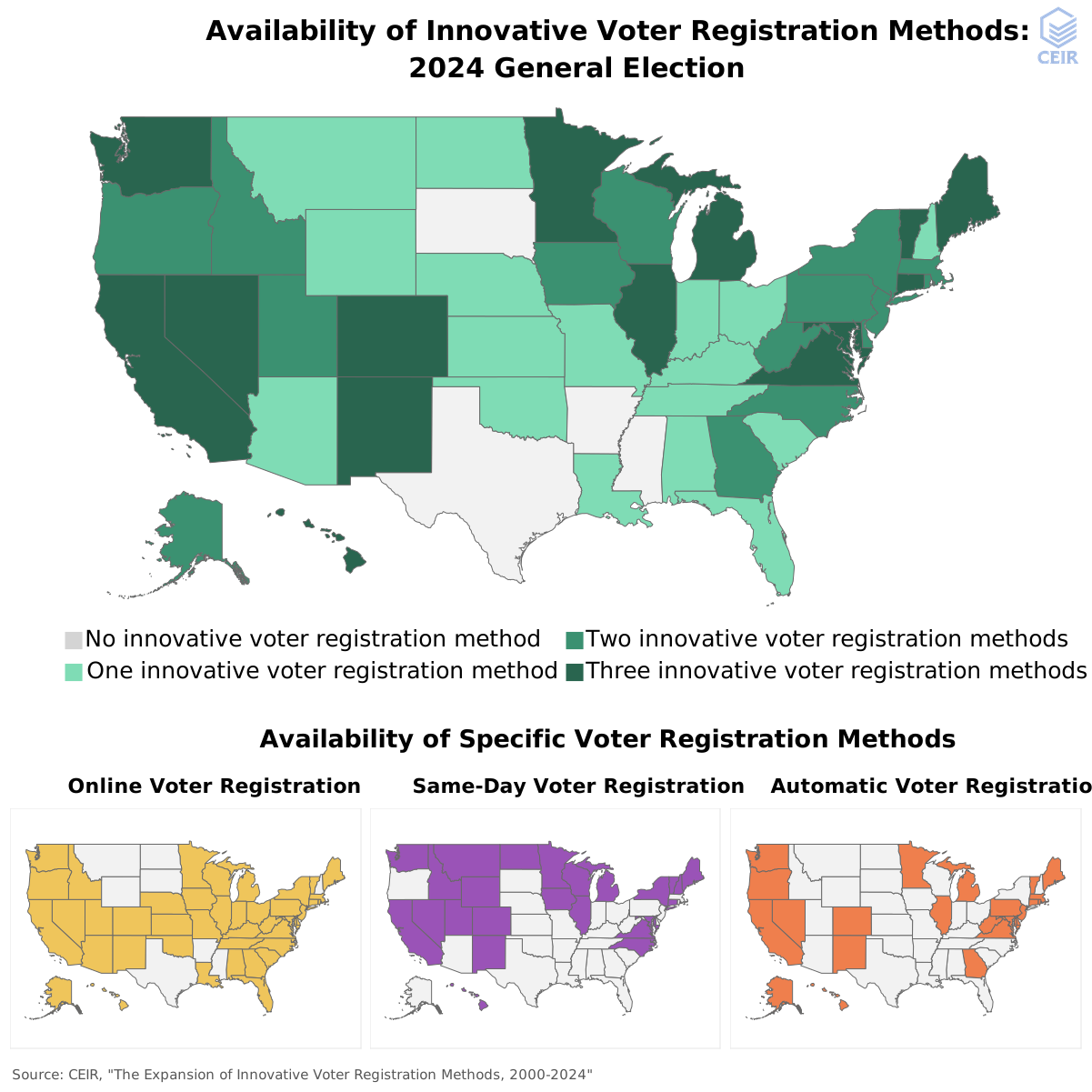
Those in-person options exist partly because of the National Voter Registration Act of 1993, often called the Motor Voter law, which requires states to offer voter registration opportunities at motor vehicle offices and public assistance agencies. If you are a U.S. citizen living abroad, a service member stationed overseas, or the spouse or eligible family member of one, you use a separate path: the Federal Voting Assistance Program (FVAP) lets you register to vote and request an absentee ballot at the same time through a single form.
Step by Step: How to Register to Vote in Minutes
Follow these steps to complete your registration correctly the first time and avoid last-minute problems.
- Check that you are eligible. You must be a U.S. citizen, be at least 18 years old on or before Election Day, and meet your state's residency requirements.
- Gather your documents. In most cases, you will need a driver's license or a state ID to register. If you do not have either, you may be able to provide other documentation such as a bank statement or utility bill — but the accepted documents vary by state, so check with your state's election office.
- Visit vote.gov and select your state. The site will show which registration methods are available to you and note your state's registration deadline.
- Complete the application. Enter your name, address, date of birth, and any other required information, then submit it online, print and mail it, or deliver it in person.
- Sign before sending. If you are mailing a paper form, make sure it is signed, or your application may be returned.
- Confirm your registration. Wait for your voter registration card in the mail or verify your status online to confirm your application was processed.
Who Can — and Can't — Register to Vote
You can register and vote in U.S. federal, state, and local elections if you are a U.S. citizen who meets your state's residency rules and will be at least 18 years old on or before Election Day. That umbrella includes several situations people often ask about: U.S. citizens living outside the country, citizens born abroad who have never lived in the United States (eligibility is based on where your parents last lived or were registered), and dual citizens living in the U.S. or abroad. People experiencing homelessness can still register as long as they meet residency requirements.
One of the most common questions from younger voters is about age. In almost every state, you can register before your 18th birthday as long as you will be 18 by Election Day, and some states even allow 17-year-olds who will turn 18 by the election to vote in primary elections.
There are also groups who cannot vote in federal, state, or most local elections. Non-citizens — including permanent legal residents — cannot vote in federal or state elections, and only certain localities allow non-citizens to vote in local elections. Some people convicted of a felony lose the right to vote, and the rules for restoring that right differ in every state. Some people with certain mental disabilities may also be unable to vote, with rules varying by state. Finally, U.S. citizens residing in U.S. territories such as Puerto Rico can vote in local elections but cannot vote for president in the general election.
After You Register: Confirm Your Status and Keep It Current
Registering is not a set-and-forget task. If you change your name or move to a new address, you must update your voter registration — and if you move to a different state, you must register again in that new state. When your registration is processed, your state will mail you a voter registration card that typically lists your name, home address, polling place, and party affiliation if you listed one. The card confirms you are registered, but you do not need to bring it with you to vote, and it may take a few weeks to arrive.
To confirm you are still registered, use the Can I Vote tool from the National Association of Secretaries of State. Select voter registration status, choose your state, and you will be directed to your state's election website to verify your name, address, political party, and polling place. Do this well before your state's registration deadline — which can be up to 30 days before the election — so you have time to re-register or make changes if anything looks wrong.
One point of confusion is political party affiliation. You do not have to join a party or reveal your party preference when you register, and not every state even lists an affiliation. If you do list one, it does not lock you into voting for that party in a general election — you can always vote for any candidate. Party affiliation mainly matters in primary elections, where some states hold closed primaries that restrict you to voting only for your own party's candidates.
Know Your Deadline: When to Register to Vote
Every state sets its own voter registration deadline, and depending on where you live, that cutoff could be as much as a month before an election. The only state that does not require voter registration at all is North Dakota, and the National Mail Voter Registration Form is accepted everywhere except New Hampshire, Wyoming, and North Dakota. Because deadlines vary so widely, the safest strategy is to register early and confirm your status well ahead of time. You can find your exact deadline on vote.gov or by contacting your state or territory's election office directly.
The Bottom Line: Quick Takeaways for New Voters
- Start at vote.gov — it routes you to the registration method your state accepts.
- Register online, by mail, or in person; the online option is the fastest.
- Have a driver's license or state ID ready, or another document your state accepts.
- You must be a U.S. citizen and 18 or older by Election Day (most states let you register early before turning 18).
- Update your registration whenever you move or change your name.
- Confirm your status before your state's deadline, which can be up to 30 days before the election.