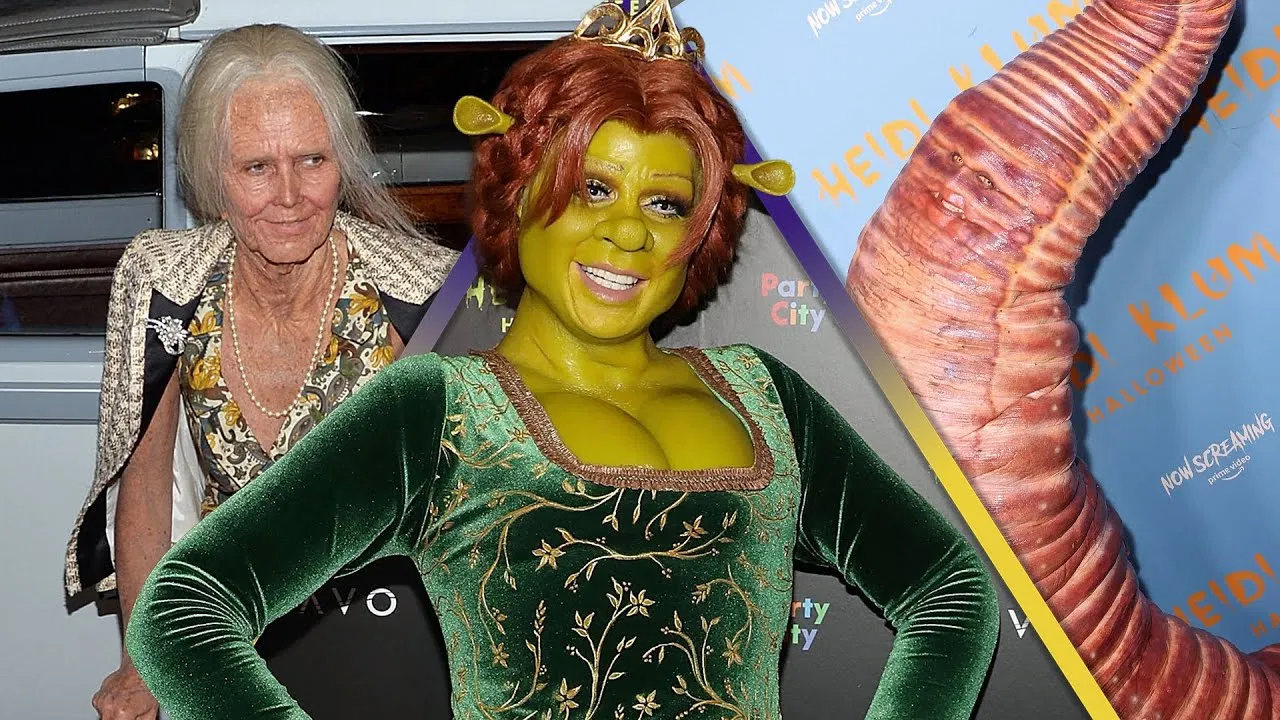
Heidi Klum arrived at her 25th annual Halloween party this year not as a supermodel but as a giant, blood-soaked severed hand — complete with painted red nails, protruding veins, and rings still wrapped around the fingers. It was the latest in a quarter-century of transformations that has earned the German-born star the unofficial title of "Queen of Halloween." But behind every one of her jaw-dropping heidi klum halloween looks sits a months-long pipeline of sculpting, molding, casting, and hand-painting that reveals exactly what it takes to build a truly elaborate Halloween costume.
This year's reveal was teased for days on Instagram with unsettling close-ups of fleshy prosthetic pieces — textures resembling brain matter, intestines, and raw pink skin — before Klum finally walked the carpet as an oversized replica of her own hand. Longtime collaborator Mike Marino, the Oscar-nominated and Emmy-winning artist behind Prosthetic Renaissance, has described these projects as among "the most elaborate costumes ever made."
Inside the Workshop: How Heidi Klum's Costumes Actually Get Made
Klum does not buy her costume off the rack. For years she has worked with Marino and his team of special-effects makeup artists — the same kind of professionals who build creatures for blockbuster films — and the workflow follows the classic movie-monster pipeline.
It starts months in advance with a concept and a full-body scan. Marino's team uses 3D scanning and printing to build a precise replica of Klum's body so each prosthetic can be sculpted to fit her exactly. Artists then sculpt the look in clay, carving wrinkles, scales, and veins by hand before taking molds. The final pieces are cast in materials such as whipped foam and latex, which are baked inside those molds so they hold their shape while staying flexible enough to move with her skin.
After casting comes the paint job. Each piece is hand-painted — sometimes for hours — to add lifelike shading, bruising, and veins. On party day, application alone can run five to six hours. Her 2026 severed-hand look reportedly took around five to six hours to put on, while the 2022 giant worm took four months to construct and another ten hours just to apply. Appliances are held in place with adhesives such as spirit gum, and artists clean the skin with alcohol first so natural oils don't break the bond.
The investment, Marino has admitted, is significant: "It costs a lot more than anyone would think." His crew often works "down to the wire" right up until the reveal, compressing months of labor into a single unforgettable night.
25 Years of Transformations: The Costumes That Built a Reputation
Klum's Halloween has become a cultural event because the looks escalate every year. In 2022 she slithered onto the carpet as a giant earthworm; in 2023 she became a peacock with a troupe of Cirque du Soleil performers arranged as her feathers. 2024 brought E.T., and in 2025 she was Medusa — a hand-painted serpentine body with shimmering green scales that extended into a rattlesnake's tail, topped with animatronic snakes for hair. Earlier standouts include Princess Fiona from Shrek in 2018, an alien creature in 2019, and a startlingly realistic elderly woman in 2013.

How to Plan Your Own Elaborate Halloween Costume
You don't need a film-effects studio to borrow the same principles. The core workflow — sculpt, mold, cast, paint, apply — scales down surprisingly well for ambitious DIY costumes, whether you're building a monster face or a full character.
Begin with a clear concept and reference photos. Decide exactly what you want to become and gather images from every angle so the build stays focused. Then sculpt your piece in oil-based clay, using a little water to blend the edges smoothly. For simple appliances such as wounds or scars, you can skip the mold entirely and brush liquid latex straight onto the skin in two or three thin layers, letting each dry before adding the next.
For larger or repeatable pieces, make a mold. A basic plaster or silicone mold taken over your clay sculpt lets you cast the same shape again and again. Cast it in liquid latex or foam latex, then paint it in thin layers to build realistic depth — veins, highlights, and shading do most of the convincing. Finally, apply the finished appliance with spirit gum or prosthetic adhesive, and always cleanse the skin with alcohol first so oils don't prevent a strong bond.
Be realistic about time and budget. Even modest foam-latex pieces need several days including drying time, and a full-body character can eat up a month or more of weekends. Start early — Klum's team begins months ahead — and do a full test run of the application before Halloween night so there are no surprises.
The 2026 Reveal: A Severed Hand 25 Years in the Making
Klum marked the milestone with a costume that was equal parts gruesome and self-aware, arriving as a "giant severed version of her own hand" with painted red nails, rings, and what fans described as blood and guts spilling from the wound. In the days before the party she posted cryptic clues asking followers, "What's my costume?" — a tradition that has become part of the annual fun.
The detail was unmistakable: every vein, wrinkle, and ring was replicated to scale. Klum credited "the entire team" for the 25th-anniversary look, writing that every vein, wrinkle, and little detail had been painstakingly delivered.
What's Next: Lessons to Steal From the Queen of Halloween
If Klum's 25-year streak proves anything, it's that the most memorable costumes are built on planning, patience, and a willingness to commit fully to a single concept. Her formula — a clear idea, professional-grade materials, and a crew that starts early — is a blueprint any dedicated costume maker can follow at a smaller scale.
As the social-media costume arms race intensifies, expect Klum to keep pushing further into creature and special-effects territory. For everyone else, the takeaway is practical: the gap between a forgettable costume and a showstopper is rarely money alone. It's time, technique, and the confidence to look completely unrecognizable for one night.
The Bottom Line: Key Takeaways
- Heidi Klum's 2026 costume — a giant severed hand — marked her 25th annual Halloween party.
- Her looks are built like movie monsters: sculpting, molding, casting in foam latex, and hand-painting.
- Mike Marino of Prosthetic Renaissance has created her worm, E.T., Medusa, and severed-hand costumes.
- Builds can take months; application alone ranges from five to ten hours.
- DIY makers can copy the same workflow at home with clay, liquid latex, a simple mold, and spirit gum.