
Google has officially entered the screenless fitness tracker space with the launch of the Fitbit Air, a $99 wearable designed to compete with devices like Whoop while staying true to Fitbit's roots in accessible health tracking. Announced on May 7, 2026, the Fitbit Air is the first new Fitbit hardware in nearly four years, and it arrives alongside a major rebranding of the Fitbit app to Google Health and the public rollout of an AI-powered Health Coach.
Meet the Fitbit Air: A Tiny Pebble That Does Big Things
The Fitbit Air is defined by what it doesn't have — there's no screen, no buttons, and no distracting notifications. Instead, it's built around a small removable sensor module that Google describes as a "pebble," which snaps into interchangeable fabric or silicone bands. The entire device weighs just 12 grams with the band on, and a mere 5.2 grams without it. To put that in perspective, it's 25 percent smaller than the Fitbit Luxe and 50 percent smaller than the Fitbit Inspire.
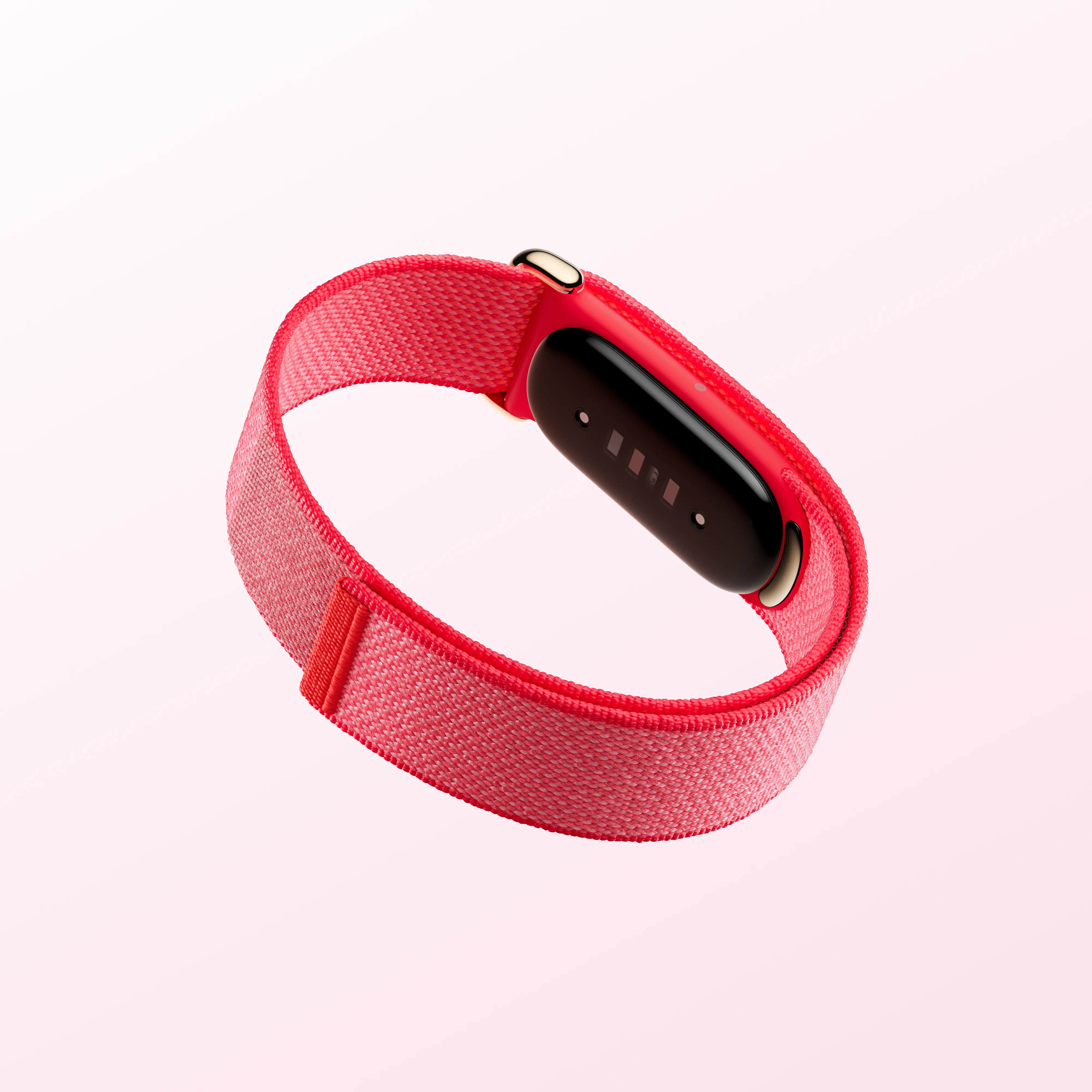
Inside that tiny sensor module lives an impressive array of health-tracking technology: an optical heart rate sensor, a gyroscope, an accelerometer, a blood oxygen (SpO2) sensor, and a skin temperature sensor. While it doesn't have built-in GPS (it uses Connected GPS from your paired phone), it covers the essentials for 24/7 health monitoring. The device is also water-resistant to 50 meters, making it suitable for swimming and showering.
According to Rishi Chandra, Google's vice president of health and home, the goal was simplicity. "We wanted something you could give to your kids and parents that they could just put on their arms," he told The Verge. "They don't have to learn anything new."
How the Fitbit Air Tracks Your Health Around the Clock
The Fitbit Air is designed for passive, continuous monitoring. You wear it, and it collects data in the background without any interaction needed. It automatically tracks steps, heart rate, sleep stages (light, deep, REM), heart rate variability (HRV), breathing rate, and blood oxygen levels throughout the day and night.
For workouts, the device features automatic exercise detection — it can recognize when you're walking, running, cycling, or swimming and log the activity without you having to start anything manually. If you prefer more structured workouts, you can start a session from the Google Health app on your phone, and the Fitbit Air will track it. The device also includes a Smart Wake feature that uses haptic vibrations to wake you at the optimal point in your sleep cycle, plus silent alarms that won't disturb others.
One of the standout capabilities is background atrial fibrillation (AFib) detection, which can monitor for irregular heart rhythm patterns without requiring an on-demand ECG reading like pricier smartwatches. The skin temperature sensor, meanwhile, can detect nightly temperature variations that may correlate with menstrual cycle phases or provide context for perimenopausal symptoms like hot flashes and night sweats.
Battery Life and Charging: A Week of Use on a Single Charge
Google rates the Fitbit Air's battery at up to seven days on a single charge. When you do need to power up, the device uses a magnetic USB-C charger. A five-minute quick charge delivers a full day of use — ideal for those moments when you realize your battery is low just before bed. A complete charge from empty to 100 percent takes about 90 minutes. A small LED light and haptic vibrations alert you when the battery is running low.
No Subscription Required — But There's an Option
Unlike Whoop, which requires a monthly membership to access its full feature set, the Fitbit Air does not require any subscription to function. All core health metrics including heart rate, sleep stages, HRV, SpO2, breathing rate, stress tracking, and Smart Wake are included at no extra cost. For users who want more, Google offers Google Health Premium (formerly Fitbit Premium) at $9.99 per month or $99.99 per year. The subscription unlocks the AI Health Coach, adaptive fitness plans, proactive trend insights, and deeper analysis. Every Fitbit Air purchase comes with three months of Premium included for free.
The Bigger Picture: Fitbit Becomes Google Health
The Fitbit Air launch is just one part of a larger transformation. On May 19, 2026, the Fitbit app will officially rebrand to Google Health, consolidating with Android's Health Connect app into a single platform. The move comes after Google acquired Fitbit for $2.1 billion in 2021 and has been steadily integrating it into its ecosystem. Nearly 500,000 users participated in a public beta of the new app since October 2025, providing over a million pieces of feedback that helped shape the final version.
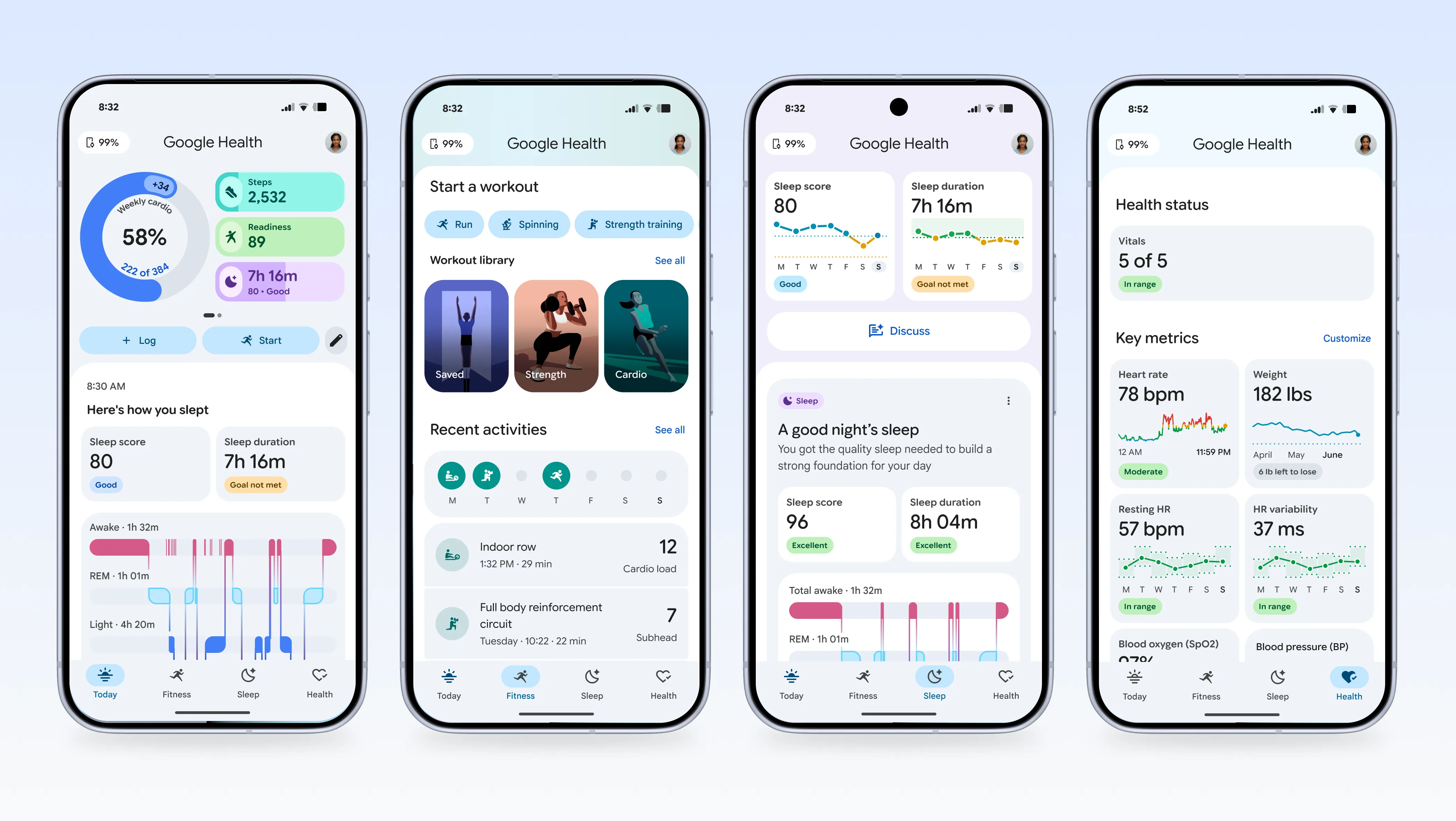
The Google Health app will be available on both Android and iOS at launch, and Google has stated it will eventually support third-party wearables like Garmin, Whoop, and Oura devices. The AI Health Coach, which was in beta, is now rolling out to the public. It can create adaptive fitness plans, answer questions about your health data, help log meals using your phone camera, and provide personalized insights that connect the dots between different metrics like sleep, activity, and recovery.
Existing Fitbit users will have their data automatically transferred to the Google Health app, and Fitbit Premium subscriptions will transition to Google Health Premium with no change in pricing.
How the Fitbit Air Compares to Alternatives
At $99 with no subscription fees, the Fitbit Air is significantly more affordable than the Whoop band, which costs $239 for the hardware plus a $30-per-month membership. The Fitbit Air also differentiates itself from other Fitbit devices by offering a truly screenless experience — something that appeals to users who want health tracking without the distractions of a smartwatch.
The device is designed to work alongside a Pixel Watch or other smartwatch, meaning you could wear a Pixel Watch during the day for notifications and apps, then switch to the Fitbit Air for sleep tracking at night. This dual-device support is a feature that Fitbit recently added back after removing it in previous generations.
What the Fitbit Air gives up compared to more expensive trackers: no on-device GPS (it uses your phone's GPS), no manual ECG readings, no color display, and no music controls. What you gain: extreme comfort for 24/7 wear, excellent battery life, a low price point, and all-day health monitoring that fades into the background.
The Fitbit Air is available for pre-order now in Obsidian, Porcelain, Lavender, and Berry colorways, with accessory bands starting at $34.99. Google is also offering a trade-in program for older Fitbit devices, with values varying by model.
Who Should Buy the Fitbit Air?
The Fitbit Air is best suited for anyone who wants comprehensive health tracking without the bulk, cost, or constant notifications of a smartwatch. It's an excellent option for first-time fitness tracker users, parents who want to monitor their activity discreetly, athletes who prefer a dedicated sleep and recovery tracker alongside their sports watch, and anyone who finds traditional smartwatches too bulky or distracting. At $99 with no ongoing fees, it's also one of the most accessible health trackers on the market — especially compared to subscription-based rivals that can cost hundreds of dollars per year.
For those who need on-device GPS, a screen for notifications, or the ability to take ECG readings manually, the Fitbit Charge 6 or a Pixel Watch would be better choices within the Google/Fitbit ecosystem. But for pure, simple health tracking that you can put on and forget about, the Fitbit Air represents a compelling return to form for a company that helped popularize the fitness tracker in the first place.