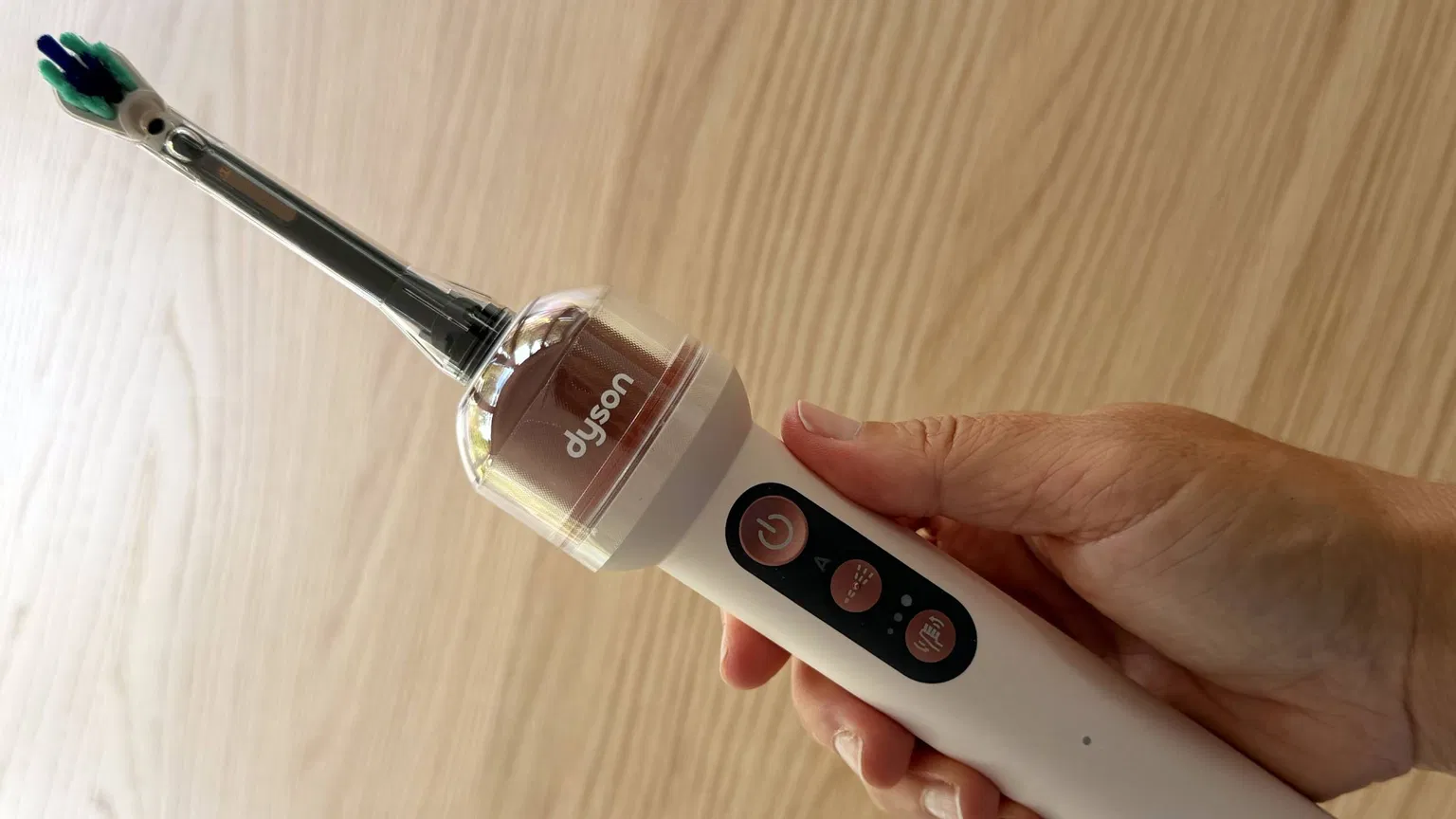
Dyson's long-rumored toothbrush is finally here — and it has a camera in it. After years of patent filings and industry speculation, the British technology company has officially entered oral care with the Dyson CameraJet™ electric toothbrush, a $499.99 device that watches your teeth in real time, uses artificial intelligence to find the gaps between them, and fires a precision jet of mouthrinse to floss those gaps while you brush. Founder James Dyson unveiled it in Paris on September 1, 2026, marking the company's first new product category in four years.
The CameraJet matters because it targets the single biggest weak spot in most people's oral-care routines. Brushing is nearly universal, but flossing is widely skipped — and it is in the gaps between teeth where plaque and gum problems tend to start. Dyson's pitch is that one device can now do both, and show you the results on your phone. Here's exactly what the Dyson toothbrush is, how it works, what it costs, and what early reviewers make of it.
Dyson's First Toothbrush Puts a Camera in Your Mouth
The CameraJet is Dyson's first electric toothbrush, offered in two colorways — Ceramic Ultra Blue and Ceramic Pink. It combines a sonic electric brush with a water-flossing jet, but the headline feature is a 100k-pixel macro lens camera built directly into the brush head and illuminated by what Dyson calls LED Dome Technology. The company's branding for the whole system is Gap Optical Targeting™.
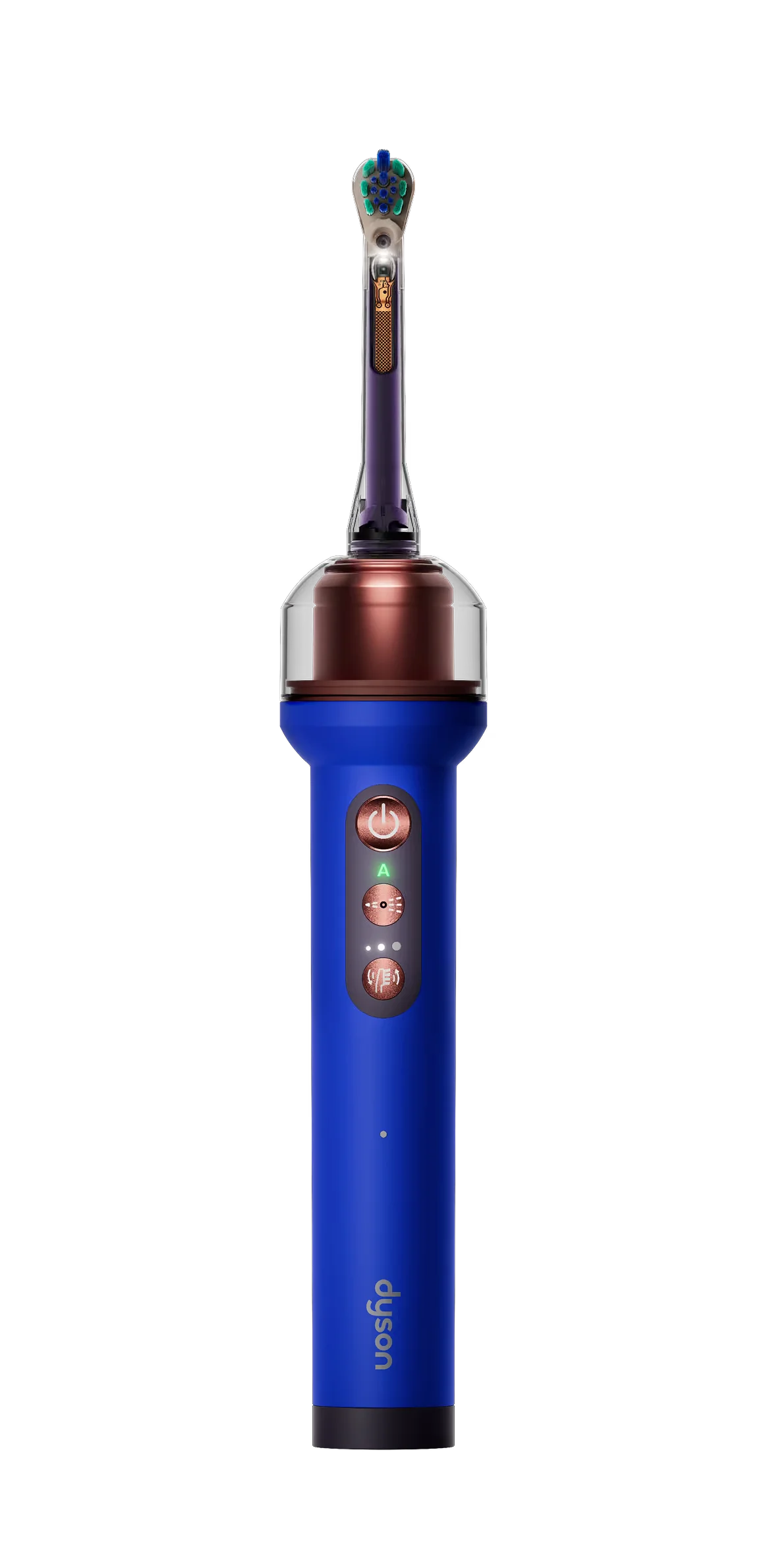
Dyson says the camera "analyzes 28 images per second," while an on-device machine-learning algorithm detects, tracks and predicts the gaps between your teeth. The moment the system identifies a gap, it triggers a conical jet of mouthrinse aimed precisely at that spot — a move Dyson describes as "precision-flossing" while you brush. In short, the brush watches your mouth, finds where floss would normally be needed, and handles it automatically.
The launch is also a notable bet for Dyson. Its previous attempt to crack a new personal-tech category — the Dyson Zone air-purifying headphones — was dismissed by critics as a gimmick. The CameraJet, by contrast, slots into the growing "smart oral care" market and arrives with a full companion range of toothpastes and rinses.
How the CameraJet Works, From Motor to Mouthrinse Jet
Behind the camera sits hardware engineered in Dyson's usual style. A powerful sonic motor drives a dual-bristle brush head with variable sonic oscillation and a sonic dampener, while a diaphragm pump feeds the jet system from an "anti-gravity" water tank. The tank holds 400ml of mouthrinse and delivers a 12.5ml dose per session — about 32 doses per bottle, or roughly 16 days of twice-daily use.
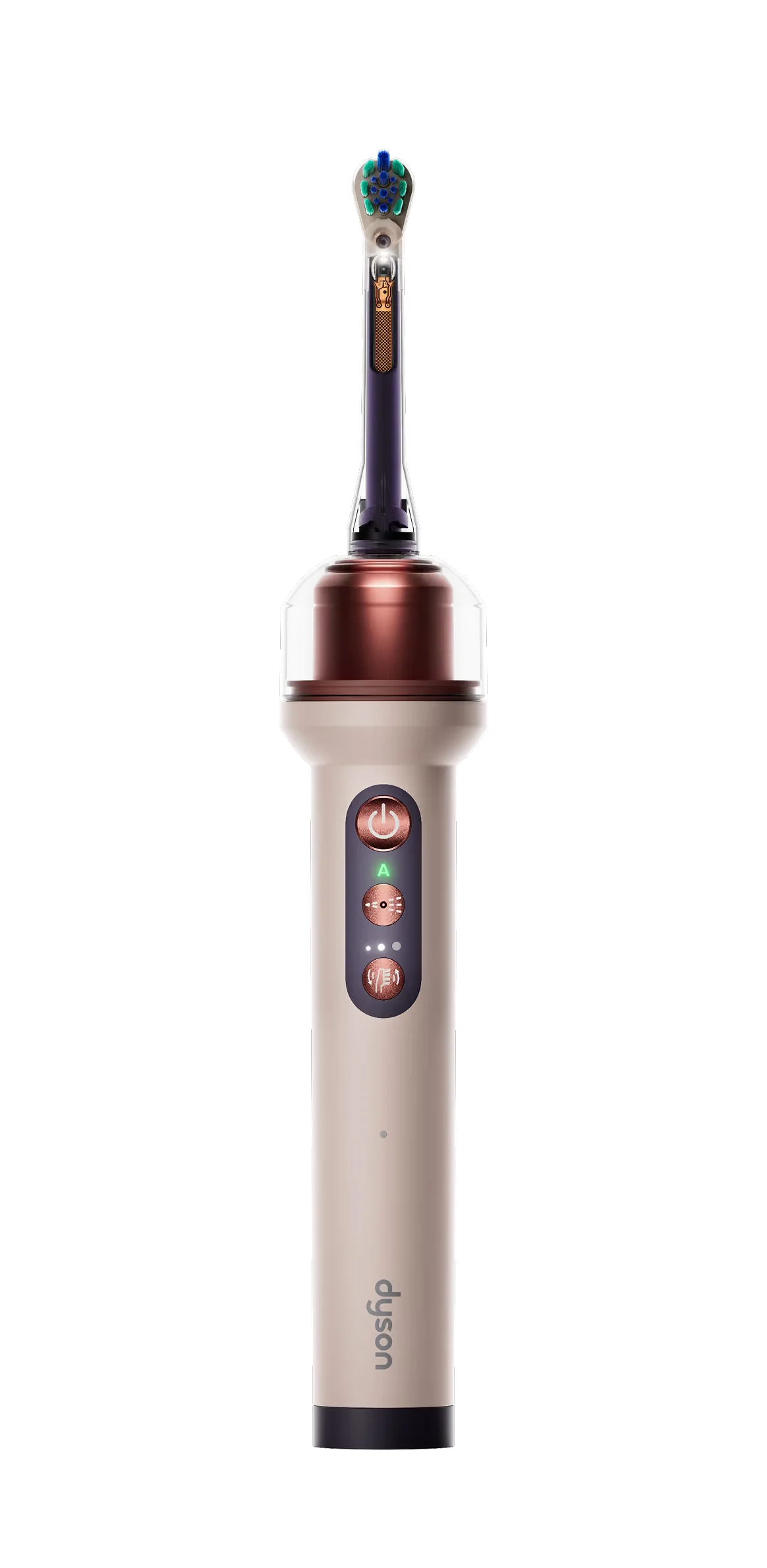
You get three brushing intensities — Gentle, Variable and Deep clean — and the brush connects to the MyDyson™ app over Wi-Fi. The app streams a live view from the camera, offers guided cleaning, and builds a "coverage map" of your mouth so you can see which areas you missed. Each brush head also carries an RFID tag, so the app can tell when a head is worn and needs replacing.
Power comes from a swappable lithium-ion battery, topped up through a USB-C-to-Pogo-pin cable with a waterproof magnetic connection, and the included 3-in-1 dock stores, charges and refills the device. Because there is a camera involved, Dyson also sells a companion line of non-foaming toothpaste and low-foaming mouthrinse in flavors like peppermint, ginger mint and spearmint — the formula is deliberately low-foaming because, as reviewers note, foam would simply block the lens.
Price, Release Date and What It Costs to Keep Running
The Dyson CameraJet costs $499.99 in the US (Dyson's press materials round this to $499). Pre-orders opened on September 1, 2026, and the device ships from September 8, backed by a two-year limited warranty. It is available through Dyson.com, Dyson Demo Stores, Amazon, Best Buy, Sephora and Costco.
The sticker price is only part of the picture. Replacement brush heads cost $29.99 for a pack of two and are rated to last about three months each — roughly $60 a year. And because every head carries an RFID tag that the device reads, Dyson states the brush "only works properly with a genuine Dyson brush head," leaving no third-party workaround.
The larger ongoing expense may be the mouthrinse. A 400ml bottle provides 32 doses — about 16 days of twice-daily use — which works out to roughly 23 bottles a year. As of the day after launch, Dyson had not yet published a US price for the rinse, leaving the true cost of ownership partly unknown. One reassuring detail: Dyson does not require its own rinse, saying only that the formula is "optimized for use with the precision jet" — a softer stance than the one it takes on brush heads.
Does the $499 Toothbrush Actually Work? Early Reviews
First impressions from reviewers who have spent hands-on time with the CameraJet are largely positive, with a few caveats. TechRadar's Emily Peck, who used the device for a week, rated it 4 out of 5, praising its premium, well-crafted feel and calling the camera "a useful tool to see if you're cleaning effectively." Her downsides: the handle is bulkier than a typical electric toothbrush, flossing mode "can get messy," and the premium price plus refill costs add up over time.
PCMag's Angela Moscaritolo, who tried it at IFA 2026, went further. "I floss religiously, but after seeing Dyson's CameraJet toothbrush in action at IFA, I might actually be ready to swap my string for a water jet," she wrote, adding that the CameraJet "appears truly useful — and considering the cost of dental work, it definitely seems like a justifiable purchase."
Dyson's own performance claims rest on a six-week clinical study of 204 participants brushing twice daily in "Brush and Auto-jet" mode versus a manual toothbrush, plus a laboratory test in which the brush removed more plaque in hard-to-reach areas than "market-leading premium electric toothbrushes" — a 69% figure Dyson highlights for those tricky zones. It is worth noting that most of Dyson's headline comparisons are measured against a manual brush rather than premium electric rivals, so direct like-for-like comparisons remain limited.
The Bottom Line: What to Know About the Dyson Toothbrush
The Dyson CameraJet is more than a novelty — it is a serious attempt to turn a daily chore into a data-driven wellness routine. By combining sonic brushing, AI-powered gap detection and precision water flossing in a single device, it aims squarely at the gap between what people actually do (brush) and what they skip (floss). Whether that justifies $499.99 depends on your habits and budget, but with refill costs still partly unpublished and long-term testing still to come, the CameraJet's real-world value remains an open question.
- The Dyson CameraJet™ is Dyson's first electric toothbrush, priced at $499.99 and shipping September 8, 2026.
- It pairs a 100k-pixel camera with AI (Gap Optical Targeting™) that detects gaps between teeth and fires a jet of mouthrinse to precision-floss while you brush.
- Running costs include $29.99 brush-head packs (about $60 a year) and roughly 23 bottles of mouthrinse per year.
- Early reviews are favorable — TechRadar scored it 4/5 — praising the camera and build quality while flagging the bulky handle and premium refill costs.