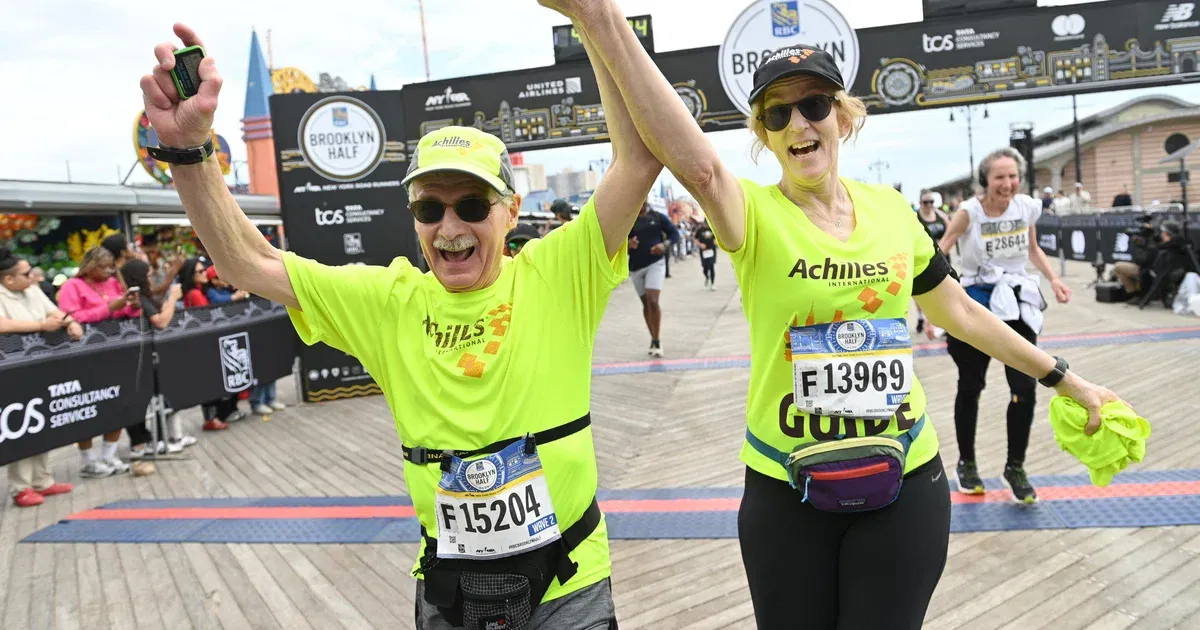
The 2026 RBC Brooklyn Half Marathon is set to take over the streets of Brooklyn on Saturday, May 16, taking 29,000 runners on a 13.1-mile journey from the Brooklyn Museum to the legendary Coney Island boardwalk. Whether you're a first-time half marathoner or a seasoned racer chasing a personal record, the Brooklyn Half offers one of the fastest and most scenic courses in New York City. Here's everything you need to know to train smart, race strong, and cross that finish line with a smile.
Training for 13.1 Miles: A 12-Week Plan for the Brooklyn Half
A half marathon training plan typically runs 10 to 14 weeks, and a 12-week program is the sweet spot for most runners—long enough to build endurance safely, short enough to stay motivated. The Brooklyn Half Marathon course is rated as flat and fast (only 246 feet of total elevation gain), making it an ideal race for beginners aiming to complete their first half marathon or experienced runners targeting a new personal best.
The key to any successful half marathon training plan is progressive overload: gradually increasing your weekly mileage and long-run distance to build aerobic capacity while minimizing injury risk. Most plans start with a base of 10 to 15 miles per week and build up to a peak long run of 10 to 11 miles about two weeks before race day. A typical training week includes three to four runs, one day of cross-training (cycling, swimming, or strength work), and two rest days for recovery.
The Brooklyn Half Course: What You Need to Know Mile by Mile
The RBC Brooklyn Half is a point-to-point course starting on Washington Avenue near the Brooklyn Museum and ending on the Coney Island boardwalk. The course packs three climbs into the first six miles, then rewards runners with roughly six miles of gently downhill, straight Ocean Parkway before the boardwalk finish. Here is how the course breaks down:
Miles 0-1 (Washington Avenue to Grand Army Plaza): The first half mile is downhill, and adrenaline will tempt you to fly—don't. Run the first mile 10 to 15 seconds per mile slower than your goal pace on purpose. Then comes the first real challenge: a 71-foot climb up to Grand Army Plaza. Shorten your stride, increase your cadence, and let your pace drift. You will recover every second on the descent that follows.
Miles 4-6 (Battle Pass in Prospect Park): This is the biggest climb of the day—84 feet over two miles, cresting at mile 6, which is the highest point on the course at 153 feet. The gradient averages only about 0.8 percent, but it is long and patient. Most runners lose 60 to 90 seconds here and never get them back. Hold your effort, not your pace. If your breathing rhythm is intact, you are doing it right.
Miles 7-12 (Ocean Parkway): After a long descent out of Prospect Park past Machate Circle, you hit Ocean Parkway proper. This is where the race is truly decided. The terrain is wide, tree-lined, gently downhill, and visually identical for almost five miles. The boredom is the challenge. Pick a runner 50 meters ahead and reel them in. Check your watch once per mile, not every 30 seconds. Count blocks, not miles.
Miles 12.5-13.1 (Surf Avenue to the Boardwalk): You will turn right onto Surf Avenue, then up a short ramp onto the Coney Island boardwalk for the last 600 meters. The footing changes to wooden planks, so push harder on the ramp up and lift your cadence. Empty the tank. You will never regret finishing hard.
Fueling and Hydration: How to Keep Your Body Moving
Proper nutrition is just as important as training. In the two hours before the race, aim for 300 to 400 calories consisting mostly of easily digestible carbohydrates—think a bagel with peanut butter or a banana with oatmeal. Target 30 to 45 grams of carbohydrates per hour during the race, which works out to roughly two gels for most people.
The Brooklyn Half has a Maurten Gel Depot at approximately mile 6.8 as you exit Prospect Park, offering both caffeinated and non-caffeinated options. Take your first gel there, and your second around mile 9 before the mental "dark patch" sets in. Chase each gel with water, not Gatorade. Sip fluids steadily throughout the morning rather than chugging at aid stations.
Aid stations are positioned at miles 1.4, 4.2, 5.6, 6.8, 8.0, 9.1, and 12.4. Move right 60 seconds before each station to avoid weaving through traffic. Half a cup of water, ten seconds to drink, and keep moving.
Pacing Strategy: The Key to a Successful Half Marathon
The Brooklyn Half's flat profile makes it ideal for even pacing, but the early hills require a smarter approach. Running coaches recommend a negative split strategy, where the back half is 20 to 45 seconds faster per mile than the front half. About 77 percent of recreational runners fade in the second half because they start too fast—do not be one of them.
For the first three miles, run 5 to 10 seconds per mile slower than your goal pace on purpose. Let the early adrenaline carry you, not pull you. From mile 8 onward, once you know your legs are there, begin accelerating. By mile 11, the crowd at the New Balance Cheer Zone on Avenue W will carry you home. The last two miles are where you find out what you are made of.
Race Day Logistics: Getting to the Start Line
The 2026 Brooklyn Half Marathon starts at 7:00 a.m. with four waves: 7:00 a.m., 7:30 a.m., 8:00 a.m., and 8:30 a.m. Runners in the first and third waves should take the 2, 3, or 4 train to Franklin Avenue. Those in the second and fourth waves should get off at Grand Army Plaza. The car and taxi drop-off location is at Washington Avenue and Park Place. Plan to arrive at least 75 minutes before your wave start time to clear security and warm up properly.
The forecast calls for progressively warmer conditions as the day progresses, so pace yourself accordingly and use the early morning cool temperatures to your advantage. Pin your bib on the night before, test everything in training—shoes, socks, nutrition, and hydration—and remember the golden rule of race day: nothing new.
What to Expect at the Finish
The finish line sits on the Coney Island boardwalk near Leti's Treasure, with the Wonder Wheel and Cyclone roller coaster providing an unmistakable backdrop. After crossing the finish line, walk at least 100 meters before stopping to let your body cool down gradually. Water, your finisher medal, and post-race food are available just past the finish line.
Official results are posted on the NYRR website and app, where spectators can also track runners live during the race. Prize money goes to the top five finishers in each category, with $2,000 for first place, and a $500 bonus for the first Brooklyn resident to finish in each gender category.
The Bottom Line: Key Takeaways for Your Brooklyn Half Journey
- Start your training 12 weeks before race day with a progressive plan that builds your long run to at least 10 miles
- Respect the early hills—Washington Avenue and Battle Pass in Prospect Park are the only real climbs, but they punish runners who go out too fast
- Fuel every 45 minutes with 30-45 grams of carbohydrates per hour, using the Maurten Gel Depot at mile 6.8 strategically
- Aim for a negative split of 20-45 seconds per mile faster on the back half
- Enjoy Ocean Parkway—the long, flat stretch is your chance to settle into a rhythm and let the miles tick by
- Arrive early and take the subway to avoid road closures that begin Thursday before the race