
Few infections sound as terrifying as the one caused by the brain-eating amoeba — and its reputation is, unfortunately, well earned. The organism behind the headlines is Naegleria fowleri, a microscopic, single-celled amoeba that lives in warm freshwater and, in extremely rare cases, travels up a person's nose and attacks the brain. The infection it causes, called primary amebic meningoencephalitis (PAM), is fatal in more than 97% of cases. But before you swear off swimming, know this: infections are extraordinarily rare. The United States typically records between zero and eight cases each year, according to the Centers for Disease Control and Prevention. Here's what the brain-eating amoeba actually is, how it gets into the body, the symptoms to recognize, and the simple steps that can dramatically reduce your risk.
What Is the Brain-Eating Amoeba?
Naegleria fowleri — commonly called the brain-eating amoeba — is a free-living, single-celled organism that normally feeds on bacteria. It thrives in warm and hot freshwater, including lakes, rivers, ponds, hot springs, and even poorly maintained swimming pools with low chlorine levels. It has also been found in soil, water heaters, and tap water pipes.
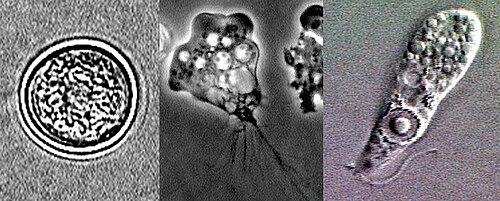
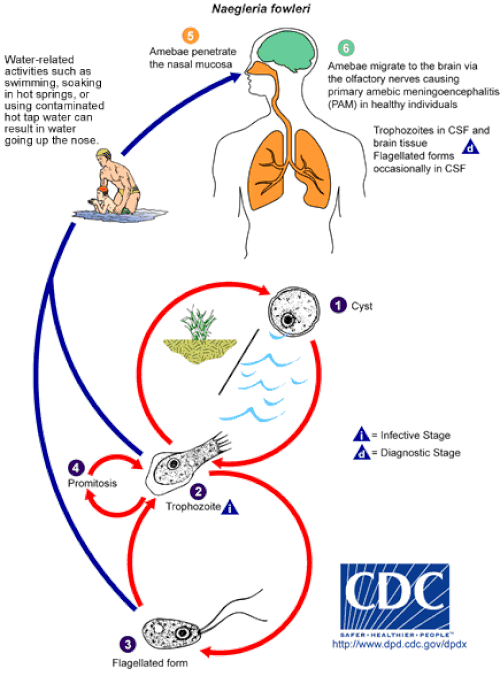
The amoeba exists in three different forms depending on its environment: a dormant cyst that protects it in harsh conditions, a feeding trophozoite (the active, amoeboid stage that causes infection in humans), and a temporary flagellate form with a whip-like tail it uses to swim. As water temperatures rise — which is why cases tend to cluster during hot summer weather — the amoeba's population grows.
How the Infection Happens: From Your Nose to Your Brain
The brain-eating amoeba is not spread the way most germs are. You cannot catch it by drinking contaminated water, and it does not pass from person to person. Instead, infection happens when water containing Naegleria fowleri is forced up the nose — for example, while swimming, diving, jumping, or doing water sports in warm freshwater.
Once inside the nasal passages, the amoeba travels along the olfactory nerve — the nerve responsible for your sense of smell — directly into the brain. There, it begins to destroy brain tissue, triggering a sudden and severe infection of the central nervous system known as primary amebic meningoencephalitis (PAM).
Research on how people were exposed found that about 58% of cases involved swimming or diving, 16% involved bathing, 10% involved water sports such as jet skiing or wakeboarding, and roughly 9% were linked to rinsing the nasal passages with untreated tap water — for example, using a neti pot.
Brain-Eating Amoeba Symptoms: The Warning Signs
Symptoms of PAM come on suddenly and are severe from the start. They typically appear within about one to 12 days after exposure — most often within about a week — and can easily be mistaken at first for bacterial meningitis. Watch for:
- High fever
- A very painful, persistent headache
- Nausea and vomiting
- A stiff neck
- Extreme sensitivity to light
- Mental confusion or changes in behavior
- Seizures
- Loss of consciousness or coma
Because the disease moves quickly, health authorities advise seeking emergency care right away if you develop a fever or headache after spending time in warm freshwater.
How Fast Does the Infection Progress?
PAM is notable not only for how deadly it is but for how rapidly it advances. The timeline, once symptoms begin, is typically measured in days rather than weeks:
- Exposure: Water containing the amoeba enters the nose during swimming, diving, or nasal rinsing.
- 1–12 days later: The first symptoms — fever, severe headache, nausea — appear.
- Days 2–5: Symptoms escalate to a stiff neck, confusion, seizures, and, in many patients, coma.
- Within about a week to 10 days: Most patients die as the infection overwhelms the brain, even with treatment.
This speed is a key reason the fatality rate is so high — the window for effective treatment is very narrow.
Why It's So Deadly — and How Doctors Treat It
More than 97% of people who develop PAM die from it. Part of the problem is that the infection is so rare that doctors don't always suspect it early, and the early symptoms closely resemble bacterial meningitis. Diagnosis usually requires a spinal tap (lumbar puncture) to look for the amoeba in the cerebrospinal fluid, and sometimes a brain biopsy.
Treatment focuses on a combination of medications. The core drug is amphotericin B, an antifungal that damages the amoeba's cell membrane. Doctors often add other drugs — including rifampin, fluconazole, and an antiparasitic called miltefosine — along with measures to reduce brain swelling, such as the steroid dexamethasone and therapeutic hypothermia (cooling the body below normal temperature).
The best outcomes have come from rapid diagnosis and early treatment. In a small number of cases — including two children who made full recoveries — early detection combined with the drug cocktail and body cooling made the difference. Still, survival remains the exception rather than the rule.
How to Protect Yourself: Prevention Tips
Because the disease is so serious and treatment options are limited, prevention matters. The good news is that the risk is already extremely low, and a few precautions make it lower still:
- Hold your nose or wear nose clips when swimming, diving, or jumping into warm freshwater.
- Keep your head above water and avoid activities that force water up the nose, especially in warm lakes, ponds, and hot springs.
- Don't stir up sediment in shallow, warm areas — the amoeba often lives at the bottom.
- Use only distilled, sterile, or properly boiled water in neti pots or any device that rinses your nasal passages. If you use tap water, boil it for one minute (three minutes above 6,500 feet) and let it cool first.
- Tell your doctor where you've been if you develop a fever or headache after being in warm freshwater.
The Bottom Line: Key Takeaways
- The brain-eating amoeba (Naegleria fowleri) lives in warm freshwater and enters the body only through the nose.
- It causes primary amebic meningoencephalitis (PAM), a rare but almost always fatal brain infection.
- You cannot get it from drinking water or from another person.
- Symptoms — severe headache, fever, stiff neck, confusion — appear within about 1 to 12 days of exposure.
- Prevention is simple: keep water out of your nose and use only safe water for nasal rinsing.