The bitcoin price has become one of the most closely watched numbers in global finance — and for good reason. It can swing by thousands of dollars in a single day, has climbed from fractions of a penny to more than $100,000 in roughly fifteen years, and now shapes decisions made by Wall Street firms, national governments, and everyday investors. At its core, bitcoin (BTC) is the world's first decentralized cryptocurrency: digital money that operates with no central bank or single company in charge. Its price is not set by any institution. Instead, it emerges from supply and demand across thousands of exchanges that trade around the clock. To understand what drives the bitcoin price, you first need to understand how bitcoin works, why its supply is permanently capped, and which forces — from halving events to regulation and institutional adoption — push the price up and down. Here is a clear, factual breakdown.
What Bitcoin Is and How It Actually Works
Bitcoin was introduced in a 2008 white paper published under the pseudonym Satoshi Nakamoto, and the network went live on January 3, 2009, when Nakamoto mined the first "genesis block." It was the first working system to solve the double-spending problem for digital money without relying on a bank or government in the middle.
Bitcoin runs on a blockchain, which is essentially a shared public ledger that records every confirmed transaction. This ledger is maintained by a peer-to-peer network of computers called nodes, each holding an independent copy — so no central authority is needed. When you send bitcoin, you sign the transaction with a private key, a secret piece of data that proves the coins belong to you. The signature also prevents anyone from altering the transaction after it is broadcast.
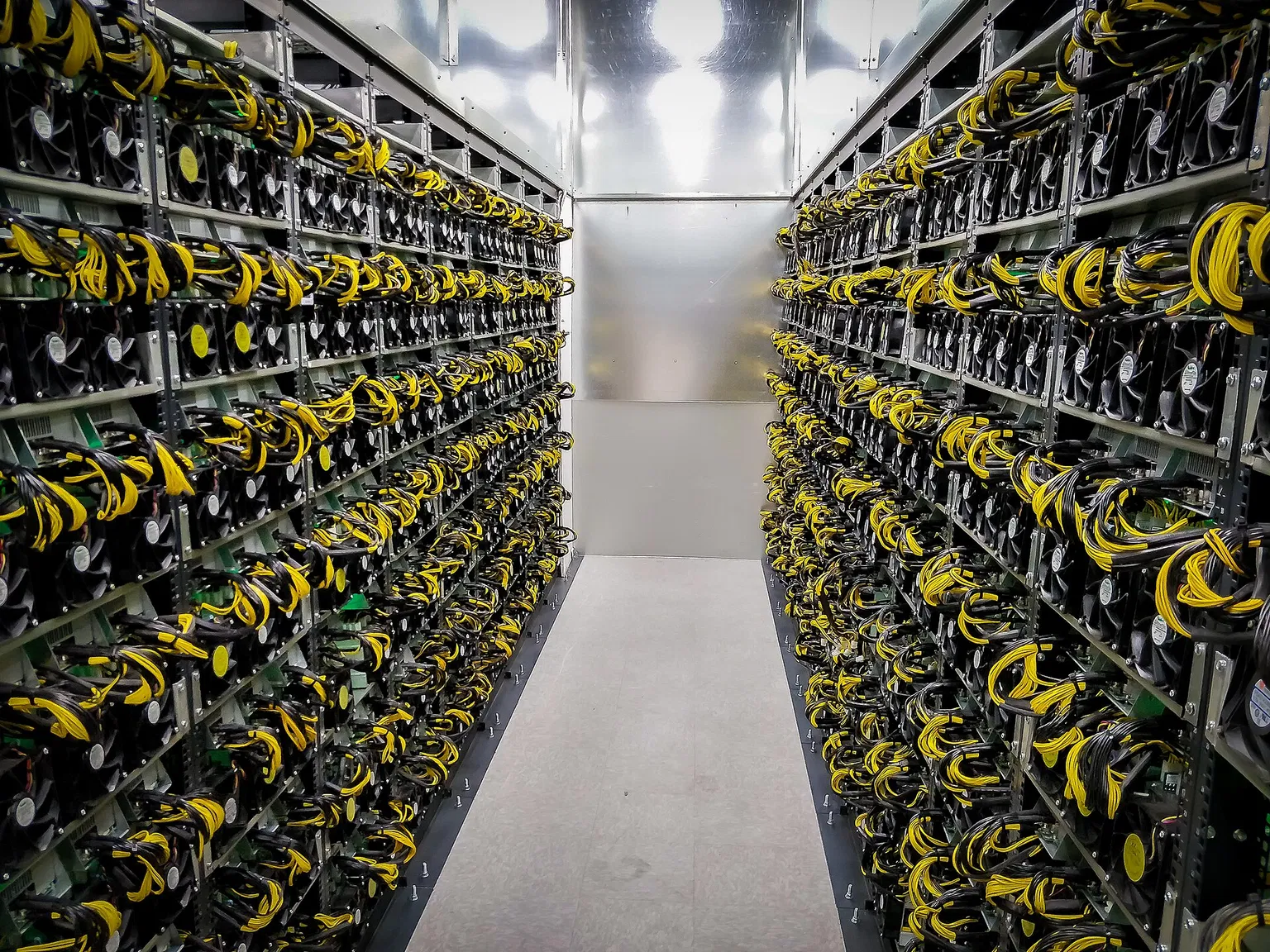
New transactions are grouped into "blocks" and confirmed through a process called mining. Miners use specialized, power-hungry hardware to solve difficult cryptographic puzzles — a method known as proof of work. The first miner to solve each puzzle adds the next block to the chain and earns newly created bitcoin plus transaction fees. The network automatically adjusts the difficulty every 2,016 blocks (roughly every two weeks) so that a new block is produced about every 10 minutes, keeping the system steady regardless of how many miners join or leave.
Bitcoin is often described as pseudonymous rather than anonymous: transactions are public on the blockchain, but they are tied to addresses rather than real names. Losing a private key means losing access to the coins permanently — an estimated 20% of all bitcoin is believed to be lost forever.
From Two Pizzas to $100,000: Bitcoin's Price Journey
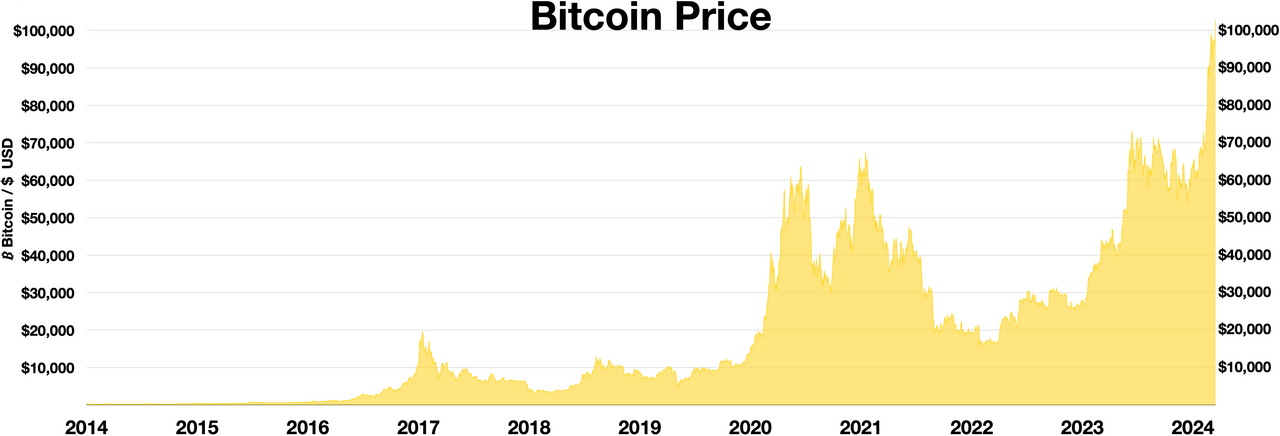
Bitcoin's price history is short but dramatic. On May 22, 2010, programmer Laszlo Hanyecz paid 10,000 BTC for two pizzas — the first known commercial bitcoin transaction, now celebrated as "Bitcoin Pizza Day." Those coins would later be worth hundreds of millions of dollars.
The milestones that followed show how far the asset has come. Bitcoin's market capitalization passed $1 trillion for the first time in February 2021. In September 2021, El Salvador became the first country to adopt bitcoin as legal tender. In January 2024, the first 11 U.S. spot bitcoin exchange-traded funds (ETFs) began trading, giving mainstream investors direct exposure on American stock exchanges. Then, in December 2024, bitcoin's price crossed $100,000 for the first time, fueled by optimism over a friendlier regulatory outlook.
What Actually Moves the Bitcoin Price
Because no central bank issues bitcoin, its price is driven entirely by the balance between buyers and sellers. Several recurring forces shape that balance.
Fixed supply and halving. Bitcoin's supply is hard-capped at 21 million coins — more precisely 20,999,999.9769 — and the rate at which new coins are created is cut in half every 210,000 blocks, roughly every four years, in an event called the halving. The block reward started at 50 BTC in 2009 and has fallen to 25, then 12.5, then 6.25, and, since 2024, 3.125 BTC. This predictable scarcity is a core reason supporters call bitcoin "digital gold": more than 95% of all bitcoin has already been minted, and the final coin is not expected until around 2140.
Demand and adoption. On the demand side, institutional adoption has been a major price driver. Beginning in 2020, companies such as MicroStrategy, Square, and MassMutual added bitcoin to their balance sheets, and Tesla disclosed a $1.5 billion purchase in 2021. PayPal added bitcoin support in late 2020, and the 2024 approval of spot ETFs opened the asset to pensions, funds, and retirement accounts.
Regulation and macro conditions. Government policy has repeatedly moved the price. China's 2013 restrictions and its 2017–2018 crackdowns triggered sharp sell-offs, while the U.S. Securities and Exchange Commission's ETF approvals and a March 2025 executive order establishing a strategic bitcoin reserve have been read as bullish. Because bitcoin trades 24/7 and is priced in dollars, it is also sensitive to interest rates, inflation expectations, and risk appetite in broader markets.
Sentiment and narratives. Finally, bitcoin is unusually driven by stories. Nobel laureate Robert Shiller has described its price growth as an "epidemic" driven by contagious narratives, while other economists — including Paul Krugman and Jean Tirole — have called it a bubble. Federal Reserve Chair Jerome Powell, by contrast, has called bitcoin a digital competitor to gold rather than the dollar. This ongoing debate is itself a price mover: headlines, posts, and analyst forecasts can shift short-term sentiment quickly.
Where Bitcoin Stands Today
Bitcoin has moved well beyond its early reputation as an internet experiment. The January 2024 launch of U.S. spot ETFs brought billions of dollars in volume on its first day, and in December 2024 BlackRock — the world's largest asset manager — suggested investors consider allocating up to 2% of a portfolio to bitcoin. In March 2025, the U.S. government formalized a strategic bitcoin reserve, and several states, including Texas and New Hampshire, followed with their own reserves.
Yet challenges remain. Bitcoin stays highly volatile, wealth is extremely concentrated — as of 2021, roughly 0.01% of holders controlled about 27% of the supply — and mining's energy use, estimated at about 0.54% of global electricity, continues to draw scrutiny. El Salvador, the first country to make bitcoin legal tender, ultimately dropped that obligation in 2025 under pressure from the International Monetary Fund.
What Could Happen Next
Looking ahead, most forecasts hinge on the same variables: whether institutional and government adoption continues, how regulators in the United States and Europe treat the asset, and how bitcoin behaves through the next halving cycle. Supporters argue that a fixed supply plus growing demand points toward higher long-term prices and a role as a "politically neutral" reserve asset. Skeptics warn that, with no cash flows or intrinsic value, bitcoin's price depends entirely on what the next buyer is willing to pay — making sharp drawdowns a permanent risk. Either way, the bitcoin price will continue to be set by the one thing no analyst controls: the collective decisions of millions of buyers and sellers around the world.
The Bottom Line
- Bitcoin is the first decentralized cryptocurrency, launched in 2009 by the pseudonymous Satoshi Nakamoto, with no central authority controlling it.
- Its price is set purely by supply and demand across global exchanges — not by any bank or government.
- Supply is capped at 21 million coins, with new issuance halving roughly every four years.
- Key price drivers include the halving cycle, institutional and ETF adoption, regulation, macro conditions, and market sentiment.
- Bitcoin crossed $100,000 for the first time in December 2024, but it remains a highly volatile and debated asset.