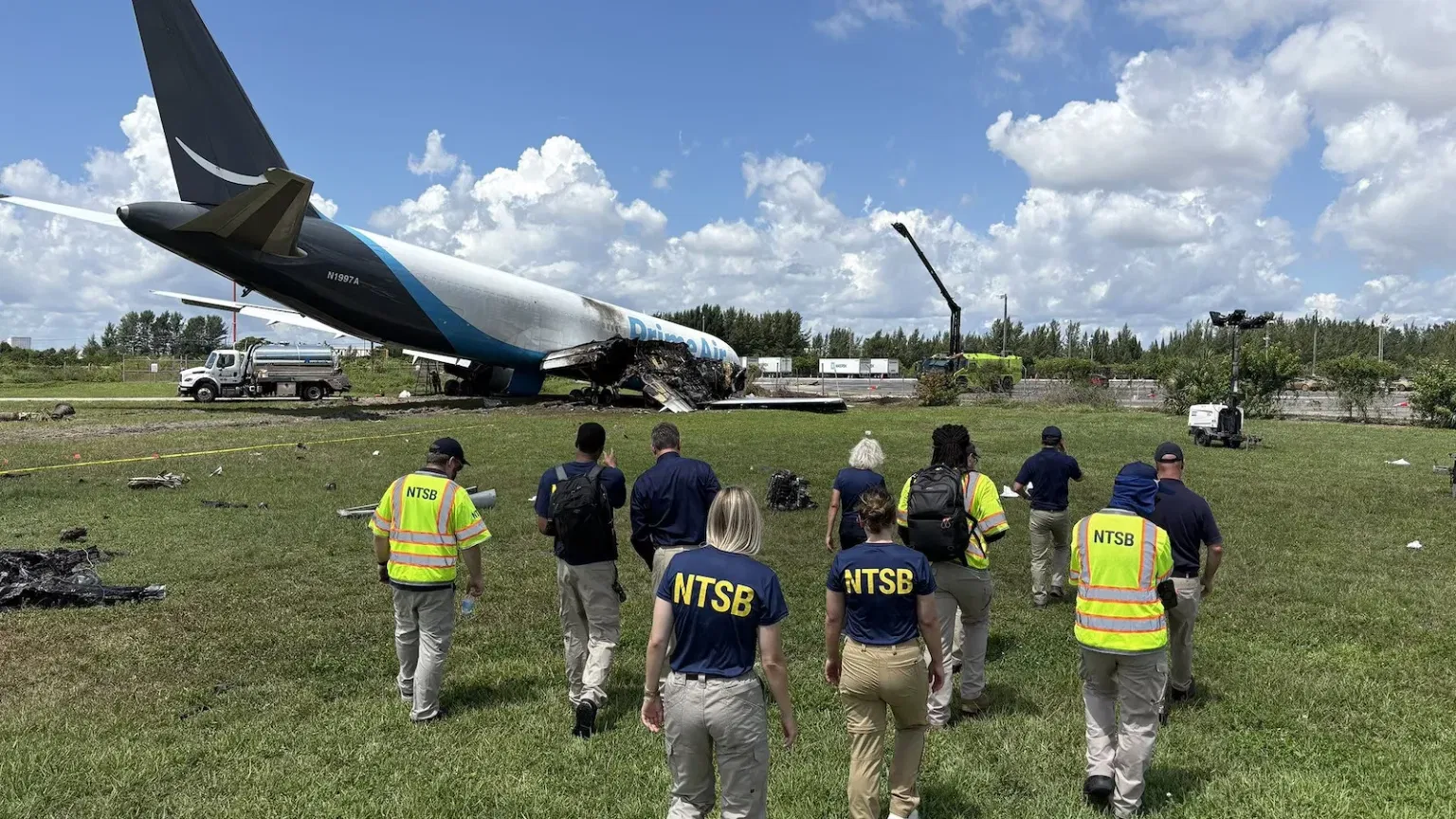
An Amazon Air cargo jet ran off the end of a runway at Miami International Airport on Sunday, September 6, 2026, killing five people and injuring five others in what federal investigators called "utter devastation." The Boeing 767 slammed into a cleaning contractor's van and a passing SUV after it overran the runway, traveled roughly 1,300 feet beyond the pavement, and burst into flames. The accident has put fresh attention on a specific — and surprisingly common — type of crash known as a runway overrun, and on the aviation safety systems designed to prevent one.
Here is what we know about the Miami crash, how a runway overrun actually happens, and what safety measures are built to stop it.
What Happened: Inside the Amazon Air Runway Overrun at MIA
The aircraft was Amazon Air Flight 7598, a Boeing 767-300 operated under contract by 21 Air LLC, according to the National Transportation Safety Board (NTSB). The jet, manufactured in 1994, was on its third flight of the day — Cincinnati to Miami, then Miami to San Juan, Puerto Rico, and back toward Miami — when it overran Runway 30 on landing around 1:53 p.m. ET.
Investigators said the plane struck navigational aids at the end of the runway, then hit a 2012 white Ford Econoline van owned by Professional Ocean Service Corporation, an airline cleaning contractor, with seven people inside. The aircraft then tore through a perimeter fence and struck a Toyota Corolla Cross LE traveling on Northwest 67th Avenue before coming to rest in a grassy area near a fence line where Tesla robotaxis were stationed.
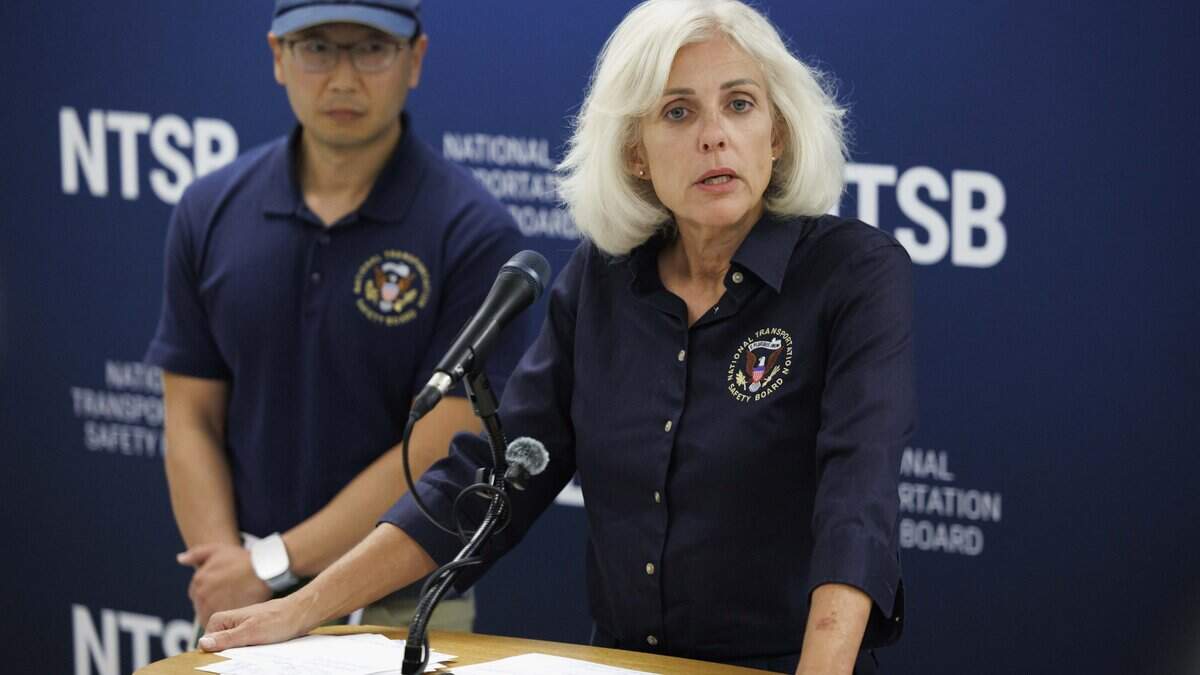
All five people killed were inside the two vehicles that were hit, NTSB Chair Jennifer Homendy said Monday. "I would describe it in one word: devastating, utter devastation," she told reporters. "The Econoline van is torn apart." Two of the injured were taken to Jackson Memorial Hospital, and three others were transported to the Ryder Trauma Center in critical condition.
Witnesses described a scene that looked "like something from a movie." Grace Mercado said she saw "black smoke everywhere" while driving past the airport. Another witness, Abraham Altamar, said he helped the visibly shaken pilot, who told his wife by phone: "I'm fine. I was in the accident, but I'm already out of the plane." First responders from Miami-Dade Fire Rescue reached the scene in about 30 seconds — a response local leaders praised as a record.
How a Runway Overrun Happens, Step by Step
A runway overrun is one form of a "runway excursion," the aviation term for any incident in which an aircraft leaves the paved runway surface. An overrun occurs when a landing plane does not stop before the end of the runway, while an excursion off the side is called a veer-off. Both rank among the most common categories of commercial aviation accidents.
On a normal landing, pilots aim to touch down in the first third of the runway at a precise speed. From there, a large jet has to decelerate from roughly 140 to 160 mph to a complete stop using three tools working together: wheel brakes, thrust reversers that redirect engine power forward, and spoilers on top of the wings that kill lift and push the aircraft's weight onto the wheels for better braking.
The danger grows when any part of that sequence goes wrong. If the approach is too fast or too high, if the touchdown happens too far down the runway, or if braking is less effective than expected, the plane can consume more runway than is available — and roll off the end.
What Causes a Plane to Overshoot a Runway
Runway overruns are rarely caused by a single failure. Investigators typically examine several contributing factors, which is exactly what the NTSB is doing in Miami. Common causes include:
- An unstable approach — coming in too fast or too high, which leaves too little runway after touchdown.
- A late or "long" touchdown beyond the normal landing zone.
- A wet or contaminated runway, which can reduce tire friction and cause hydroplaning.
- A tailwind or downhill slope, both of which increase the stopping distance required.
- Reduced braking, from worn brakes, a delayed thrust-reverser deployment, or a mechanical problem.
The NTSB has investigated more than 3,000 runway excursions since 2008, a figure that underscores how often aircraft end up off the pavement. The agency's job is to identify root causes and issue safety recommendations — and, as Homendy noted, "we can only work to prevent the next one if our recommendations... are implemented."
The Safety Systems Built to Stop Runway Overruns
Aviation uses multiple layers of defense against runway overruns. At the end of many runways sits an Engineered Materials Arresting System, or EMAS — a bed of crushable, lightweight material that gives way under an aircraft's weight and safely slows it to a stop if it overruns the pavement. Homendy said investigators will examine whether an EMAS should have been installed at the end of Miami's Runway 30 and whether it could have made a difference.
On board the aircraft, the two "black boxes" — the flight data recorder and the cockpit voice recorder — capture the performance data and cockpit conversations that investigators rely on to reconstruct a crash. The NTSB recovered both recorders from the Miami jet and sent them to its headquarters for download and analysis.
Pilot training adds yet another layer. Airlines require "stabilized approach" criteria, meaning pilots must be on speed and on glide path at a set altitude; if they are not, the procedure is to go around and try the landing again rather than force a landing that could overrun the runway.
What Investigators Will Look for Next
The NTSB has about 32 people on the ground in Miami, organized into specialized teams covering human performance, airplane systems, power plants, air traffic control, aircraft performance, structures, meteorology, and airport survival factors. The agency said it has some preliminary speed data but wants to confirm it against the flight data recorder before releasing figures.
Investigators also plan to examine the aircraft's age and ownership history, and the contractual relationship between Amazon and 21 Air. "This is an Amazon operation for transporting cargo, but it's actually contracted to 21 Air," Homendy said. "We're going to want to see what that relationship is, who does what, what safety provisions might be in any sort of contracts or any sort of policies."
Probable cause will not be determined on scene. The agency's goal at this stage is to document the scene and collect perishable evidence — work it expects will take at least a week on the ground.
Key Takeaways from the Miami Amazon Plane Crash
- Amazon Air Flight 7598, a Boeing 767-300 operated by 21 Air LLC, overran Runway 30 at Miami International Airport on September 6, 2026.
- Five people died and five were injured; all five victims were inside the cleaning contractor's van and the SUV the plane struck.
- The jet traveled about 1,300 feet past the runway before stopping and catching fire.
- The NTSB recovered both black boxes and is investigating the cause, including whether an EMAS arresting system should have been installed.
- Runway overruns are a leading category of aviation accident, with more than 3,000 excursions investigated by the NTSB since 2008.