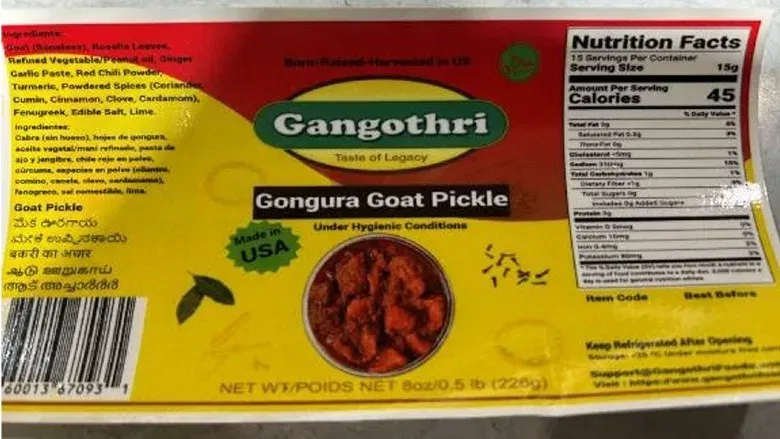
Indus Foods, LLC — an Austin, Texas food manufacturer doing business as Gangothri Foods — is recalling approximately 1,626 pounds of ready-to-eat pickled goat and chicken products because they were produced without the benefit of federal inspection. The U.S. Department of Agriculture's Food Safety and Inspection Service (FSIS) announced the nationwide recall on Aug. 17, 2026, and classified it as a Class I recall, the agency's highest health-risk tier. No illnesses have been reported, but the jars were shipped to restaurants, retail locations, and distributors across the country and sold directly to consumers online. Here's what was recalled, how a food recall unfolds behind the scenes, and exactly what you should do if these products are sitting in your kitchen.
What Was Recalled: Four Pickled Products in 8-Ounce Jars
The recall covers four ready-to-eat pickled items, all packaged in 8-ounce glass jars and sold under the Gangothri Foods brand:
- Gangothri Goat Pickle
- Gangothri Gongura Goat Pickle
- Gangothri Chicken Pickle
- Gangothri Gongura Chicken Pickle
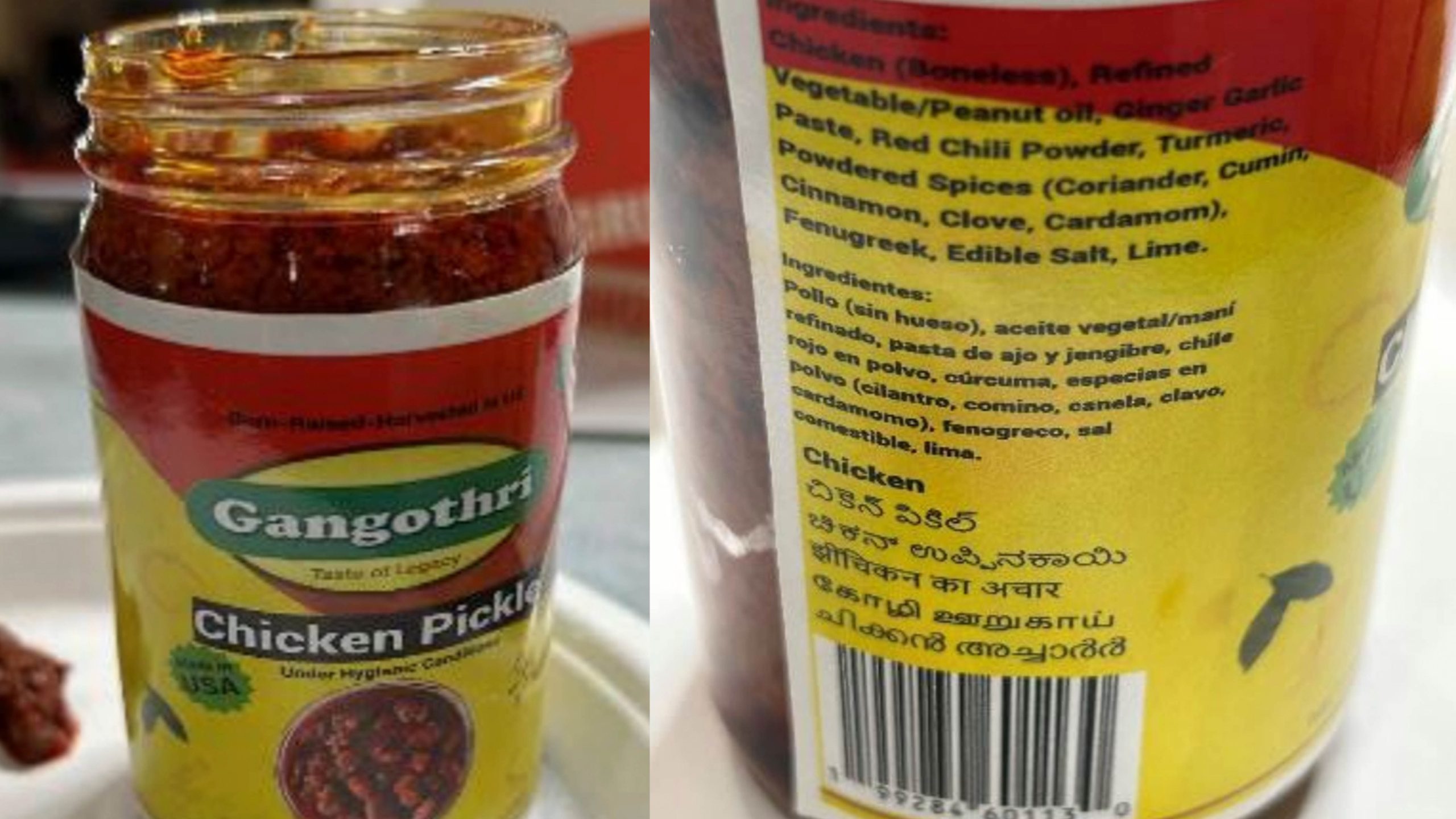
None of the recalled jars carry a USDA mark of inspection. According to FSIS, the products were produced between Jan. 28, 2025, and May 6, 2026, and have a two-year shelf life — meaning affected jars could remain in home pantries, restaurant kitchens, and distributor warehouses well into 2027. That long shelf life is a big part of why the agency says it is concerned product may still be out there.
What "Produced Without Inspection" Actually Means
The reason behind this recall isn't a pathogen like listeria or salmonella — it's the absence of oversight. "Produced without the benefit of inspection" means the products were manufactured outside the federal inspection system that FSIS requires for meat and poultry sold commercially in the United States.
Under federal law, businesses that process meat and poultry for interstate sale must operate in an FSIS-inspected facility, where agency inspectors review processing operations, verify sanitation, and confirm products are handled safely before they receive a USDA mark of inspection. When a product is made without that oversight — as was the case here — regulators cannot verify that it was produced under conditions that meet federal food safety standards. That uncertainty, not a confirmed contamination, is what triggers the recall.
This distinction matters for consumers: a recall driven by "no inspection" is precautionary, but it is still treated with the same urgency as a pathogen-linked recall because the product's safety simply cannot be confirmed.
How a USDA Food Recall Works, Step by Step
When FSIS identifies a problem, it works through a defined process that most consumers never see. Understanding that sequence can make recall alerts less confusing:
1. Detection. Most issues are caught through routine surveillance, sampling, or inspection. In this case, FSIS said the problem was discovered during routine surveillance activities — not because anyone got sick.
2. Classification. The agency assigns a recall class based on health risk. Class I means there is a reasonable probability the product will cause serious, adverse health consequences or death. Class II covers products that may cause temporary or reversible health issues, while Class III applies to products unlikely to cause illness. The Indus Foods recall is a Class I action, the most serious tier.
3. Notification and removal. The company is responsible for pulling the product from the marketplace, while FSIS issues a public recall notice with product names, labels, and distribution details.
4. Effectiveness checks. FSIS routinely conducts recall effectiveness checks to confirm the recalling firm has notified its customers and that the product is no longer available to consumers. The agency also posts retail distribution lists on its recall website once they are available.
In short, a recall is the safety net that kicks in when the normal inspection system fails — and in this case, the recall itself is the response to products that skipped inspection entirely.
What to Do If You Have the Recalled Products
FSIS is urging anyone who purchased the affected jars to follow a few simple steps:
- Do not eat them. Even though no illnesses have been reported, the products were not produced under verified food safety conditions.
- Throw them away or return them to the place of purchase.
- Check your pantry and refrigerator. Because the jars have a two-year shelf life, they could easily still be stored at home.
- Restaurants and distributors should not serve or sell the products and should discard or return them.
- Watch for symptoms. Anyone concerned about a reaction after eating a recalled product should contact a healthcare provider.
Consumers can monitor the FSIS recall website for the retail distribution list, which the agency posts as soon as it becomes available.
Where the Recall Stands Now
As of the most recent updates, there are no confirmed reports of illness tied to the recalled products. The recall remains active, and FSIS is continuing its effectiveness checks to make sure the products are removed from restaurant, retail, and distributor shelves nationwide. The agency has said it will publish retail distribution lists when they are ready, which will help shoppers identify exactly which stores may have sold the jars.
The Bottom Line: Key Points to Remember
- Indus Foods, LLC (doing business as Gangothri Foods) of Austin, Texas, is recalling about 1,626 pounds of ready-to-eat pickled goat and chicken products.
- The products were made without federal inspection, so their safety could not be verified — the recall is classified as Class I, the highest risk level.
- Four 8-ounce glass jar products are affected: Goat Pickle, Gongura Goat Pickle, Chicken Pickle, and Gongura Chicken Pickle.
- The jars were distributed nationwide to restaurants, retailers, and distributors, and sold online directly to consumers.
- If you have them, don't eat them — throw them away or return them, and contact a healthcare provider if you have concerns.