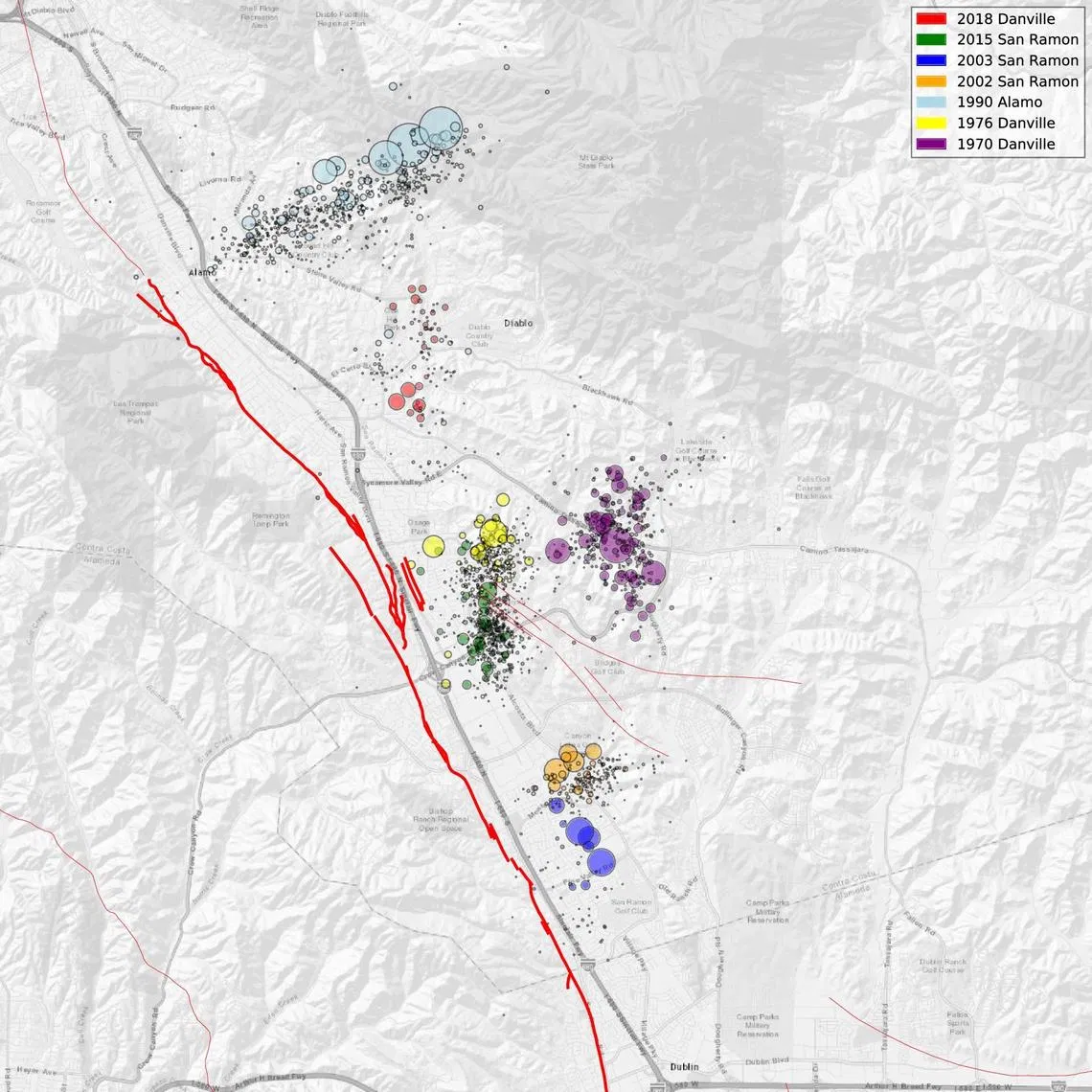
The San Ramon Valley in California's Bay Area has been rattled by over 300 small earthquakes since December 2025, with the latest cluster striking on February 2, 2026. This ongoing seismic activity, known as an earthquake swarm, has residents and scientists alike asking important questions about how earthquakes work, what causes these unusual sequences, and most importantly—how to stay safe when the ground starts shaking. Understanding the science behind these natural phenomena can help demystify earthquakes and provide practical knowledge for anyone living in seismically active regions.
The San Ramon Swarm: What's Happening Right Now
According to data from the U.S. Geological Survey, three minor earthquakes struck San Ramon on February 2, 2026, with magnitudes of 3.0, 2.8, and 2.6 occurring within just four minutes of each other. These tremors are part of a larger pattern that began in November 2025, with approximately 300 earthquakes recorded in the same area by early February 2026. The largest event in this swarm reached magnitude 4.2, enough to be felt throughout the Tri-Valley region but not strong enough to cause significant damage.
San Ramon sits directly atop the Calaveras Fault, a major branch of the extensive San Andreas Fault system that runs through California. Dr. Annemarie Baltay, a USGS seismologist and geophysicist, explained to CBS News Bay Area: "We don't know exactly why these swarms are occurring exactly where they do, but we've seen that they can be very focused. We think it's some small, sort of micro-movements along the fault, or along smaller faults in the area. And that's just generating a couple of little earthquakes that just pop off and trigger each other."
Plate Tectonics 101: The Science Behind Earthquakes
To understand why earthquakes happen, we need to start with plate tectonics—the theory that Earth's outer shell is divided into several plates that glide over the planet's mantle. According to the U.S. Geological Survey, most earthquakes occur along the boundaries where these tectonic plates meet. California sits on the boundary between the Pacific Plate and the North American Plate, which are moving past each other at about two inches per year.
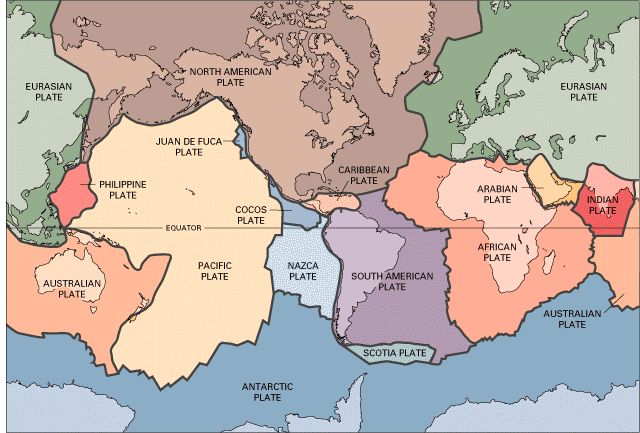
As these massive plates grind against each other, stress builds up along fault lines—fractures in Earth's crust where the rocks on either side have moved. When the stress exceeds the strength of the rocks, they suddenly slip or break, releasing stored energy as seismic waves that travel through the ground. This sudden release of energy is what we feel as an earthquake. The point where the slip begins underground is called the hypocenter (or focus), while the point directly above it on Earth's surface is called the epicenter.
What Causes Earthquake Swarms? The Fluid Connection
While most earthquakes follow a pattern of a main shock followed by smaller aftershocks, earthquake swarms present a different pattern. The USGS defines earthquake swarms as sequences of many seismic events occurring in a local area within a relatively short period without a single dominant main shock. These swarms can last for days, weeks, or even months, with fluctuating activity levels.
Research from the U.S. Geological Survey indicates that swarms are often caused by fluids—primarily water—interacting with faults. As fluids move through fractures in the crust, they can reduce friction along fault surfaces, allowing small slips to occur more easily. This fluid movement might come from natural sources like groundwater or hydrothermal systems, or in some cases, from human activities like geothermal energy production or wastewater injection.
In the case of San Ramon, scientists believe the swarm activity may be related to small movements along the Calaveras Fault or nearby smaller faults, possibly facilitated by fluid movement at depth. The concentration of activity in a specific area over an extended period is characteristic of swarm behavior rather than typical main shock-aftershock sequences.
Timeline of the San Ramon Earthquake Sequence
The current San Ramon earthquake swarm began in November 2025 and has continued through early 2026. Here's a timeline of key events based on USGS data and local news reports:
- November 2025: Initial swarm activity begins with dozens of small earthquakes detected beneath San Ramon.
- December 19, 2025: A magnitude 4.0 earthquake strikes—the largest in the sequence at that point—rattling residents across the Tri-Valley region.
- December 22, 2025: EarthquakeInsights reports on the developing swarm, noting San Ramon's population of approximately 85,000 and its location on the Calaveras Fault.
- January 9, 2026: A new cluster of three earthquakes (magnitudes 3.0, 2.8, and 2.6) shakes the area within four minutes, centered in a residential area south of Bollinger Canyon Drive.
- February 2, 2026: The swarm continues with additional activity, bringing the total number of earthquakes in the sequence to approximately 300 since December 1, 2025.
Earthquake Safety: How to Prepare and Stay Safe
Whether you're experiencing earthquake swarms like those in San Ramon or facing the possibility of larger seismic events, being prepared can save lives. Ready.gov, the official preparedness website of the U.S. Department of Homeland Security, outlines three key phases of earthquake safety:
Before an Earthquake: Secure your home by fastening heavy furniture, water heaters, and appliances to wall studs. Create an emergency kit with at least three days' worth of food, water, medications, and essential supplies. Develop a family communication plan and practice "Drop, Cover, and Hold On" drills.
During an Earthquake: If you're inside, stay inside—do not run outdoors. Drop to your hands and knees, cover your head and neck (and your entire body if possible) under sturdy furniture, and hold on until the shaking stops. If you're in bed, stay there and cover your head and neck with a pillow. If you're outdoors, move to an open area away from buildings, trees, and power lines.
After an Earthquake: Expect aftershocks and be prepared to drop, cover, and hold on again. Check yourself and others for injuries. If you're in a damaged building, evacuate carefully. Only use text messages to communicate, as phone lines may be overwhelmed. Listen to official updates for information and instructions.
The Future of Earthquake Prediction and Monitoring
While scientists cannot predict exactly when or where earthquakes will occur, monitoring networks like those operated by the USGS provide crucial data for understanding seismic hazards. The Advanced National Seismic System (ANSS) includes thousands of seismometers across the United States that detect and locate earthquakes in real-time. This information helps emergency managers respond more effectively and provides data for scientists studying earthquake processes.
Research continues into earthquake early warning systems, which can provide seconds to minutes of warning before strong shaking arrives. California's ShakeAlert system, operated by the USGS and university partners, is already providing alerts to millions of residents through mobile phones and institutional partners. While these systems don't predict earthquakes, they can provide enough time for people to take protective actions, trains to slow down, and surgeries to pause.
Key Takeaways: What You Need to Know
The San Ramon earthquake swarm serves as a reminder that earthquake science is constantly evolving, and preparedness is everyone's responsibility. Key points to remember:
- Earthquakes occur when stress built up along fault lines is suddenly released as the rocks on either side slip past each other.
- Earthquake swarms involve many small earthquakes without a single main shock and are often associated with fluid movement along faults.
- California's complex network of faults, including the Calaveras Fault beneath San Ramon, makes the region particularly seismically active.
- The "Drop, Cover, and Hold On" protocol remains the safest action during earthquake shaking.
- Preparation—including securing your home, creating emergency kits, and having a communication plan—can significantly improve your safety during and after earthquakes.
By understanding the science behind earthquakes and taking practical steps to prepare, individuals and communities can better withstand seismic events when they occur. The ongoing research into earthquake processes, combined with advances in monitoring and early warning systems, continues to improve our ability to live safely in earthquake country.