
In the ever-evolving world of fashion, few brands have managed to maintain relevance across centuries while continuously pushing creative boundaries. Balenciaga stands as a towering example of how visionary design, strategic evolution, and cultural resonance can transform a small Spanish couture house into a global luxury powerhouse. Founded over a century ago, the brand has weathered political upheavals, changing consumer tastes, and industry revolutions to emerge as one of the most influential and talked-about names in contemporary fashion. Today, under the creative direction of Demna Gvasalia, Balenciaga continues to challenge conventions with designs that blend high fashion with streetwear sensibilities, creating pieces that are as controversial as they are coveted.
How Balenciaga Revolutionized Fashion: From Spanish Origins to Global Powerhouse
The story of Balenciaga begins in 1919 when Cristóbal Balenciaga, a self-taught Spanish designer, established his first fashion house in San Sebastián, Spain. Born into a humble fishing family in the Basque Country, Balenciaga developed an early passion for sewing and design, eventually attracting the attention of Spanish nobility with his impeccable craftsmanship. His early success led to the opening of boutiques in Madrid and Barcelona, but the outbreak of the Spanish Civil War in 1936 forced a pivotal relocation to Paris, where he established his couture house at 10 Avenue George V in 1937.
What set Balenciaga apart from his contemporaries was his revolutionary approach to women's silhouettes. While Christian Dior's "New Look" celebrated the hourglass figure with cinched waists and full skirts in the post-war era, Balenciaga moved in the opposite direction. He introduced sleek, linear lines that liberated women from restrictive corsetry, creating garments that hung from the shoulders rather than clinging to the waist. This architectural approach to design earned him the nickname "The Master" among fashion insiders, with contemporaries like Coco Chanel famously declaring him "the only true couturier."
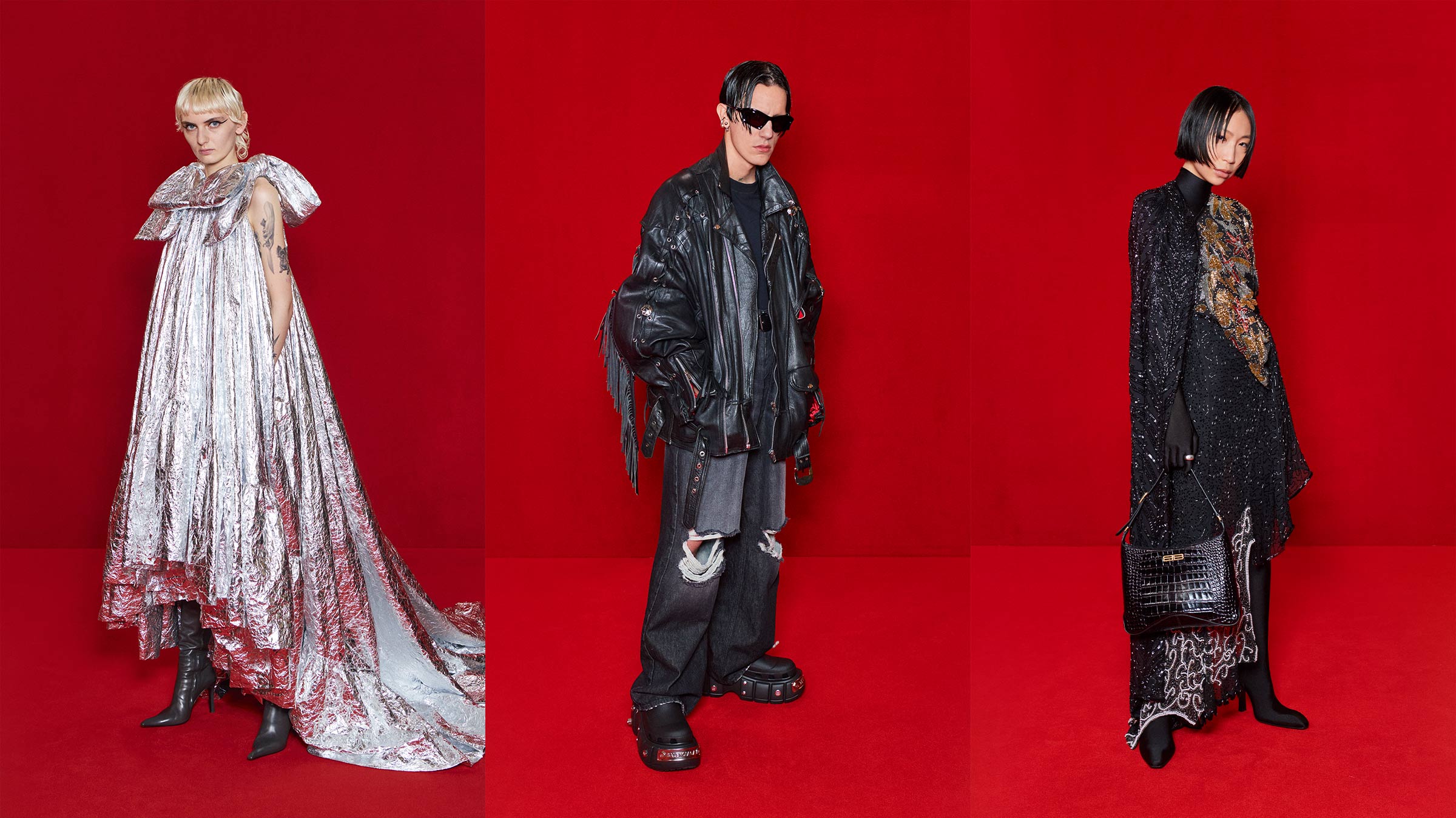
Throughout the 1950s and 1960s, Balenciaga introduced several groundbreaking designs that would become fashion landmarks. The "sack dress" of 1957, which hung straight from the shoulders without waist definition, initially shocked critics but eventually influenced generations of designers. His "ballroom hems" created dramatic volume without excessive fabric, while the "bracelet sleeve"—a three-quarter length sleeve that widened at the bottom—became one of his signature innovations. These creations weren't just garments; they were architectural statements that challenged conventional notions of femininity and form.
Timeline: Key Moments in Balenciaga's Century-Long Journey
Understanding Balenciaga's impact requires tracing the pivotal moments that shaped its evolution. The brand's journey reflects broader shifts in fashion, society, and global culture, from the golden age of haute couture to the digital age of viral fashion moments.
1919: Cristóbal Balenciaga opens his first fashion house in San Sebastián, Spain, initially under the name "Eisa" (a shortened version of his mother's surname).
1937: Forced to leave Spain due to the Civil War, Balenciaga establishes his Paris couture house, quickly gaining recognition for his technical mastery and innovative silhouettes.
1950s: The "Golden Age" of Balenciaga, during which he introduces revolutionary designs including the tunic dress, balloon jacket, and baby doll dress, earning him international acclaim and a loyal clientele of aristocrats and celebrities.
1968: Following the social upheavals of May 1968 and changing fashion trends, Balenciaga closes his couture house, believing the era of true haute couture had ended. He dies four years later in 1972.
1986: The brand is revived under new ownership, but struggles to recapture its former glory through much of the 1980s and 1990s.
1997-2012: Nicolas Ghesquière's appointment as creative director marks the beginning of Balenciaga's modern renaissance. His futuristic designs and technological innovations bring the brand back to fashion's forefront.
2001: French luxury conglomerate Kering (then PPR) acquires Balenciaga, providing the resources for global expansion while maintaining the brand's creative independence.
2015-Present: Demna Gvasalia assumes creative direction, transforming Balenciaga into a cultural phenomenon through viral marketing, celebrity collaborations, and designs that blend luxury with streetwear aesthetics.
Why Balenciaga's Design Philosophy Continues to Captivate
At the heart of Balenciaga's enduring appeal lies a design philosophy that balances tradition with disruption, craftsmanship with conceptualism. Cristóbal Balenciaga's original approach—working directly with fabric rather than sketches, letting materials dictate form—established a foundation of innovation that continues to guide the brand. This methodology has evolved under different creative directors while maintaining its core principles.
Demna Gvasalia's tenure has particularly emphasized what he calls "destruct to create"—a process of deconstructing conventional fashion elements to build something entirely new. This philosophy manifests in designs like the "Triple S" sneaker with its exaggerated, multi-layered sole, the "Hourglass" bag that plays with proportions, and clothing that often features intentionally awkward fits or unexpected material combinations. Rather than merely following trends, Balenciaga under Gvasalia creates them, often by embracing what others might consider "ugly" or unconventional.
The brand's success also stems from its understanding of contemporary culture and marketing. Balenciaga has mastered the art of viral moments, from its controversial advertising campaigns to high-profile celebrity endorsements. When Kim Kardashian wore a head-to-toe Balenciaga look to the 2021 Met Gala—complete with a full-face covering—it generated global media coverage and social media buzz. Similarly, collaborations with video games like Fortnite and artists like Kanye West (now Ye) have positioned Balenciaga at the intersection of fashion, technology, and pop culture.
Where Balenciaga Stands Today: Latest Collections and Cultural Impact
As of 2025, Balenciaga remains at the peak of its influence, consistently ranking among the world's most valuable luxury brands with annual revenues exceeding $2.3 billion. The brand's Fall 2025 ready-to-wear collection, presented during Paris Fashion Week in March 2025, exemplifies its current direction under Demna Gvasalia. According to Vogue's review of the collection, the show featured "hybrid looks that splice ripstop workwear fronts with tracksuit backs, cut-up cargo pants patched onto tracksuit bottoms, and cocoon Western leather jackets"—a continuation of Gvasalia's interest in blending disparate elements into cohesive statements.
The collection, as documented by WWD's runway coverage, emphasized comfort and versatility while maintaining Balenciaga's signature avant-garde edge. Models walked through a black, curtain-covered maze with multiple entrances and exits—a metaphor for the creative process itself. This presentation style reflects Balenciaga's ongoing commitment to transforming not just what people wear, but how they experience fashion.
Beyond the runway, Balenciaga's cultural impact extends to its retail innovations and sustainability initiatives. The brand has experimented with digital fashion shows, augmented reality shopping experiences, and limited-edition drops that create exclusivity and urgency. While maintaining its luxury positioning, Balenciaga has also made strides toward greater sustainability, including commitments to reducing its environmental footprint and increasing transparency in its supply chain.
The Future of Balenciaga: Innovation and Sustainability
Looking ahead, Balenciaga faces both opportunities and challenges as it navigates an increasingly complex fashion landscape. The brand's ability to balance its avant-garde identity with commercial success will likely depend on several key factors. Continued innovation in materials and manufacturing processes represents one promising direction, particularly as consumer demand grows for sustainable luxury options.
Digital transformation presents another frontier. Balenciaga has already demonstrated leadership in this area with its early embrace of virtual fashion shows and NFT collaborations. As the metaverse evolves, the brand is well-positioned to explore new forms of digital expression and commerce. However, this digital push must be balanced with the tangible quality and craftsmanship that have defined Balenciaga since its founding.
The brand's relationship with controversy also warrants careful management. While provocative designs and marketing have fueled Balenciaga's relevance, recent controversies have sparked important conversations about responsibility in fashion. Moving forward, the brand may need to navigate the fine line between challenging conventions and respecting social sensitivities, particularly as global audiences become more socially conscious.
Key Takeaways: Understanding the Balenciaga Phenomenon
Balenciaga's century-long journey offers valuable insights into what makes a fashion brand truly enduring. First, the foundation established by Cristóbal Balenciaga—technical excellence, architectural silhouettes, and fabric innovation—created a legacy strong enough to survive his retirement and the brand's temporary closure. Second, successful reinvention requires respecting heritage while embracing contemporary culture, as demonstrated by Nicolas Ghesquière's technological approach and Demna Gvasalia's streetwear influences.
Third, cultural relevance in fashion increasingly depends on understanding not just what people wear, but how they communicate, shop, and express identity in a digital world. Balenciaga's mastery of viral marketing and celebrity culture has been instrumental in its modern success. Finally, the brand demonstrates that true luxury in the 21st century involves more than expensive materials; it requires conceptual depth, storytelling, and the courage to challenge conventions.
From a small Spanish atelier to a global fashion powerhouse, Balenciaga's story is ultimately about the power of vision—both in creating beautiful objects and in seeing possibilities where others see limitations. As the brand enters its second century, it continues to remind us that fashion at its best isn't just about clothing; it's about ideas, identity, and imagining different ways of being in the world.